Useful Information

Fishing at Aquamarine Fukushima

Fishing at Aquamarine Fukushima

I know what you’re thinking... Fishing?? At an aquarium?

Well, this isn’t a typical aquarium.

Aquamarine Fukushima is an Environmental Aquarium focused on research and providing educational information about sustainability and conservation.

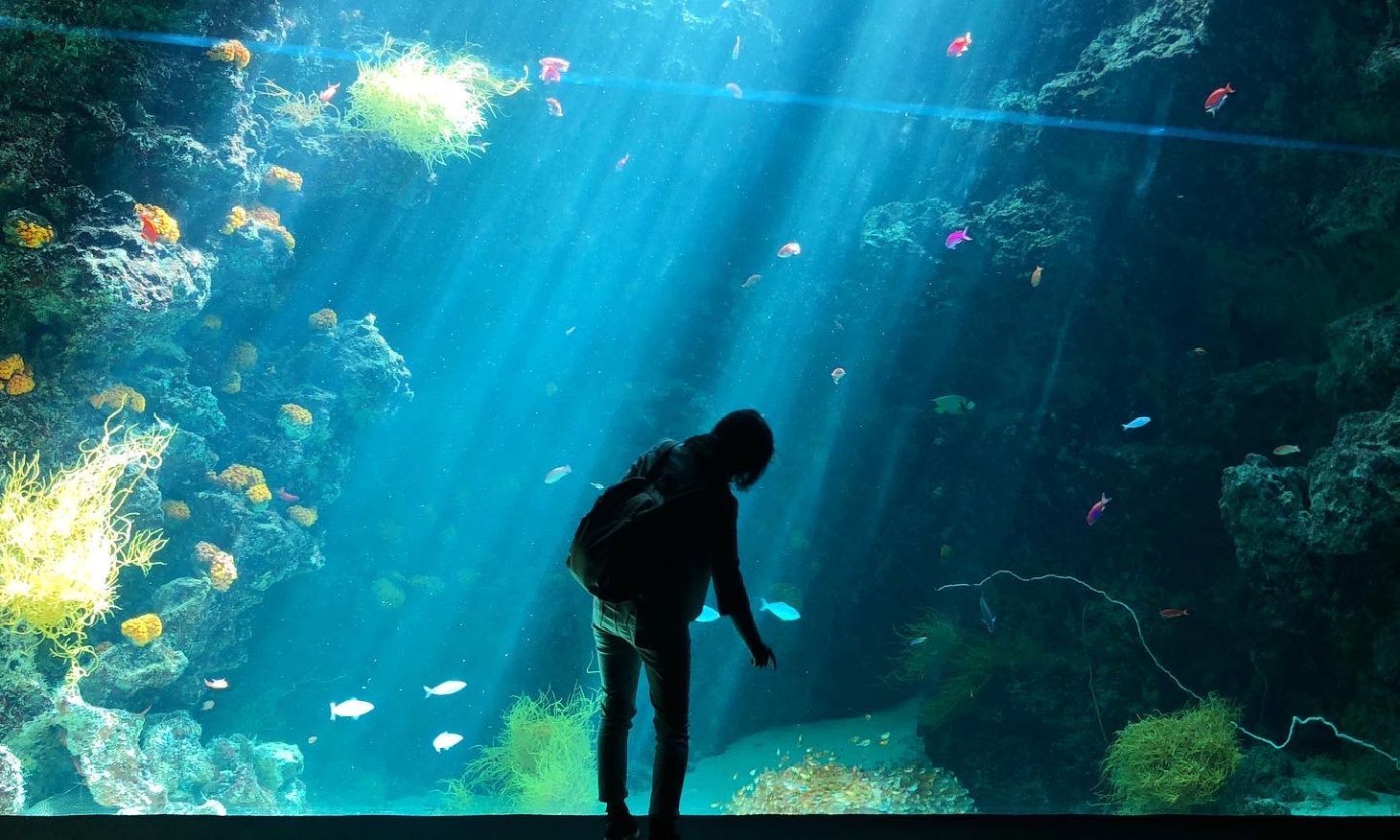
The aquarium is most well-known for its triangular tunnel that separates two large tanks that represent the part of the sea where two currents meet. The Oyashio current (home to a high degree of diversity and reef environments) and the Kuroshio current (home to fast-moving fish and wide open sea environments). This was my first time seeing large schools of fish moving together, and it was really mesmerizing!
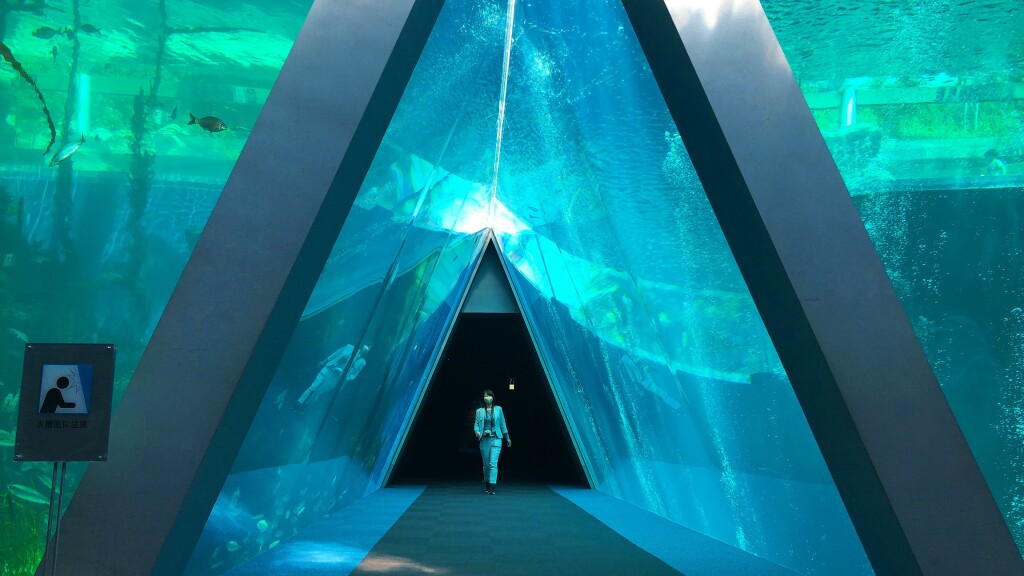
After getting hypnotized by the swirling school of fish, we headed over to the fishing pond to catch some lunch!

At the fishing area, I was handed a rod and some bait. You pay (1000 yen) to use the rod, and then it is a small fee (100 yen) per fish you catch.

The fish in the pond were really cute, so I was nervous about eating them. I love eating sushi but when confronted with a cute little fish swimming around, I start to think less with my stomach and more with my heart.

I’ve never successfully caught a fish on my own, so I was shocked when I almost instantly felt a tug on the fishing pole. I pulled the rod up and suddenly there was a flopping fish in my hands!

In the same way, I was able to quickly catch two more fish. So, one for me and each of my coworkers. You aren’t allowed to return any fish to the water, so be careful not to catch more fish than you can eat.

Catching the fish here is pretty easy, so I think this is a great activity to try!

Most of us have very little experience with fishing or hunting. When you source all of your food from the local grocery store, it can be hard to remember or come to terms with the fact that the meat we eat was once alive. Faced with a living fish, some visitors (mostly children) have broken the rules and released what they caught once no one was looking! However, rather than feeling sad about the fish, I channeled the mindset of gratitude towards the fish for providing me with life-sustaining nourishment. Thank you, fish friend!

We carried the fish friends over to the cooking area, said a little goodbye, and handed them over to the chef. Quickly, the fish were swiftly prepared in front of us and cooked. A few minutes later, we were handed a plate of hot fish fry.

They smelled really good. We said a heartfelt thank you, “itadakimasu,” and ate. The taste was so fresh and delicious. I have never eaten such fresh fish before, and my coworker and I agreed that the meat almost tasted more like fried chicken than fish. It felt good to know exactly where our food had come from.

In order to consume consciously, it is good to remember to value the life of the creatures that we eat.

By keeping our oceans clean, we can honor the lives of sea animals. After we ate, we walked around a bit more and took a look at some of the exhibits. One had a lot of information about beach cleanups and efforts that the aquarium is making to stay environmentally conscious which I hope you will check out if you visit!

It was a lot of fun visiting Aquamarine Fukushima, and I hope that you will consider visiting!
Latest posts

  1. Useful Information

    Exploring A Fukushima Footpath Course

    In 2026, Fukushima’s east coast is no longer defined solely by its past. Along the Pacific shoreline, towns once struck by disaster are gradually filling with new buildings, new businesses and cautious optimism. One of the most revealing ways to understand this transformation is simply to walk through it, map in hand, on a Fukushima Footpath walking tour.What is a Footpath course?Threading through towns along Fukushima’s east coast, a Footpath course is a self-guided walking route that particularly explores areas heavily affected by the earthquake, tsunami and nuclear accident of 2011. These courses follow ordinary streets, coastal paths, shrines, parks and newly developed districts, with visitors using a map to explore at their own pace, stopping where they choose and taking time to absorb the surroundings.The initiative began as a way to draw people back to communities still rebuilding their numbers following the 2011 evacuation order. By encouraging visitors to walk through these towns, the project aims to increase awareness of both the disaster’s impact and the steady, visible progress of reconstruction. On foot, you can see details that would otherwise pass unnoticed; new seawalls, freshly laid roads, modern public buildings, and empty plots waiting for future homes.What makes them worthwhile?Walking these courses with friends turns the experience into something more than simply sightseeing. You might find yourself chatting with a shop owner in a newly opened café or meeting residents who have recently returned. Spending money locally – even on a coffee or lunch – directly supports communities rebuilding from the ground up.You’ll see construction sites beside quiet fields, or brand-new community centers next to long-standing shrines. The courses offer visitors a chance to see the region with their own eyes, and witness firsthand how the coastline is reshaping itself day by day with the support of its vibrant and regrowing community.Futaba: A link from yesterday to tomorrowFutaba, once home to thousands of residents, became the last municipality in Fukushima Prefecture to reopen after the disaster. Today, its population is still small, and walking here makes for a quiet but reflective afternoon. The course begins at the Great East Japan Earthquake and Nuclear Disaster Memorial Museum, a beautiful facility completed in 2020 as an archive detailing life before, during and after the 2011 tragedy.Next door is the Futaba Business Incubation and Community Center (F-BICC), equally modern with restaurants, conference facilities and a great view from the rooftop.From there, visitors walk through Futaba’s natural scenery, through wide plains where neighbourhoods once stood, while ongoing infrastructure work indicates the area’s rapid progress. In Futaba alone, there is a large hotel under construction by the museum, while the planned Fukushima Reconstruction Memorial Park is taking shape along the coast, designed as a large green space for reflection overlooking the Pacific.The walking course takes trekkers past Nakano Hachiman Shrine, famously rebuilt after once being swept away by the tsunami, and a rare example of a newly built shrine building.Further uphill, Morotake Suwa Shrine sits among trees, offering a view across the town toward the Pacific Ocean, with a small memorial to those who found refuge there during the tsunami.Eventually the course leads to the Asano-Nenshi textile factory, built here in 2023. Masami Asano, company president, chose Futaba as the site for the new factory to promote and stimulate Futaba’s economic recovery.The factory now stands as a beacon for Futaba’s revival, and contains a cafe restaurant where visitors can stop for lunch.Okuma: Forging new infrastructureLike Futaba, Okuma is in the midst of large-scale reconstruction. Entire districts are newly built or being developed, creating a townscape that blends fragments of the old with ambitious new planning. The footpath loops through the former downtown area, where parts of the historic main street survive alongside wide new roads and modern housing for returning residents.The route begins at the contemporary multipurpose complex CREVA, with coworking spaces and event halls reflecting the town’s focus on attracting businesses and entrepreneurs. Nearby, Kuma Sun Terrace provides a convenience store, restaurant, kid’s play room and everyday services.The new Ono Station building connects the town to Joban Line railway, while rows of azaleas and ginkgo trees line sections of the route.Further along stands Fun Eat Makers, a modern wooden facility combining a café and a hydroponic farm that grows produce using advanced indoor techniques. Nearby, the Okuma Incubation Center was once an elementary school, and now hosts companies and community events. Officials have suggested that in five or ten years, the town may look entirely different again. Walking the footpath today captures Okuma at a pivotal moment – actively constructing the infrastructure and social spaces that will define its next chapter.Hirono: At one with natureSouth of Futaba and Okuma, Hirono has a peaceful farmland atmosphere, reminiscent of even a European countryside. Beginning at a renovated Hirono Station – with a new community exchange center scheduled to open nearby – the footpath quickly transitions from town streets to open greenery.Tsukijigaoka Park provides an early highlight, including a monument connected to a well-known children’s song associated with the area. Beyond the park, vivid green rice paddies stretch across the landscape in growing season, backed by low hills.Walking under the Joban Line railway bridge, you may be lucky enough to watch a train passing overhead on its way headed north to Sendai or south to Iwaki.As the path approaches the Asamigawa estuary, the horizon opens toward the Pacific. The Oshu Sunrise Viewpoint draws visitors in the early morning, when light spreads across the water. Coastal windbreak forests and disaster-prevention green spaces line the shore, representing both preparedness and resilience.Together, Futaba, Okuma and Hirono reveal different aspects of Fukushima’s east coast in modern times: a mixture of reconstruction, natural beauty and cultural significance. By walking a Footpath course, you can witness these changes at a leisurely pace – and see for yourself how the region is reshaping its future.Looking for other ideas during your visit? Check out more details about the Hamadori region, and learn more about the Footpath programme (Japanese language only) on the official website.

    Exploring A Fukushima Footpath Course
  2. Useful Information

    5 Experiences in Fukushima with a Local Guide

    Did you know that there are cultural experiences in Japan that come with their own guide? Many visitors choose to take advantage of the wide array of local experts during their visit to Fukushima.Some say exploring Japan with the help of a local is the best way to travel – someone who knows their way around, can show you hidden spots, answer questions and deepen your understanding of the area.Why does the scenery look like that? What causes that natural phenomenon? What’s the history behind this spot? These are all questions that a local guide can answer for you during your trip. With that in mind, here are our recommendations for some activities you can try in Fukushima with the help of an experienced guide, both for solo travellers or group trips.1. Aizu Lacquerware Painting ExperienceCreate your own piece of a 400-year traditionWith a history tracing back over 400 years, Aizu lacquerware was known in the samurai era for its beauty and quality of craftsmanship. However, this region also pioneered some of the techniques that made mass production of lacquerware a reality, and it became the backbone of Aizu’s artisanal history.In this hands-on experience, you’ll paint some of this lacquerware yourself, with guidance from a skilled artisan and guide, and get to take home your creation as a souvenir.In addition to the techniques and history, you’ll learn about the philosophy behind this sacred art, and how it has been passed down through the generations from the very first artisans who served their samurai lords.Not only is this a fun way to engage with Japanese culture and learn from an experienced artisan first-hand, but you’ll have a lasting memory to take home from your trip!The lacquerware experience takes place at the historic Suzuzen workshop in Aizu-Wakamatsu City, making it a perfect stop for travellers interested in traditional crafts. It’s suitable for visitors of any artistic level.This experience can be booked on the Fukushima Travel website with English support.2. Ramen-Making Experience & Kitakata Town WalkDiscover Kitakata through ramen, culture, and landscapeKitakata City is famous across Japan as one of the country’s ‘ramen heartlands’ – a city with over 100 ramen shops. Ramen is so tied to the culture here that some ramen shops even open for breakfast!In this experience offered by a local store, you’ll explore Kitakata’s ramen history first-hand, walking the atmospheric streets, seeing the traditional warehouses that make the old town so famous, and trying your hand at making your own ramen.In short, this experience is about ramen not only as food, but as a form of culture. To the people of Kitakata, that’s what ramen is – inherently tied to their day-to-day lives.In this experience, rather than making noodles, participants take on the same role as actual Kitakata ramen chefs by preparing an authentic ramen soup, under the watchful eye of a former ramen shop owner. This reflects the true structure of Kitakata ramen culture, where soup-making and noodle-making are traditionally handled by different specialists.The soup is made using naturally filtered spring water fed by the snowmelt of Mount Iide, along with locally produced soy sauce.The experience includes a guided walk through the town, learning about the history of the warehouses that were vital to the ramen creation process. A stop at the local sake brewery allows guests to see and taste the same spring water used in ramen-making.This is no ordinary cooking class – this is a thoughtful, story-rich experience connecting ramen, nature, and everyday life in Kitakata.Prices vary based on group size; please check the booking website for more information.3. Snowshoe Hiking at Goshiki-numaA quiet winter walk through snow, forest, and lightAfter the busy streets of Tokyo, there’s nothing like stepping away to enjoy the peace of nature in rural Japan. This snowshoe hiking tour takes visitors into the famous Goshiki-numa region, renowned for its ponds that turn a variety of vibrant colours depending on the season and sunlight.Led by an experienced guide, visitors wind their way through the snowy forests of the Urabandai area, finally arriving at one of Fukushima’s great natural sights – the crystal blues and emerald greens of the waters of Goshiki-numa.For many people, the snowshoe hiking tour is something of a meditative experience. Although the guide will walk you through the region’s history and wildlife, there are portions of the trip where you’ll hear nothing but the crunching of snow beneath your feet. If you’re looking to visit somewhere with real character and no other tourists, this is the trip for you.Although guests can bring their own snowshoes, most choose to rent snowshoes on site for a small additional fee. The default experience is held with a Japanese-speaking guide, although they speak some basic English and are happy to welcome visitors from overseas.This experience is suitable for families and small groups.Bookings can be made on the Fukushima Travel website.4. Fukushima Taxi: Tsurugajo Castle CourseHistory, local cuisine, and a preserved post town in one dayTaking out the stress of getting the right timings on public transport, a day taxi hire is how many visitors choose to see Fukushima’s best sights. This course departs from Fukushima Station, a bullet train stop, making it easy for travellers utilising the JR Pass.The course runs to Tsurugajo Castle, an awe-inspiring fortress that bears a terrible and war-torn history behind it. The interior is a museum dedicated to the men and women who fought here in open rebellion, during the final years of the samurai.Lunch, included in the price, is served at a beloved local restaurant serving wappa-meshi. This regional dish, made exclusively with local produce in artisanal cedar lunchboxes, has a rich history that evokes the workers who used to carry them to their work deep in the wilderness.The taxi then winds its way south to Ouchi-juku, one of Fukushima’s most beloved sights for its rows of thatched roofs and calming atmosphere. Some of the residents in this area have lived here and sold their wares for generations, and are as eager to welcome new visitors as their forefathers were. This was once a post town, where samurai would stop and rest on their long journeys between Aizu and the capital.You’ll be met by your guide at the important sites and given an introduction to the history of the area, making it perfect for lovers of history or those looking to learn more about Japanese culture.This is a private taxi tour, so pricing varies based on the number of participants. A standard taxi seats 1-2 guests (plus the guide), while a ‘jumbo’ taxi is used for groups of 3-8.Bookings can be made here.5. Fukushima Taxi: Disaster Memorial CourseA day to understand Fukushima’s past, present, and futureAs with the taxi tour to Tsurugajo Castle and Ouchi-juku, this course simplifies travel arrangements, offering visitors a chance to see the main sights of Fukushima’s disaster recovery for themselves.The events of March 2011 are intertwined with this part of Japan. The east coast of Japan, devastated by the earthquake and tsunami, is still recovering in many ways, although great strides have been made in the intervening years.Visitors on this course will head first to the Great East Japan Earthquake and Nuclear Disaster Memorial Museum, known as Denshokan, where they can learn more about the people tragically affected in 2011 and how the prefecture continues to move forward to a brighter future. Here is where your guide will explain more about the history as someone who is familiar with the area and can explain the facts clearly and carefully.Next is lunch at Asano Nenshi; the soft towel factory is something of a symbol of the region’s recovery, having been opened here after the disaster to encourage economic growth and provide jobs. The stylish café on the ground floor is an open, airy space that offers a variety of Japanese and Western options.The final stop is Ukedo Elementary School, a preserved site that quietly conveys the memories of the disaster. The school, barely 300 metres from the east coast, was badly hit by the tsunami, and still bears the scars of that day, but also tells the story of how all students and teachers escaped with their lives. A peaceful and thought-provoking final stop on your tour before heading back.This is a private taxi tour, so pricing varies based on the number of participants. A standard taxi seats 1-2 guests (plus the guide), while a ‘jumbo’ taxi is used for groups of 3-8.Bookings can be made here.Looking to travel more in-depth during your trip? Consider booking a guided experience and learn more about Fukushima’s rich history and culture.Advance booking is recommended. For any questions, send us a message via our contact form.

    5 Experiences in Fukushima with a Local Guide
  3. Destination Spotlight

    7 Things to Do in Iwaki City

    One of Fukushima Prefecture's largest cities, Iwaki is located in the south-east of the prefecture and is one of its warmest areas, seeing no snow in winter and great beach-going weather in summer.The city is known for its laid-back coastal atmosphere, contrasting with the rich samurai history and chilly winters in the Aizu region to the west, and is a great example of the width of experiences on offer in Fukushima.Only three hours from Tokyo Station via the direct Hitachi & Tokiwa limited express, or an hour's drive from Koriyama, Iwaki is surprisingly accessible. It's also possible to take the Joban Line from here to Futaba, site of Fukushima's great reconstruction efforts, or all the way up to Sendai.Here are some suggestions for must-visit spots if you're looking to make a stop in Fukushima's sunny seaside city:BentenjimaBentenjima Shrine stands on a small rocky island just off the coast of Iwaki City, set within a crescent-shaped cove facing the Pacific Ocean. The shrine is marked by a vermilion torii gate that contrasts sharply with the jagged stone and crashing waves below. According to local tradition, the shrine was originally located on the mainland, but a major earthquake in 1410 caused the land to break apart, leaving the shrine isolated on what is now Bentenjima. Although the exact date of the shrine’s founding is unknown, it has long been worshipped as a sacred coastal site dedicated to Benzaiten, a deity associated with water and protection.The island is also known as Wanigafuchi, named after a legendary creature called a wanizame, said to be half crocodile and half shark. Folklore describes the creature as the cause of the swirling currents and rough seas around the island, and one legend tells of it abducting a young woman who wandered too close. Such stories reflect the fear and respect once held for this dangerous stretch of coastline.The shore around Bentenjima is covered with small, rounded pebbles , which visitors are warned not to take home, as legend says doing so will bring eye disease.Shiramizu Amidado TempleShiramizu Amidado, also known as the Amitabha Hall, is located in Iwaki City and is a rare surviving example of late Heian period religious architecture. The hall reflects Pure Land Buddhist beliefs that were widespread at the time, and is the only building in Fukushima Prefecture designated as a National Treasure. In front of the hall lies a Jodo-style garden designed to represent the Buddhist Pure Land. The garden is centered around a pond with a small island and carefully placed stones, creating a calm, balanced landscape meant to be viewed from the hall. The garden changes noticeably with the seasons, such as when lotus flowers bloom across the pond in summer, or most famously when maple and ginkgo trees flush red in autumn.In November, the temple grounds are illuminated in the evening, typically on the last two weekends of the month, offering a stunning view of the red leaves reflected in the pond waters. This combination of historic architecture, religious art, and carefully designed landscape makes Shiramizu Amidado an important cultural and historical site, and easily accessible from central Iwaki.Aquamarine FukushimaAquamarine Fukushima is an environmental aquarium designed to showcase marine life in settings that closely resemble natural habitats. In addition to its public exhibits, the facility also functions as a research and education center, providing information on marine ecosystems, sustainability, and conservation. This dual role makes it both a place for learning and a space for observation.The aquarium’s main feature is a pair of large tanks spanning from the second to the fourth floors, recreating Shiome no Umi, the offshore waters where the Kuroshio and Oyashio currents meet. This unique environment supports a wide range of marine species, including large schools of sardines and bonito. There is also a touch pool where visitors can interact with starfish and other small sea creatures.One of the aquarium’s research highlights is its long-running study of coelacanths, with specimens and footage displayed in the 'World of Coelacanths' exhibit on the first floor.Seasonal events and hands-on activities are held throughout the year, many aimed at families. Nearby, Iwaki Lalamew offers a seafood market and restaurants serving locally caught fish, located about a ten-minute walk from the aquarium. There is also an Aeon Mall nearby.Bicycle tour with Hayate CycleThe Iwaki Nanahama Kaido cycling route carries visitors down the scenic east coast, past the Bentenjima island and the symbolic Shioyasaki Lighthouse. If you're looking to rent bikes to do the trip, why not make a stop to Hayate Cycle? The bike rental shop is located next to the Iwaki Yotsukura 'michi no eki' or rest station, which has a restaurant and sells souvenirs.Kimura-san, the owner, is a sunny and easy-going local of the Iwaki area and cycling enthusiast who loves showing people around the area. In addition to renting out bicycles -- among them electric bikes and tandem bikes -- he also acts as a tour guide, taking you to some of the best scenic spots.To learn more about the cycling tour, see our dedicated page.Iwaki City Coal & Fossil Museum (Horuru)Iwaki City Coal & Fossil Museum, affectionately known as 'Horuru,' introduces visitors to both the coal-mining history of Iwaki and the region’s rich fossil record. The museum opened in 1984 to preserve the legacy of the Joban Coalfield, once one of Honshu’s major coal-producing areas. At the entrance stands a life-sized replica of Futabasaurus suzukii, a marine reptile discovered in Iwaki in 1968 by a local high school student. This fossil has since become one of the most important paleontological finds in Japan.Inside, the museum is divided into several themed areas. The fossil exhibition rooms display specimens from Iwaki and beyond, including plesiosaurs and ancient whales, with lighting and sound used to explain their environments and evolution. A recreated underground coal mine allows visitors to walk through a tunnel and learn how miners worked and how extraction techniques changed over time. The learning and specimen areas also explain the geology of the region and how coal and fossils were formed.Horuru also looks at everyday life in mining communities. Dioramas and displays recreate streets and homes from the early to mid-20th century, showing how coal mining shaped local culture and livelihoods. Hands-on activities, such as making amber or fossil-themed accessories, are offered on certain days, and the museum shop sells minerals, fossils, and souvenirs.The museum is also a short walk from our next spot...Yumoto OnsenIwaki's Yumoto Onsen is widely regarded as one of the oldest hot spring resorts in Japan, often mentioned alongside Dogo Onsen in Ehime and Arima Onsen in Hyogo. Its history is said to date back around 1,000 years, when hot spring water was first used in the area. The onsen developed in connection with the aforementioned Joban Coalfield, as miners made use of the naturally heated water that flowed underground. Today, hot spring water is pumped throughout the town to hotels and ryokan at an impressive rate of around five tonnes per minute, supporting a compact but well-established onsen community.The spring water at Iwaki Yumoto is a sulfur-based onsen, known for its distinctive scent and its reputation for skin care. It's said to help with fatigue, muscle pain, and circulation, as well as having skin-beautifying properties. Public day-trip bathhouses and free footbaths are scattered around the town, making it easy for visitors to casually experience the hot springs even without staying overnight.A short distance from the onsen town is Miyukiyama Park, a popular green space overlooking the city. In spring, the park becomes a local cherry blossom spot, with rows of trees lining the paths and open areas suitable for hanami picnics. From the higher points of the park, visitors can enjoy views over Iwaki while walking beneath the blossoms. A stroll through Miyukiyama Park combines well with a soak in one of Yumoto Onsen's many hot springs!Ogawasuwa ShrineSpeaking of cherry blossoms, one of Fukushima Prefecture's earliest-blooming sakura spots is here at Ogawasuwa Shrine. Although the rows of massive cherry trees are beautiful in daytime, the nighttime illuminations are especially impressive.Selected by Iwaki City as a Natural Monument, the main tree is estimated to be over 500 years old and is one of the area’s most important seasonal landmarks. The tree blooms slightly earlier than standard Yoshino cherry trees, usually reaching its peak in late March to early April.Bear in mind that, as a popular viewing spot, the shrine grounds are particularly busy during cherry blossom season, especially in the evenings or on weekends. Some parking is available, but waiting times can be long during busy times.Looking for more information? Check out our: Top 10 Things to Do in Fukushima Access guide for getting to Fukushima Itineraries page for trip ideas Activities page for tour experiences with English support

    7 Things to Do in Iwaki City
Top