Useful Information

Japan's Best Wild Onsen: Taking the Extreme Onsen Challenge

Japan's Best Wild Onsen: Taking the Extreme Onsen Challenge

The Extreme Onsen: Nakanosawa-numajiri Onsen

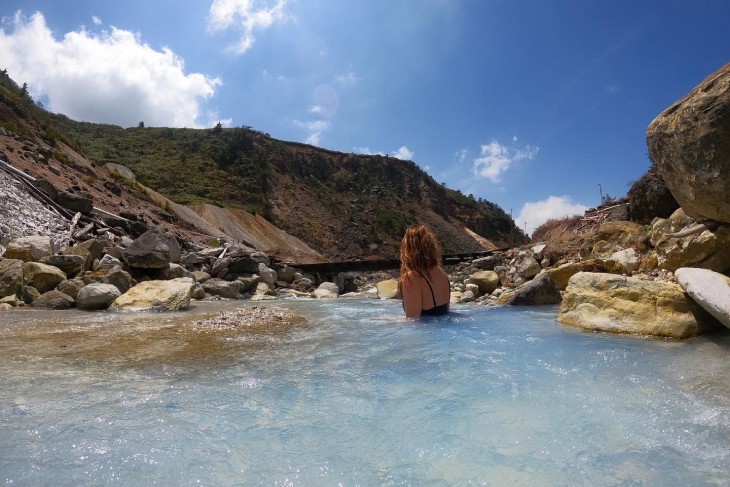
The greatest wild onsen in Japan? Maybe the world?  This massive onsen river in the mountains is the largest of its kind in the entire country! With the help of a professional guide, visitors can traverse unique volcanic terrain to reach this extreme onsen river in the mountains. Bathing in the water here is thought to have many health benefits, as well.

If you are interested in doing this hike, tours can be booked through our tours page.
Poisonous Volcanic Gases and Safety (IMPORTANT!)

First of all: SAFETY. 

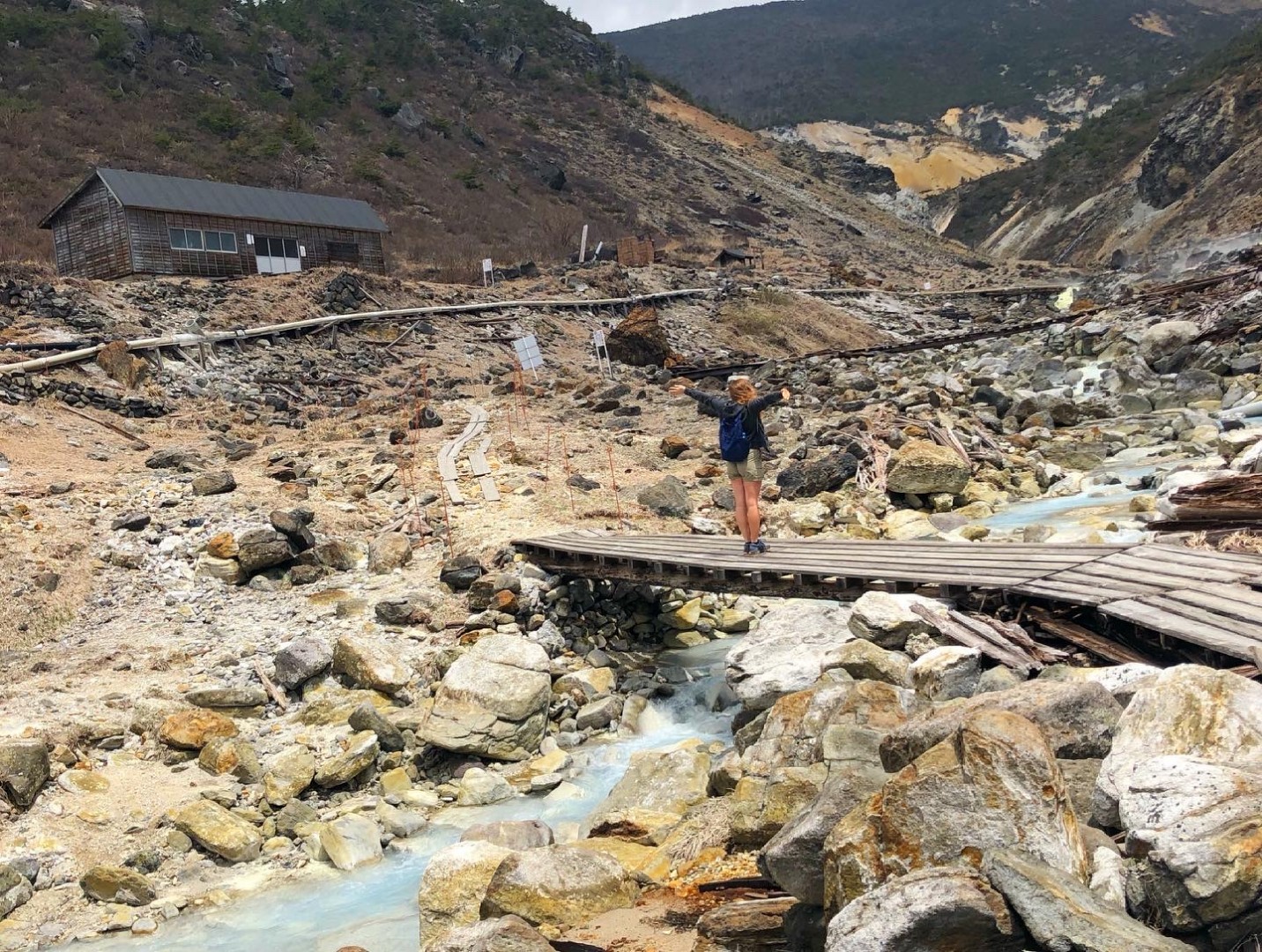
Completing this hike is approximately a two hour round trip. It has several stretches of difficult and potentially dangerous terrain. The main danger is that, since Mt. Adatara is a volcano, it is constantly releasing poisonous gases. These sometimes accumulate to dangerous and deadly levels that can cause fainting and even death. Fortunately, the professional guides are available and trained with the tools necessary to safely guide you on your journey.
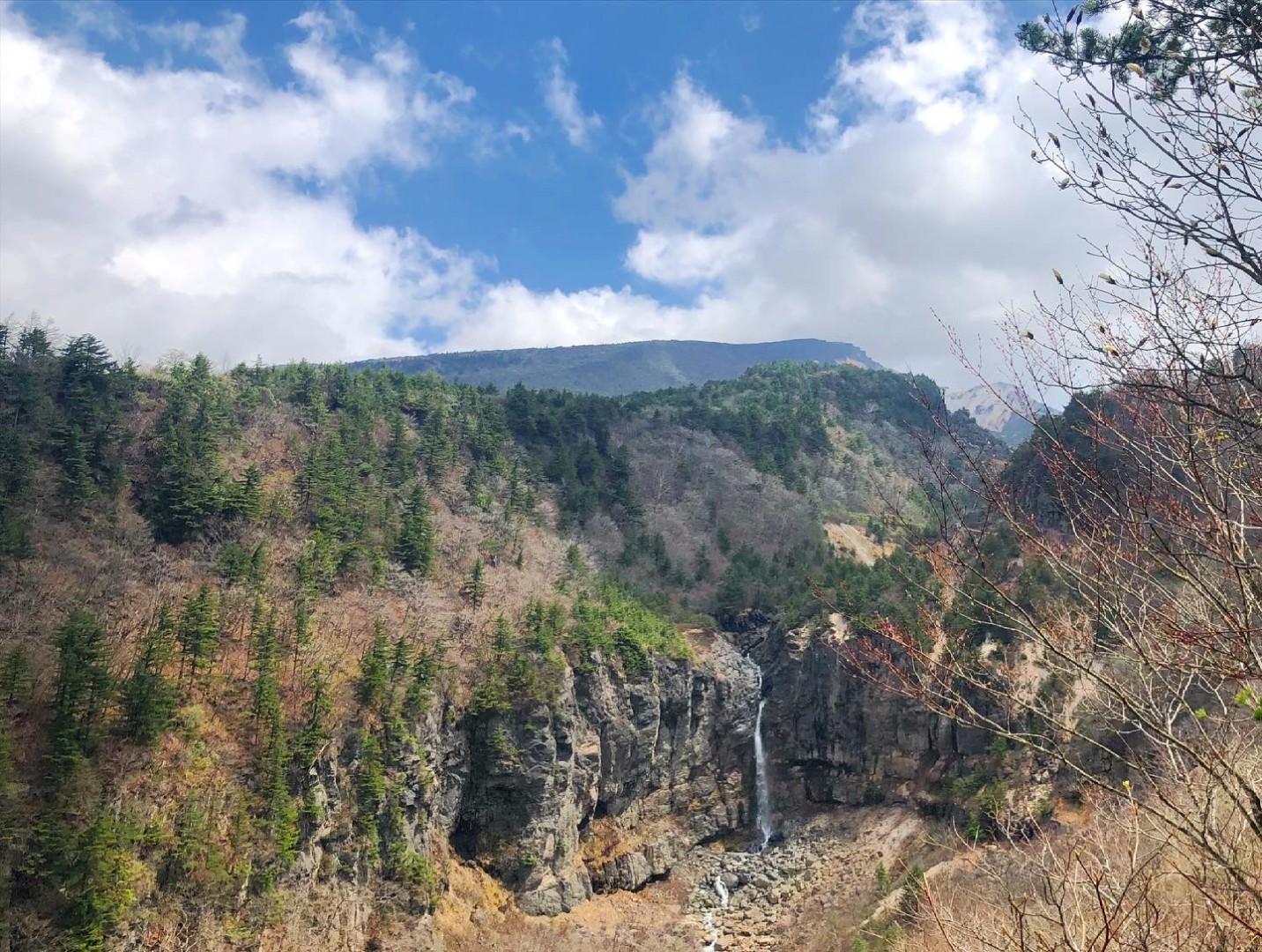
The approach

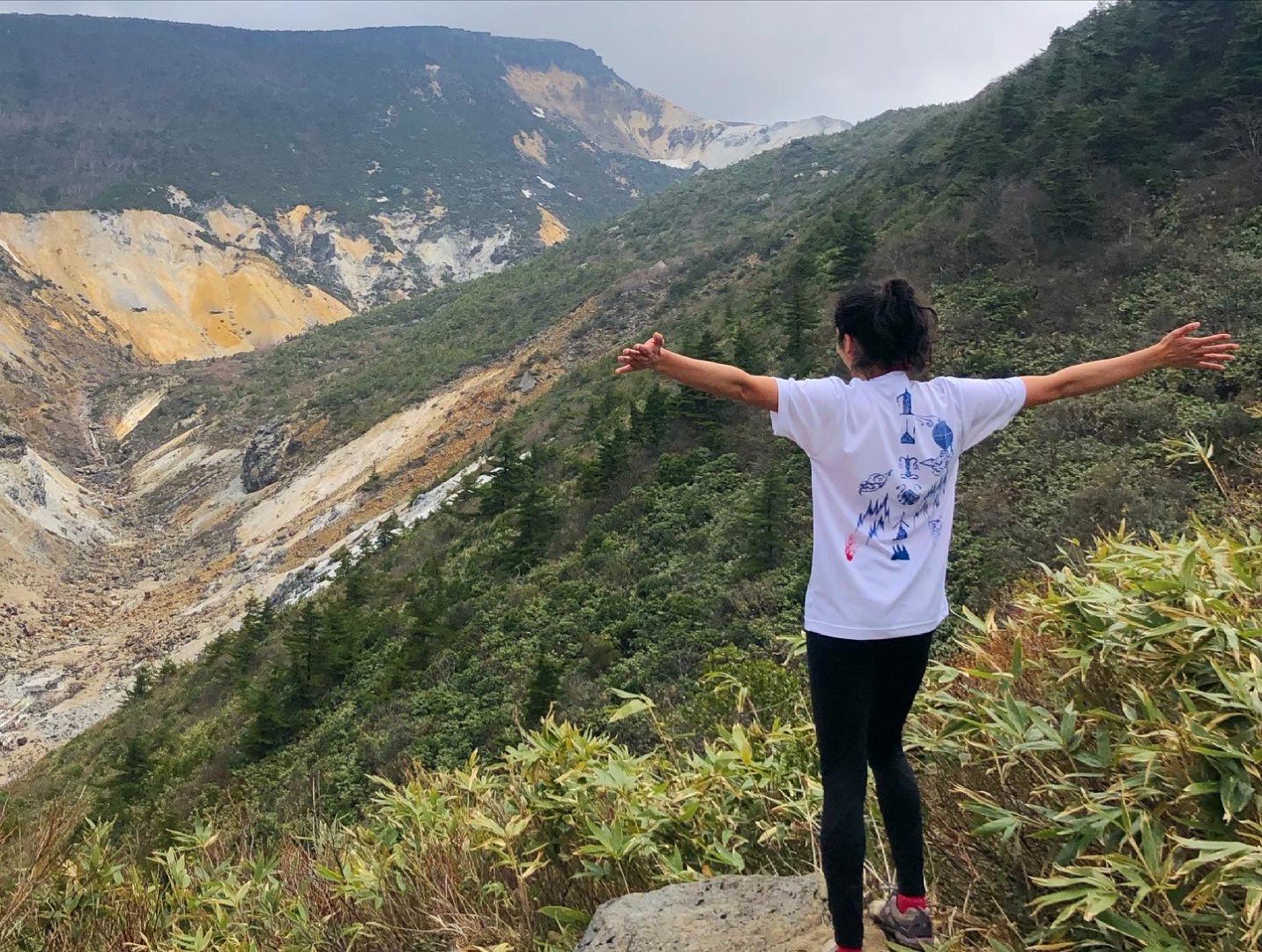
The hike is beautiful, with views of a massive waterfall and the surrounding mountains.

Tunnels of trees reminded me of the entryway to a mysterious world. As you get higher, the trail slopes downwards on either side, revealing panoramic views of the surrounding area. Suddenly, you can see the terrain has changed up ahead from green forest to volcanic stones of white and red. This was once the site of a violent volcanic eruption, and the thought of that feels outlandish as the mountain is peacefully quiet. 
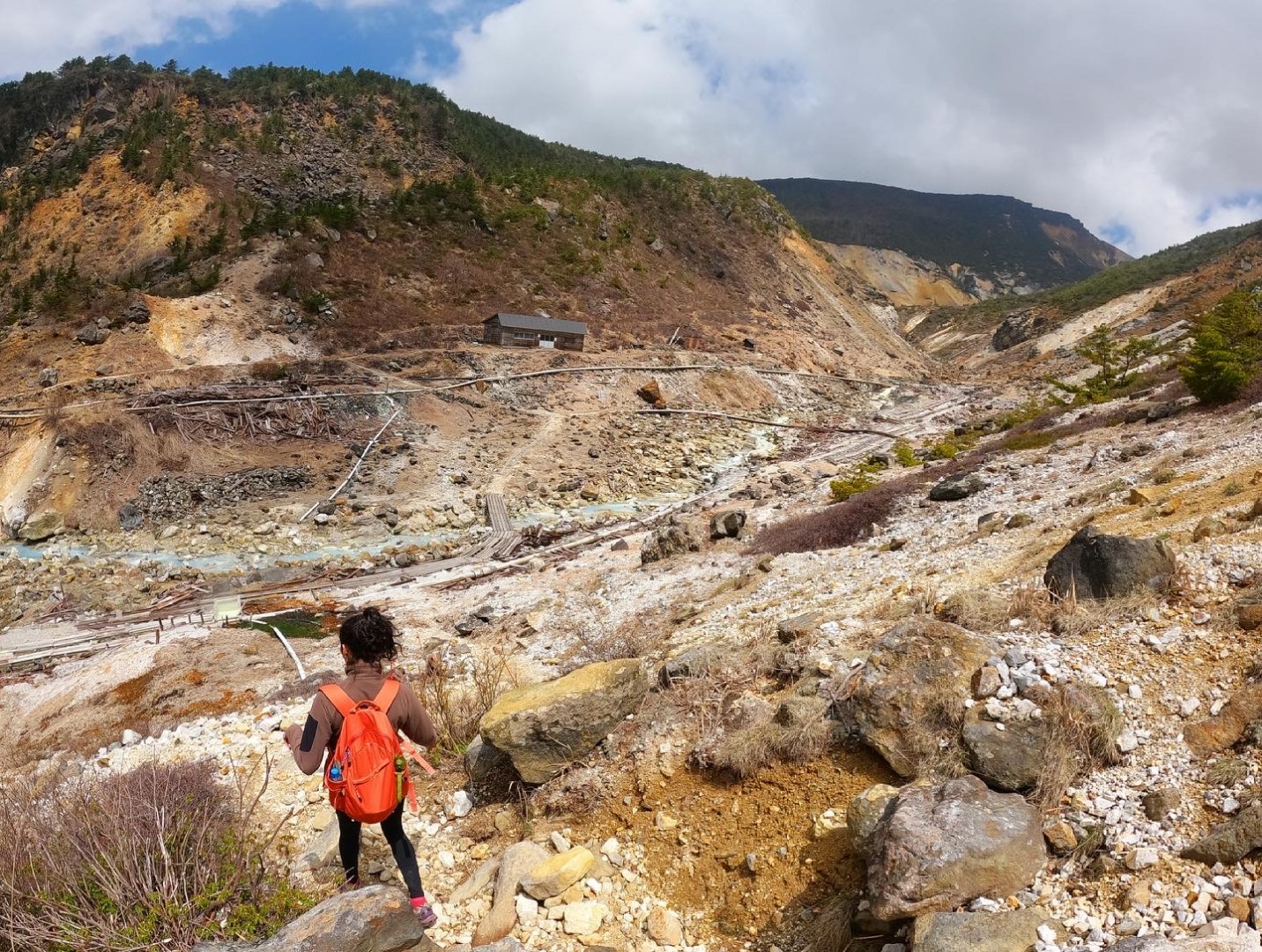
Descending into the volcanic valley

The trail drops steeply into the valley, where shadows preserve small pockets of winter snow well into the spring months, something that is important to consider if you are visiting in spring. (Vising in winter would be extremely dangerous and is prohibited.) 

As you continue, the trail can be difficult to identify due to plant overgrowth, the remote nature of this trail and onsen can make it difficult to keep the path clear. When I visited, I was grateful for my guide who kindly helped me cross the large pockets of snow and ice as well as the sections where bamboo shoots had encroached on the trail, making it difficult to pass.

As you descend deeper into the valley, you can appreciate the way the valley forms a bowl of reddish volcanic stone and soil. Unfortunately, this unique shape is what can contribute to the accumulation of fatal levels of poisonous gas! Our guide tested the air and conditions, and determined that we were safe to explore. 
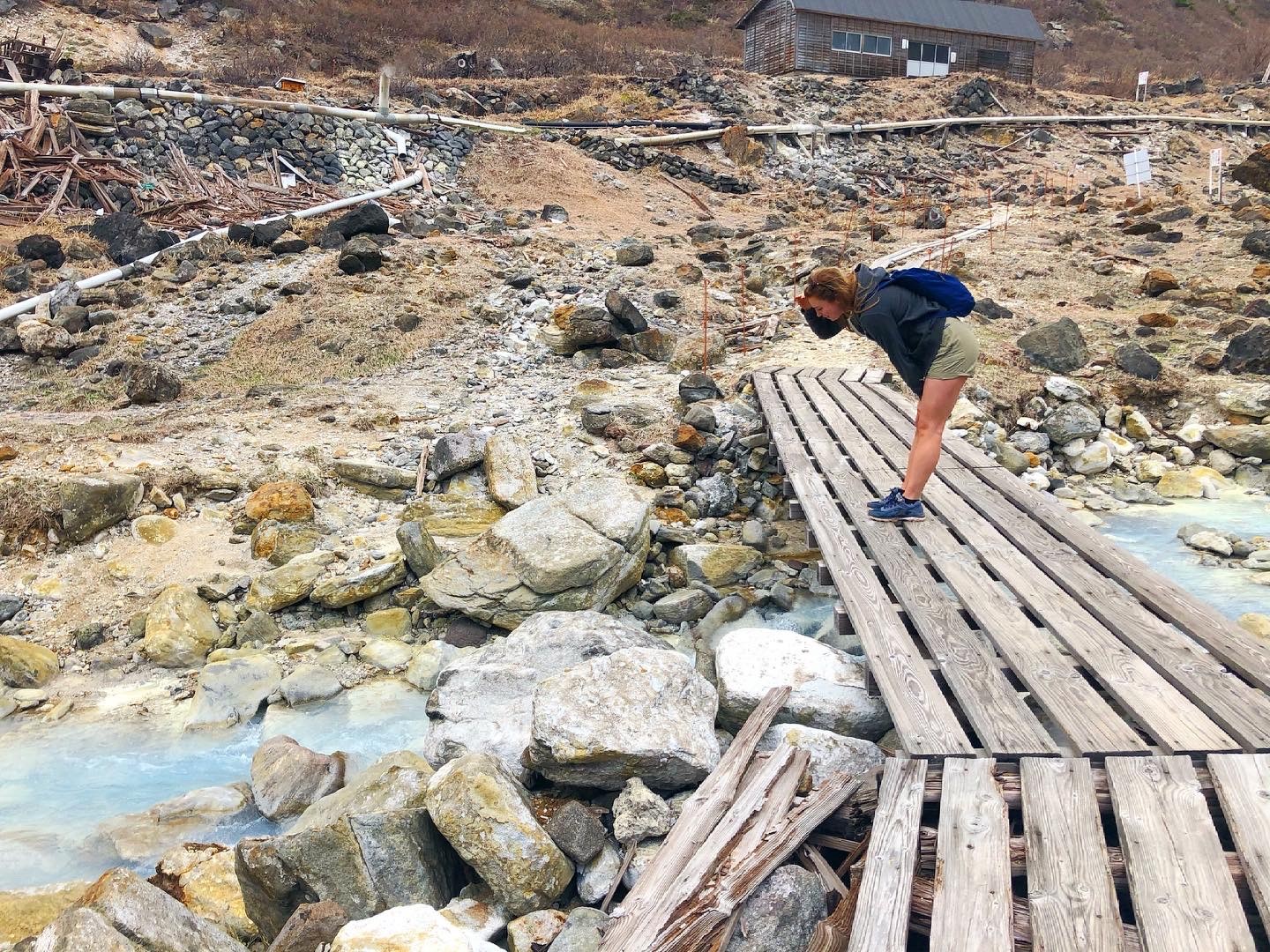
A river of warmth

The blue river of onsen water contrasted sharply with the warm tones of the volcanic landscape; it felt like we had discovered water on Mars. It was amazing how warm the water stayed despite being so exposed to the cool spring air. Wooden channels split off from the river - this onsen water flows through these to underground pipes and fills the baths at eleven different onsen hotels nearby, where it can be enjoyed by guests who want to experience the health benefits without the need to go hiking.  
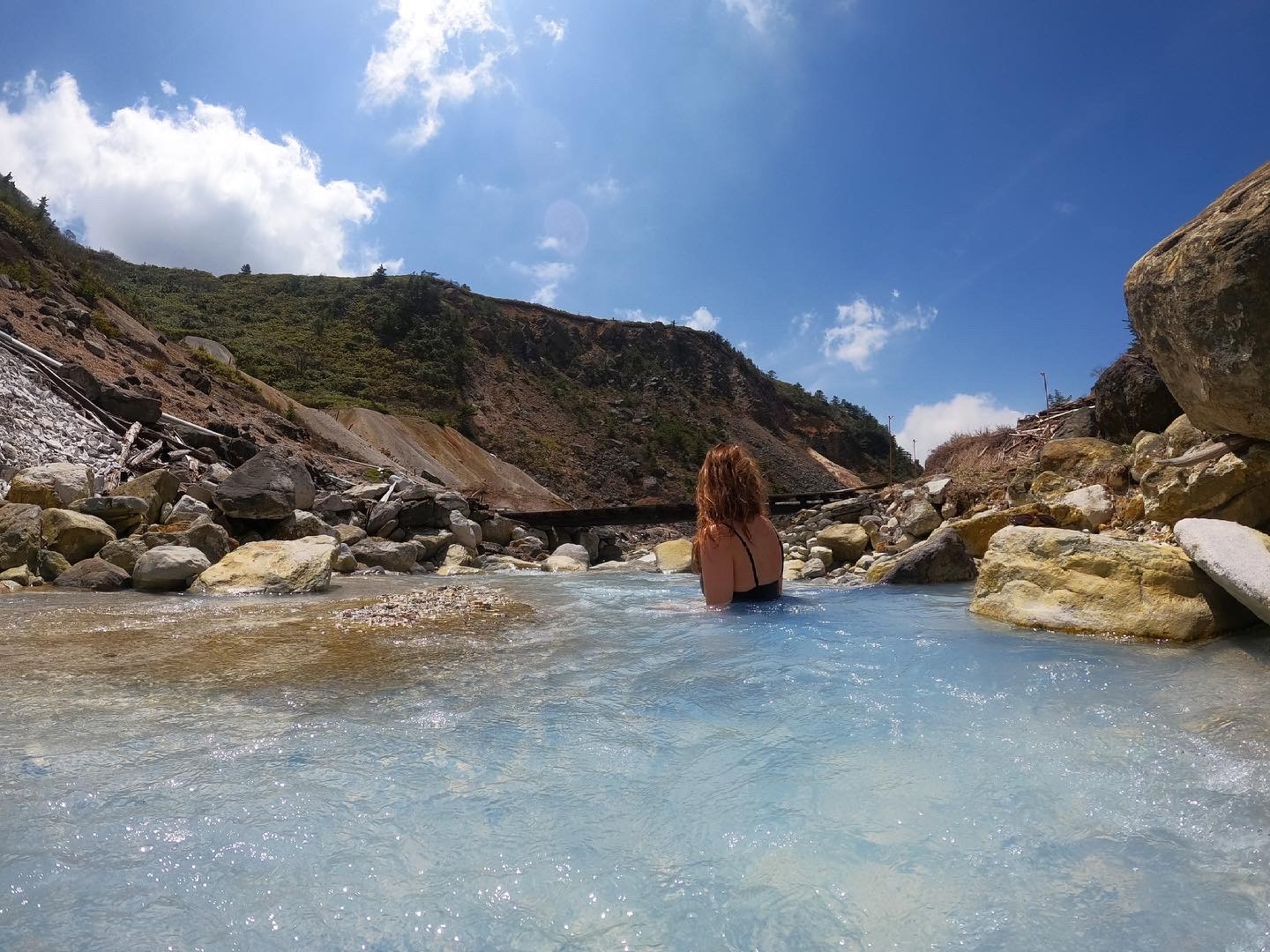
Bathing

Bathing in the onsen water is thought to have medicinal benefits. The water has a pH of 2.1 that is comparable to lemons! It is unique in Japan as the largest amount of hot spring water to come from one source, the “Numajiri Motoyu”. So if you choose to visit, I hope you will bathe in the water here and experience the refreshing effects of this onsen! 
Disclaimer:

We cannot provide the exact trail information for this hike due to the dangerous nature of poisonous volcanic gases in the area, which have been fatal to some hikers. You may find information about the trail online, likely referencing a different version of the trail that is illegal, and crosses over protected land. In order to experience this beautiful and unique environment in a safe and respectful way, we encourage visitors to hire guides or visit as a part of tours that include guides. Unfortunately, some have chosen not to hire a guide, resulting in a number of casualties on the mountain. Please help us to avoid further tragedies and do not attempt this hike without an experienced guide or encourage others to do so. Thank you for your cooperation.

Taxi Service

There are reservable taxis available to take you from Fukushima Station to the meeting point at 'cafe&activity nowhere'. The price is 33,100 yen (overall) for trips of 1-3 people, and 49,900 yen for a larger taxi carrying 4-8 people. Taxis will be dispatched one hour prior to the start of the tour, and will pick you up from the cafe after the hike is complete. Please be aware that reserved taxis do not depart from the regular taxi rank but slightly to the right (when facing the taxi rank) at a specific pick-up spot for guests with reservations.

Ready to take the plunge? The Extreme Onsen experience is available here


Latest posts

  1. Destination Spotlight

    7 Things to Do in Iwaki City

    One of Fukushima Prefecture's largest cities, Iwaki is located in the south-east of the prefecture and is one of its warmest areas, seeing no snow in winter and great beach-going weather in summer.The city is known for its laid-back coastal atmosphere, contrasting with the rich samurai history and chilly winters in the Aizu region to the west, and is a great example of the width of experiences on offer in Fukushima.Only three hours from Tokyo Station via the direct Hitachi & Tokiwa limited express, or an hour's drive from Koriyama, Iwaki is surprisingly accessible. It's also possible to take the Joban Line from here to Futaba, site of Fukushima's great reconstruction efforts, or all the way up to Sendai.Here are some suggestions for must-visit spots if you're looking to make a stop in Fukushima's sunny seaside city:BentenjimaBentenjima Shrine stands on a small rocky island just off the coast of Iwaki City, set within a crescent-shaped cove facing the Pacific Ocean. The shrine is marked by a vermilion torii gate that contrasts sharply with the jagged stone and crashing waves below. According to local tradition, the shrine was originally located on the mainland, but a major earthquake in 1410 caused the land to break apart, leaving the shrine isolated on what is now Bentenjima. Although the exact date of the shrine’s founding is unknown, it has long been worshipped as a sacred coastal site dedicated to Benzaiten, a deity associated with water and protection.The island is also known as Wanigafuchi, named after a legendary creature called a wanizame, said to be half crocodile and half shark. Folklore describes the creature as the cause of the swirling currents and rough seas around the island, and one legend tells of it abducting a young woman who wandered too close. Such stories reflect the fear and respect once held for this dangerous stretch of coastline.The shore around Bentenjima is covered with small, rounded pebbles , which visitors are warned not to take home, as legend says doing so will bring eye disease.Shiramizu Amidado TempleShiramizu Amidado, also known as the Amitabha Hall, is located in Iwaki City and is a rare surviving example of late Heian period religious architecture. The hall reflects Pure Land Buddhist beliefs that were widespread at the time, and is the only building in Fukushima Prefecture designated as a National Treasure. In front of the hall lies a Jodo-style garden designed to represent the Buddhist Pure Land. The garden is centered around a pond with a small island and carefully placed stones, creating a calm, balanced landscape meant to be viewed from the hall. The garden changes noticeably with the seasons, such as when lotus flowers bloom across the pond in summer, or most famously when maple and ginkgo trees flush red in autumn.In November, the temple grounds are illuminated in the evening, typically on the last two weekends of the month, offering a stunning view of the red leaves reflected in the pond waters. This combination of historic architecture, religious art, and carefully designed landscape makes Shiramizu Amidado an important cultural and historical site, and easily accessible from central Iwaki.Aquamarine FukushimaAquamarine Fukushima is an environmental aquarium designed to showcase marine life in settings that closely resemble natural habitats. In addition to its public exhibits, the facility also functions as a research and education center, providing information on marine ecosystems, sustainability, and conservation. This dual role makes it both a place for learning and a space for observation.The aquarium’s main feature is a pair of large tanks spanning from the second to the fourth floors, recreating Shiome no Umi, the offshore waters where the Kuroshio and Oyashio currents meet. This unique environment supports a wide range of marine species, including large schools of sardines and bonito. There is also a touch pool where visitors can interact with starfish and other small sea creatures.One of the aquarium’s research highlights is its long-running study of coelacanths, with specimens and footage displayed in the 'World of Coelacanths' exhibit on the first floor.Seasonal events and hands-on activities are held throughout the year, many aimed at families. Nearby, Iwaki Lalamew offers a seafood market and restaurants serving locally caught fish, located about a ten-minute walk from the aquarium. There is also an Aeon Mall nearby.Bicycle tour with Hayate CycleThe Iwaki Nanahama Kaido cycling route carries visitors down the scenic east coast, past the Bentenjima island and the symbolic Shioyasaki Lighthouse. If you're looking to rent bikes to do the trip, why not make a stop to Hayate Cycle? The bike rental shop is located next to the Iwaki Yotsukura 'michi no eki' or rest station, which has a restaurant and sells souvenirs.Kimura-san, the owner, is a sunny and easy-going local of the Iwaki area and cycling enthusiast who loves showing people around the area. In addition to renting out bicycles -- among them electric bikes and tandem bikes -- he also acts as a tour guide, taking you to some of the best scenic spots.To learn more about the cycling tour, see our dedicated page.Iwaki City Coal & Fossil Museum (Horuru)Iwaki City Coal & Fossil Museum, affectionately known as 'Horuru,' introduces visitors to both the coal-mining history of Iwaki and the region’s rich fossil record. The museum opened in 1984 to preserve the legacy of the Joban Coalfield, once one of Honshu’s major coal-producing areas. At the entrance stands a life-sized replica of Futabasaurus suzukii, a marine reptile discovered in Iwaki in 1968 by a local high school student. This fossil has since become one of the most important paleontological finds in Japan.Inside, the museum is divided into several themed areas. The fossil exhibition rooms display specimens from Iwaki and beyond, including plesiosaurs and ancient whales, with lighting and sound used to explain their environments and evolution. A recreated underground coal mine allows visitors to walk through a tunnel and learn how miners worked and how extraction techniques changed over time. The learning and specimen areas also explain the geology of the region and how coal and fossils were formed.Horuru also looks at everyday life in mining communities. Dioramas and displays recreate streets and homes from the early to mid-20th century, showing how coal mining shaped local culture and livelihoods. Hands-on activities, such as making amber or fossil-themed accessories, are offered on certain days, and the museum shop sells minerals, fossils, and souvenirs.The museum is also a short walk from our next spot...Yumoto OnsenIwaki's Yumoto Onsen is widely regarded as one of the oldest hot spring resorts in Japan, often mentioned alongside Dogo Onsen in Ehime and Arima Onsen in Hyogo. Its history is said to date back around 1,000 years, when hot spring water was first used in the area. The onsen developed in connection with the aforementioned Joban Coalfield, as miners made use of the naturally heated water that flowed underground. Today, hot spring water is pumped throughout the town to hotels and ryokan at an impressive rate of around five tonnes per minute, supporting a compact but well-established onsen community.The spring water at Iwaki Yumoto is a sulfur-based onsen, known for its distinctive scent and its reputation for skin care. It's said to help with fatigue, muscle pain, and circulation, as well as having skin-beautifying properties. Public day-trip bathhouses and free footbaths are scattered around the town, making it easy for visitors to casually experience the hot springs even without staying overnight.A short distance from the onsen town is Miyukiyama Park, a popular green space overlooking the city. In spring, the park becomes a local cherry blossom spot, with rows of trees lining the paths and open areas suitable for hanami picnics. From the higher points of the park, visitors can enjoy views over Iwaki while walking beneath the blossoms. A stroll through Miyukiyama Park combines well with a soak in one of Yumoto Onsen's many hot springs!Ogawasuwa ShrineSpeaking of cherry blossoms, one of Fukushima Prefecture's earliest-blooming sakura spots is here at Ogawasuwa Shrine. Although the rows of massive cherry trees are beautiful in daytime, the nighttime illuminations are especially impressive.Selected by Iwaki City as a Natural Monument, the main tree is estimated to be over 500 years old and is one of the area’s most important seasonal landmarks. The tree blooms slightly earlier than standard Yoshino cherry trees, usually reaching its peak in late March to early April.Bear in mind that, as a popular viewing spot, the shrine grounds are particularly busy during cherry blossom season, especially in the evenings or on weekends. Some parking is available, but waiting times can be long during busy times.Looking for more information? Check out our: Top 10 Things to Do in Fukushima Access guide for getting to Fukushima Itineraries page for trip ideas Activities page for tour experiences with English support

    7 Things to Do in Iwaki City
  2. Useful Information

    5 Hidden Autumn Colour Spots in Fukushima

    Fukushima Prefecture is famous for its striking autumn scenery, the mountainsides and parks across the prefecture turning vibrant shades of golds, reds, oranges, greens and browns throughout late October, November and into early December.Make sure to check out our guide to 10 famous spots, as well as our Google Maps list of every major autumn leaves area in the prefecture. But here are our top five lesser-known gems that are worth a visit this year:1. Suzumigaoka Hachiman Shrine, Soma CityLocated at the end of a road with parallel rows of cherry trees, Suzumigaoka Hachiman Shrine is a popular spot among locals in both spring's blossom season, and again in autumn. The gingko beside the main worship hall turns a vibrant yellow, and leaves cascade across the shrine grounds.All of the buildings on site are designated as Important Cultural Properties of Japan, and even in autumn colour season, the shrine grounds have a calming, ethereal atmosphere. It was once known as 'Soma Nikko', calling to mind the splendour of the Nikko shrine complexes in Tochigi Prefecture.Best viewing time: Late November to early DecemberAutumn is one of the best times to visit the Soma region, an area affected by the 2011 disaster but rich in natural beauty. Consider pairing your visit with a trip to nearby Baryo Park and its Soma Nakamura Shrine for more autumnal scenery.2. Isasumi Shrine, Aizu-MisatoA beautiful shrine complex with a lot to offer, Isasumi Shrine makes for a worthwhile visit during a trip to the Aizu region. The shrine grounds are beautiful in autumn, when yellow leaves can be seen throughout, and there's a park where visitors can walk through rows of vermilion torii gates and feed the ducks. (Ask at the nearby kiosk for bread!)Isasumi Shrine is a well-loved spot among Aizu locals. Once upon a time it was named a 'Daijingu' or 'Great Shrine', said to enshrine the guardian deity of the Aizu region, and was well-looked-after by the great warlords who ruled here throughout history.Best viewing time: Early to mid NovemberVisiting the storied old city of Aizu-Wakamatsu? Learn more about its samurai heritage by touring some of its major historical sites.3. Shirahata Gingko, Shinchi TownSometimes called the 'upside down gingko', this massive tree was the subject of an urban myth that Masamune Date, the notorious warlord, planted a riding crop here upside down that later became this tree. The beautiful yellows of the Shirahata Gingko -- which typically reach their pinnacle in early December -- can be seen from quite a distance and contrast beautifully with the striking red torii gate at its base.Best viewing time: Late November to early DecemberFukushima has some of the most impressive gingko trees in all of Japan, with most sites hosting night-time illuminations during autumn colour season. Consider visiting Fukushima City's Azuma Sports Park with its rows of parallel trees, the Great Gingko of Akai in Aizu for its sheer scale, or Shingu Kumano Shrine in Kitakata with its legendary wooden pavilion.4. Kuimaru Elementary School, Showa VillageAlthough no longer a real elementary school day-to-day, this old wooden building was built in 1937 and still stands in Showa Village, these days as a tourism and local community centre. It's most popular in autumn for the massive gingko tree that dominates the front of the building. The interior has a quaint, homely atmosphere thanks to its all-wooden construction and Showa era design, and visitors can take photos sat at the desks, while looking out at the tree through the window.Most years there are night illuminations of the tree, but please be aware the 2025 edition has been cancelled due to repeated bear sightings in the area.Best viewing time: Mid October to Early November5. Hanitsu Shrine, InawashiroIn the heartland of the stunning Inawashiro lake region, Hanitsu Shrine is located a few hundred metres south of the ski fields at Inawashiro Ski Resort. The shrine is famous not only for its gorgeous autumn colours caused by 16 large maple trees, but also for its great white torii gate that greets visitors at the front of the shrine. Patterned artisanal parasols line the stairs here, making it a picturesque location popular for families and couples taking photos.Walking up past the main shrine building takes visitors into the woodlands behind the main grounds, where cobblestone paths lead to the site where Lord Hoshina Masayuki, founder of the powerful Aizu clan of samurai, is buried.During autumn colour season, the shrine can get a little busier, and temporary car parking areas are installed. Please follow the instructions of staff. Illuminations take place from 5pm to 9pm.Best viewing time: Late October - mid NovemberLooking for more information? Check out our: Guide of Top Things to Do in Fukushima Access guide for getting to Fukushima Itineraries page for trip ideas Activities page for tour experiences with English support

    5 Hidden Autumn Colour Spots in Fukushima
  3. Destination Spotlight

    5 Things to Do in Kitakata

    Located just 15 minutes north of the historic city of Aizu-Wakamatsu, Kitakata is a charming area with a rich history, most notable for its traditional quarter and seasonal nature spots.If you’re visiting Kitakata, be it for cherry blossoms, the green season, or autumn colours, this is a great chance to explore one of Japan’s great ‘ramen cities’, with over 100 restaurants serving the famous Kitakata ramen.Here are some ideas for things to do:Wander the old townDuring the Meiji and Taisho eras, Kitakata experienced a construction boom, leaving behind an impressive legacy of around 4,200 kura warehouses still standing today. These buildings were originally used by brewing and lacquerware industries, but they also symbolized wealth and pride for local families. Building a kura was seen as a mark of success and remains deeply tied to Kitakata’s cultural identity.Different districts showcase unique designs. If you’re keen to learn more, the visitor’s centre Kitakata Kura no Sato offers a preserved collection of kura and other traditional architecture within a 4,500-square-metre site. Ten restored buildings include warehouses for miso, grains, shops, and even residences, as well as houses of former local officials.These kura now serve as exhibition spaces, displaying everything from Aizu dye stencils and historic photographs to stories of local figures and movements from the Meiji era. Wandering from warehouse to warehouse is a great way to immerse yourself in traditional Japanese culture.Nicchusen Weeping Cherry BlossomsThe Nicchusen cherry blossoms offer one of Fukushima’s most memorable springtime experiences. The trees line a three-kilometre stretch of the former Nicchu Line railway, which once connected Kitakata with Atsushio Onsen. Today, the old tracks have been transformed into a walking and cycling path that comes alive with thousands of cherry blossoms, creating a tunnel of pink and white each spring. Blooming typically coincides with Golden Week in late April to early May.An old steam locomotive remains on display midway along the path, providing a nostalgic backdrop framed by blossoms. On clear days, you can even make out the silhouette of Mt. Bandai to the east.With different varieties of cherry trees, each section offers unique views and photo opportunities. Despite its popularity, the path is so long that there are still plenty of places to stop and relax, and food stalls are usually abundant during blooming season.Sannokura Plateau Sunflower Fields & Ski ResortIn summer, the ski slopes of Sannokura Plateau are transformed into expansive fields of sunflowers. Around 1.5 million flowers bloom across 5.4 hectares of land, divided into three main areas that flower at slightly different times. This staggered blooming means visitors can enjoy the fields from early August through early September. The view stretches across the Aizu Basin, giving the fields a broad and open backdrop.The site is also known for its canola flowers, which bloom between March and June. The yellow blossoms spread across the same slopes, offering another seasonal landscape before the sunflowers appear. Signs at the entrance provide guidance on the best viewpoints and current blooming conditions, while wooden observation decks on the west and south hillsides give elevated perspectives over the fields.In winter, the area reopens as a ski resort, hosting evening sessions for beginners and intermediate skiers.Shingu Kumano ShrineAt the heart of Shingu Kumano Shrine stands an 800-year-old ginkgo tree, rising 30 metres high with roots over eight metres around. Designated a Natural Monument of Kitakata City, the tree is the site’s most striking feature. Each autumn, its leaves turn a vivid yellow, covering the shrine grounds in a golden carpet. In November, evening illuminations draw visitors from all over Tohoku.Behind the ginkgo is the Nagatoko, or ‘long floor,’ a large thatched-roof worship hall built between the Heian and Kamakura periods. Supported by 44 pillars and open on all sides, it was historically used for ascetic training and kagura dance rituals. The hall has been designated a National Important Cultural Property.The shrine also preserves treasures such as a copper pot once used for offerings, Buddhist statues, and guardian figures, many of which are displayed in the treasure hall.Savour Kitakata ramenKitakata ramen is one of Japan’s ‘big three’ ramen styles, alongside Sapporo and Hakata, and for many people is one of the highlights of visiting the area. Known for its soy sauce-based broth and thick, chewy noodles with a high water content, the style originated at Genraiken in 1927, when Ban Kinsei, a Chinese immigrant, began selling noodles based on his own recipe. He later opened a shop and shared his methods freely, helping spread the dish across the city.Today, Kitakata has the highest number of ramen shops per capita in Japan. Local eateries often open as early as 7 a.m., serving bowls to factory workers, farmers, and travellers. Among the most famous are Genraiken, Makoto Shokudō, and Bannai Shokudō, each offering slightly different variations, from soy sauce-based soups to salty broths topped with generous slices of chashu pork.The long tradition of soy sauce brewing here, and access to clear mountain water, also shapes the flavor of the ramen. Local pride and the work of ramen associations has helped establish Kitakata as a must-visit ramen destination.Kitakata’s ramen shops are as much a cultural experience as a meal, reflecting Kitakata’s history, resources, and community spirit.One of several bars at Aizu HomareTour a sake breweryA trip to Kitakata wouldn’t be complete without a visit to a sake brewery. Two potential options are Yamatogawa and Aizu Homare, both of which have long histories and welcome visitors for tastings and tours.Yamatogawa Brewery, founded in 1790, uses pure mountain water from Mt. Iide and high-quality rice grown on its own fields and by local farmers. The interior features a museum telling visitors about its long history. Next to the brewery, the Northern Museum displays Edo-era earthen storehouses and explains how sake production has evolved. Tours and tastings are free, and the museum is open daily from 9:00 to 16:30.Aizu Homare Brewery, established in 1918, is known for its award-winning sake and also benefits from soft spring water from Mt. Iide. Visitors can take guided tours, watch a video on sake making, and sample over 10 varieties of sake, liqueur, and shochu. The brewery grounds include a large Japanese garden, overlooked by a tatami room where guests can sit, enjoy sake, and take in the seasonal scenery.Looking for more information? Check out our: Access guide for getting to Fukushima Itineraries page for trip ideas Activities page for tour experiences with English support

    5 Things to Do in Kitakata
Top