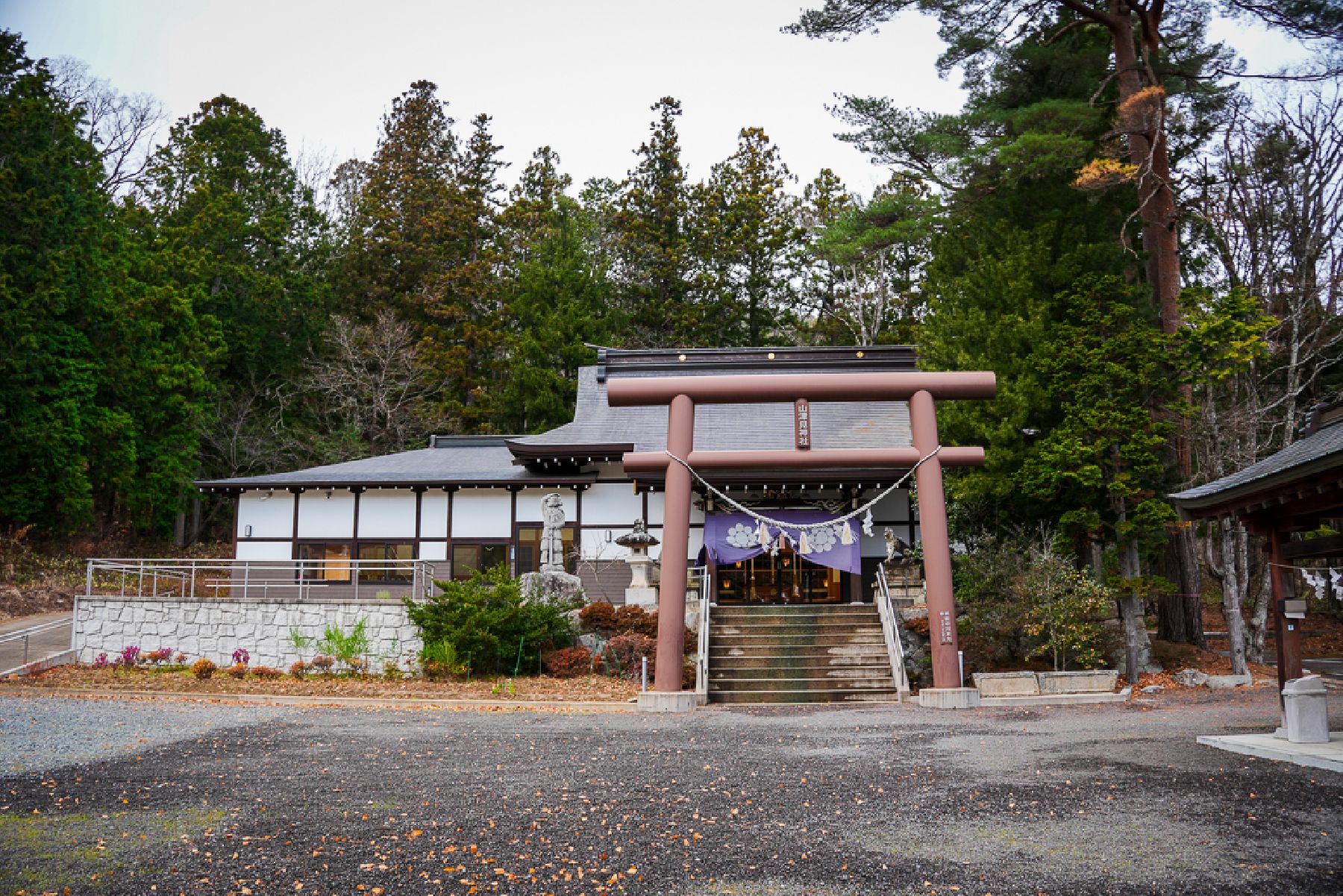
Iitate Reconstruction Three Thousand Cherry Trees

Iitate Reconstruction Three Thousand Cherry Trees

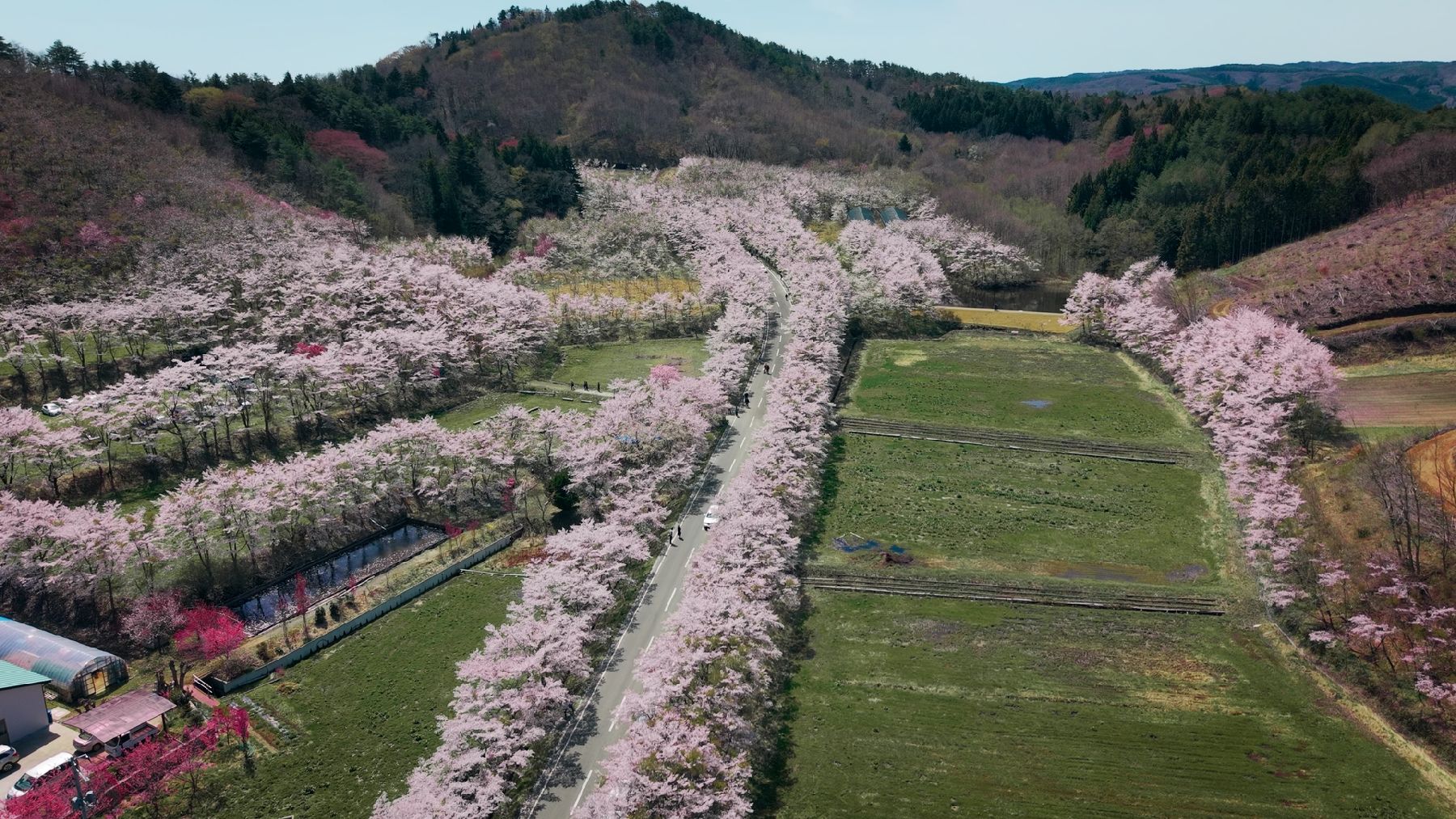
The Iitate Reconstruction Three Thousand Cherry Trees began as a private planting project in 1998, when a local couple started growing cherry trees on former farmland. Over time, the number of trees gradually increased, with the help of locals, so that the grounds now feature cherry blossoms as far as the eye can see every April.

Following the 2011 disaster, Iitate Village was evacuated, but the couple still returned periodically to look after the trees. From around 2013, the area became a focus for volunteers helping with things like cleaning and pruning, and the project became something of a symbol of Iitate's reconstruction. Nowadays, the site is a great example of how far Fukushima has come in the years since the earthquake.

Venue Details

Venue Details
Websitehttps://www.iitate3000sakura.com/(Japanese)
Best Season
  • Spring
Related infoCar parking: Parking is available on-site in nearby grassy and gravel areas. Please be careful when parking as the ground may become muddy and slick after rain.
Access Details
AccessSasanosawa-153 Itamizawa, Iitate, Soma District, Fukushima 960-1803
View directions
Getting there

By Car: 50mins from Fukushima Station

Nearby

The World Glassware Hall
History & Culture

Daihisan Stone Buddhas (Daihisan no Sekibutsu)

Estimated to have been carved over 1,000 years ago, the Daihisan Stone Buddhas (大悲山の石仏) are a group of stone-carved Buddhas in Odaka, Minamisoma City, in the coastal area of Fukushima prefecture.The Daihisan Stone Buddhas are made up of three groups of statues: the Yakushido Buddhas (薬師堂石仏), the Amidado Buddha (阿弥陀堂石仏), and the Kannondo Buddha (観音堂石仏). The statues are enshrined in a forest area with many smaller Buddha statues.They are the biggest and oldest stone Buddha statues in the Tohoku area of Japan, and have been designated as a National Historical Site. Their origins, and much of their history, however, remain unknown, although they are presumed to have been built sometime during the Heian period of Japanese history, which goes from 794 to 1185.In front of the entrance to the Yakushido Buddhas is a 45 meter high cedar tree known as Daihisan’s Giant Japanese Cedar Tree. The tree has a circumference of 8.4 meters at eye level, and is one of the largest trees in Fukushima prefecture, also estimated to be over 1,000 years old. It is designated as a Natural Monument of Fukushima Prefecture.

The World Glassware Hall
Gourmet & Shopping

Iwaki Lalamew

At Iwaki's Tourism and Products Center, visitors can purchase products and specialties from Iwaki as well as enjoy eating local produce. The Tourism and Products Center also introduces visitors to Iwaki City's local history and culture.The Lalamew complex includes 7 fish shops, 15 gift shops, and 12 eating and drinking establishments. The fish shops have the feel of an open-air market, and visitors can bargain for seafood direct from the port.Please enjoy dining in the establishments that present to you an abundance of seasonal seafood.

The World Glassware Hall
Gourmet & Shopping

Full House Book Cafe

Full House is a stylish bookstore and cafe run by the critically-acclaimed novelist Yu Miri. It is located near the JR Odaka Station in Minamisoma City, in the coastal area of Fukushima prefecture.Full House is located on the ground floor of a refurbished house. The interior is wooden and elegant, and there is a selection of books in Japanese chosen by the author. The cafe serves meals like pasta and doria, as well as desserts and drinks with seasonal options.Yu Miri is famously known for her novel Tokyo Ueno Station (translated into English by Morgan Giles), which won the U.S. National Book Award in the Translated Literature category in 2019.Following 3.11, Ms. Miri has worked extensively to communicate the stories of residents of evacuated towns and villages in Fukushima’s coastal area, and has been living in Minamisoma City since 2015.When Ms. Miri moved to Minamisoma, there were no other bookstores open in the area —the few bookstores that had been there before 3.11 had closed following the evacuation—, so she decided to open her own in 2018, and named it ‘Full House’ after one of her novels.But something was missing. She quickly realized that people who traveled all the way to visit the store wanted to sit down with a warm drink, and there weren’t many restaurants or cafes nearby yet, so she decided to turn Full House into a book cafe the following year.Today, Full House is a lively and cozy hub where locals and visitors can bond over their love of coffee and literature.

The World Glassware Hall
History & Culture

Hattachi-Yakushi Temple

In the year 806, the holy priest Tokuichi constructed Hattachi-Yakushi Temple as a place of worship for the Buddhist deity who has the ability to ensure the safe voyage of seafarers. The temple grounds are extremely beautiful in spring when the hydrangeas bloom, earning the temple the local nickname ‘Hydrangea Temple’. In front of Hattachi-Yakushi Temple is Bentenjima Island and Shrine, and the Hattachi Coastline, which connects the mainland with the island. The Hattachi Coast is covered in unique gravel, which has traditionally been thought to have healing properties. However, removing a stone and bringing it home can have the opposite effect.

You might also like

Matsugaoka Park
Nature & Scenery

Matsugaoka Park

Matsugaoka Park is one of the oldest public parks in Iwaki, with origins going back to 1907. It was first developed around a large reservoir that doubled as a fire prevention water source. Rather than being designed as a purely ornamental space, the park grew gradually with plantings of cherry, plum, and azalea trees. That starting point still shapes the layout today, with the central pond acting as a focal point.Within the park grounds stands a statue of Andō Nobumasa, a former lord of the Taira domain, reflecting the area’s connection to the old castle town.The park is best known for its cherry blossoms in spring. Around 200 Somei Yoshino cherry trees typically flower early compared to other spots in Iwaki, making it one of the first places locals associate with the start of hanami season. The azaleas - around 340 bushes, some originally transplanted from a former samurai residence in Tokyo - add a second wave of color slightly later. During peak bloom, the area is popular with groups and families, with food stalls set up around the park.Covering roughly 37,000 square meters, Matsugaoka functions as a neighborhood park with everyday amenities: benches, a small playground, walking paths, and a modest pond.

Top