Michi-no-Eki Madeikan (Roadside Station)

Michi-no-Eki Madeikan (Roadside Station)

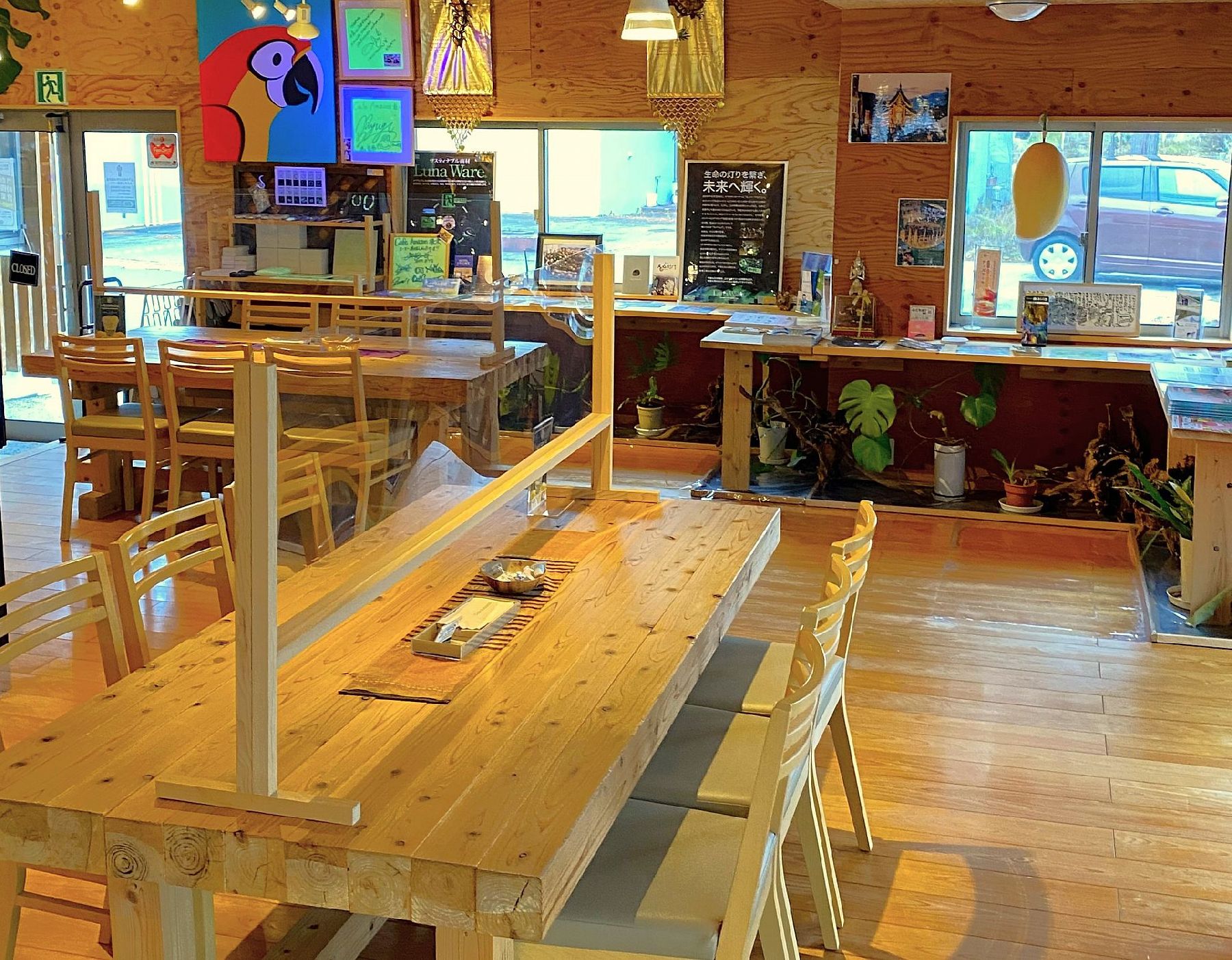
Madeikan is an excellent stopping point when heading east to the Soma region thanks to its clean, modern design and array of services. Like many roadside stations, it is outfitted with two restaurants in a food court style where dishes are bought using nearby ticket machines. There is a good-sized market selling local produce, as well as a souvenir shop selling goods and crafts.

The term 'madei' is a local term that depicts the slow and thoughtful way of life in Iitate Village. As such, the roadside station is intended as a place where people can unwind and take their time.

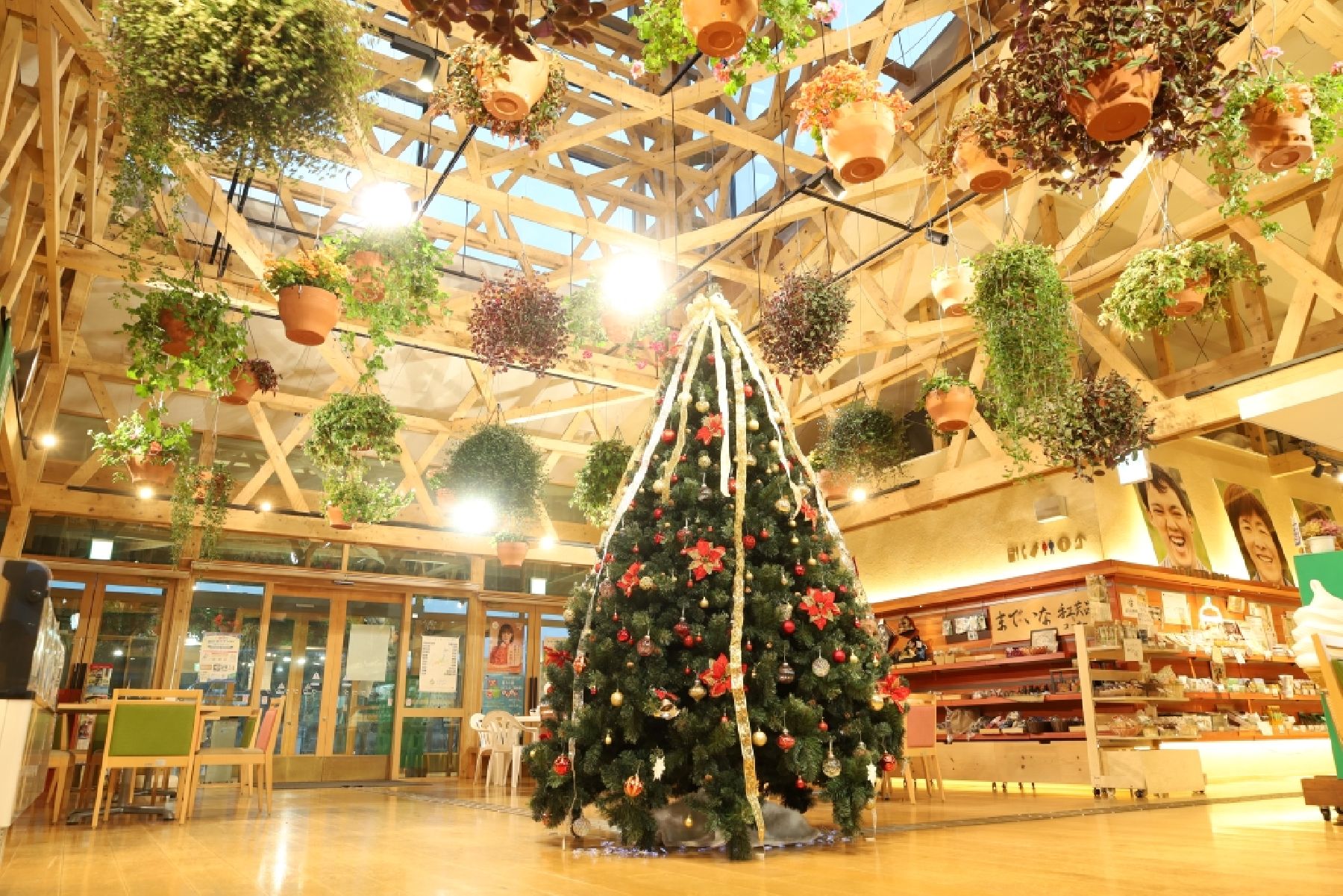
When you enter the main hall of Madeikan, you're greeted by a stunning display of hanging flowers in the rafters - growing these flowers is the main industry of the village and a source of pride. The display changes season to season, meaning you're likely to see a different arrangement every time you visit.

The service station is popular in summer time, when nearby sunflower fields are in full bloom, then again in winter time for its Christmas illuminations, which take place in the park behind the main building. Lights are usually turned on around 4:30pm, when it begins to get dark.

Venue Details

Venue Details
Websitehttps://madeikan.com/english-guide/
Best SeasonAll Year
Opening Hours

09:30 - 17:00

Closed on Wednesdays

ParkingFree
Access Details
Access960-1802 Fukushima, Soma District, Iitate, Fukaya, Fukaya, 前12-1
View directions
Getting there

By Car: 50 min drive from Fukushima Station

(Suitable stopping point for visiting Yamatsumi Shrine or attractions in Soma)

Nearby

The World Glassware Hall
History & Culture

Bentenjima

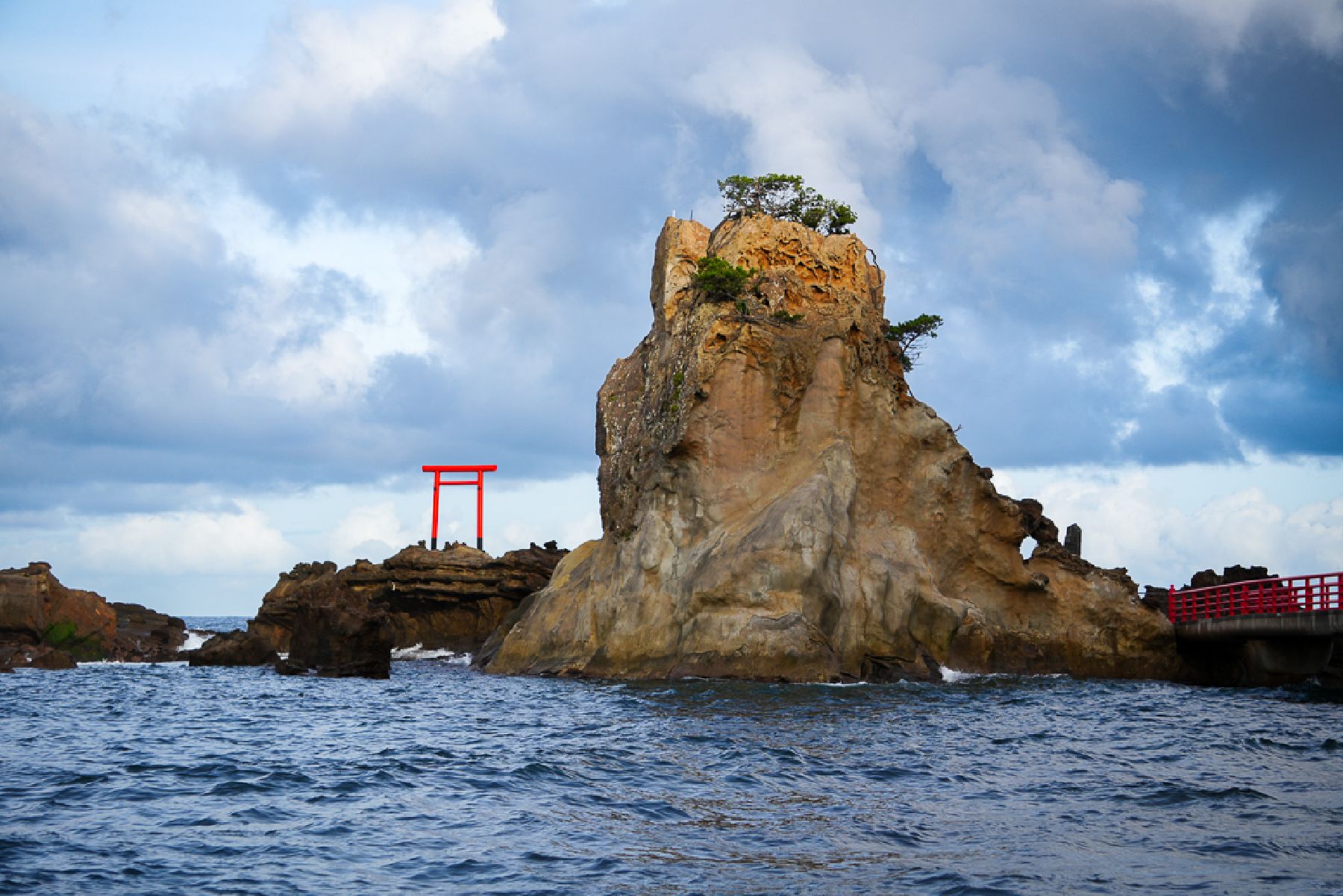
In a crescent shaped cove separated from the mainland on the small island known as Bentenjima Island, you will find the mysterious Bentenjima Shrine. The vermillion painted tori gate stands out against the jagged stone and the powerful waves. It is believed that the shrine was land based until an earthquake that occurred in 1410 resulted in the formation of this jagged rock island. The construction date of the original shrine is unknown. The island is also known as Wanigafuchi because, according to legend, a creature known as a “wanizame” (crocodile shark) lived on the island. Half crocodile, half shark, this creature can be seen in many old Japanese paintings. The creature may have been believed to cause the swirling water and violent waves that crashed against the rocks, sometimes resulting in people getting swept into the water. Another legend suggests that the wanizame once kidnapped a young woman from Iwaki who had wandered out to explore the island.This coast is lined with small round pebbles that shine when the water hits them. However, do not take any of these pebbles home, as legend says that anyone who takes pebbles home from this coast will suffer from eye disease. This area was once a very popular destination for tourists and the Iwaki city website linked below features many photos. Although the page is in Japanese, it's viewable using the translation function on web browsers.Hattachi-Yakushi Temple is located near the shrine and is worth visiting, but please do not park there while accessing Bentenjima as it is disrespectful to the temple monks and patrons.

The World Glassware Hall
History & Culture

Shiramizu Amidado Temple

Shiramizu Amidado Temple (Amitabha Hall) was constructed in 1160 by Princess Tokuhime of the Oushu Fujiwara clan, which built the "golden culture" in Oushu (the present Tohoku Region). It is the only building in Fukushima Prefecture that has been designated as a national treasure. Inside the hall stands a wooden statue of Amida Nyorai as well as a number of other Buddhist statues such as Kannon Bosatsu, Seishi Bosatsu, Jikoku Tenno, and Tamon Tenno.The garden, called Jodo Teien (Jodo, or "the pure land", is the Buddhist paradise) is a realm of natural beauty in every season. The scenery is especially breathtaking in summer when the lotus flowers are in bloom, prompting one famous writer to liken the garden to a mythical paradise.

The World Glassware Hall
Nature & Scenery

Nijuisseiki-no-Mori Park (21st Century Forest Park)

Stretching over more than 80 hectares, Nijuisseiki-no-Mori Park (二十一世紀の森公園) is a true haven for recreation; complete with a tennis court, a baseball stadium, a skateboard park, and a family sports garden, as well as a variety of flower fields, trees and shrubs.21st Century Forest Park is also a popular cherry blossom spot: it has both early-blooming Kawazu-sakura (which mostly bloom mid-February to mid-March) as well as Somei Yoshino cherry blossom trees (which typically bloom sometime between early to mid-April).During winter each year illumination events are held in the park, and, during autumn, the bright colored leaves attract plenty of visitors. During the summer, sunflowers and rapeseed flowers bloom, so the park truly offers ways to enjoy nature all year round.

The World Glassware Hall
Gourmet & Shopping

Full House Book Cafe

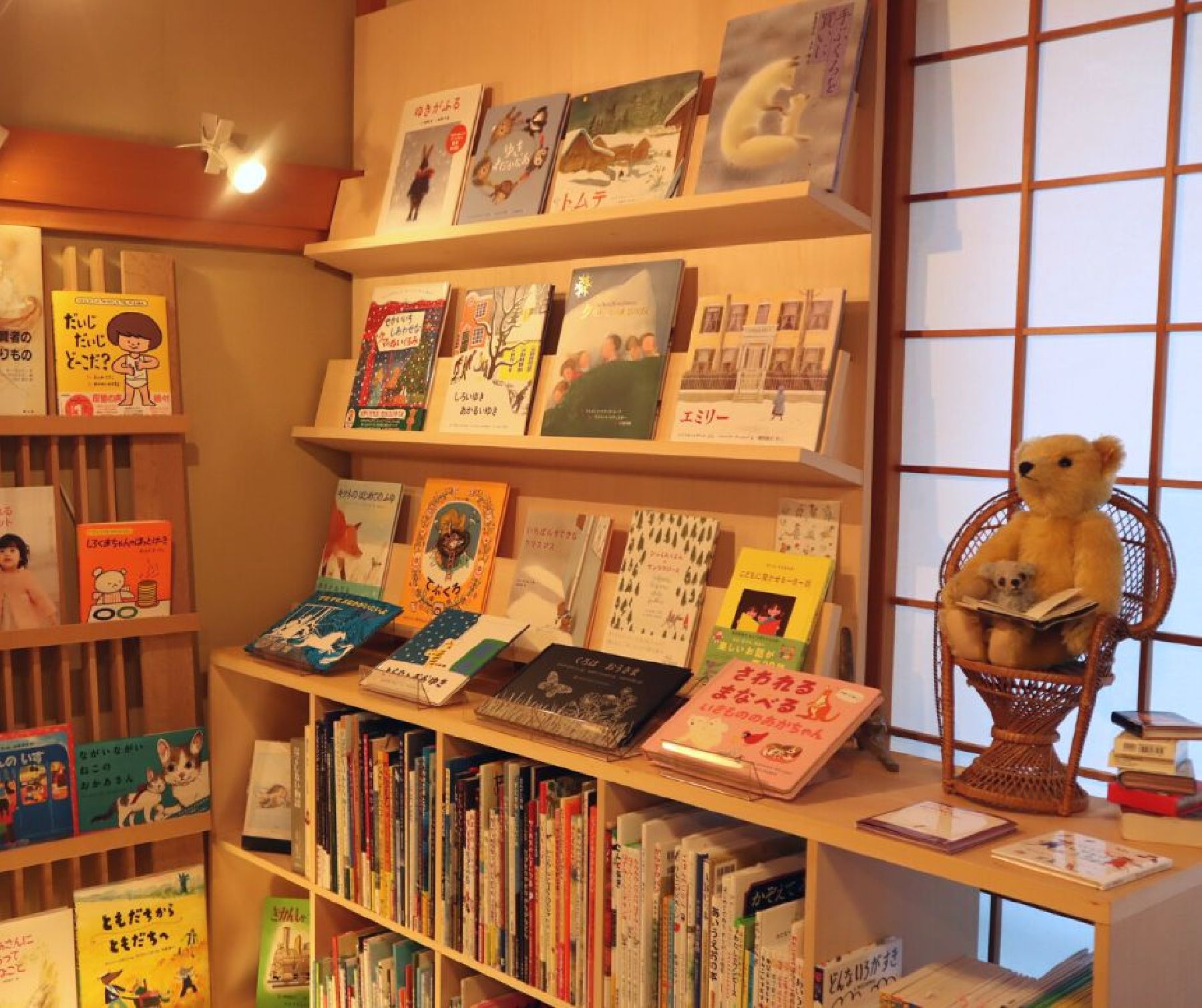
Full House is a stylish bookstore and cafe run by the critically-acclaimed novelist Yu Miri. It is located near the JR Odaka Station in Minamisoma City, in the coastal area of Fukushima prefecture.Full House is located on the ground floor of a refurbished house. The interior is wooden and elegant, and there is a selection of books in Japanese chosen by the author. The cafe serves meals like pasta and doria, as well as desserts and drinks with seasonal options.Yu Miri is famously known for her novel Tokyo Ueno Station (translated into English by Morgan Giles), which won the U.S. National Book Award in the Translated Literature category in 2019.Following 3.11, Ms. Miri has worked extensively to communicate the stories of residents of evacuated towns and villages in Fukushima’s coastal area, and has been living in Minamisoma City since 2015.When Ms. Miri moved to Minamisoma, there were no other bookstores open in the area —the few bookstores that had been there before 3.11 had closed following the evacuation—, so she decided to open her own in 2018, and named it ‘Full House’ after one of her novels.But something was missing. She quickly realized that people who traveled all the way to visit the store wanted to sit down with a warm drink, and there weren’t many restaurants or cafes nearby yet, so she decided to turn Full House into a book cafe the following year.Today, Full House is a lively and cozy hub where locals and visitors can bond over their love of coffee and literature.

You might also like

Iwaki Lalamew
Gourmet & Shopping

Iwaki Lalamew

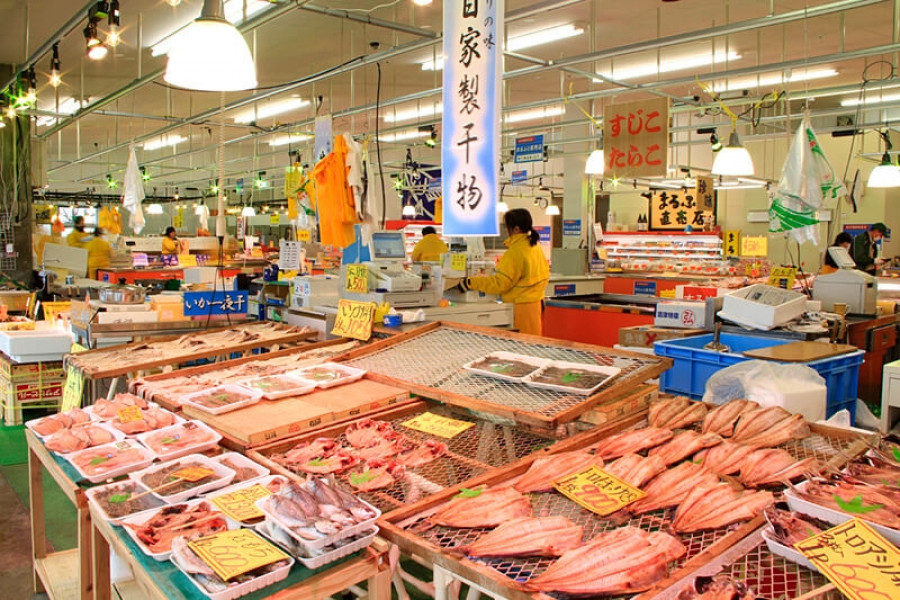
At Iwaki's Tourism and Products Center, visitors can purchase products and specialties from Iwaki as well as enjoy eating local produce. The Tourism and Products Center also introduces visitors to Iwaki City's local history and culture.The Lalamew complex includes 7 fish shops, 15 gift shops, and 12 eating and drinking establishments. The fish shops have the feel of an open-air market, and visitors can bargain for seafood direct from the port.Please enjoy dining in the establishments that present to you an abundance of seasonal seafood.

Sedette Kashima
Gourmet & Shopping

Sedette Kashima

Sedette Kashima [せでってかしま] is a service area in Minamisoma City, in the coastal area of Fukushima prefecture.The name of the facility derives from an expression in the local dialect, which could be roughly translated as “Bring me with you!”. At the entrance, the service area has life-size replicas of Soma Nomaoi participants riding horses, and monitors showing photos of the festival. There is a souvenir shop and a dining hall, places for drivers to rest, as well as a play area for children and a dog park.At Sedette Kashima, you’ll find plenty of local crafts, souvenirs and traditional items from Minamisoma.Sedette Kashima can be accessed using non-toll (local) roads. 

Full House Book Cafe
Gourmet & Shopping

Full House Book Cafe

Full House is a stylish bookstore and cafe run by the critically-acclaimed novelist Yu Miri. It is located near the JR Odaka Station in Minamisoma City, in the coastal area of Fukushima prefecture.Full House is located on the ground floor of a refurbished house. The interior is wooden and elegant, and there is a selection of books in Japanese chosen by the author. The cafe serves meals like pasta and doria, as well as desserts and drinks with seasonal options.Yu Miri is famously known for her novel Tokyo Ueno Station (translated into English by Morgan Giles), which won the U.S. National Book Award in the Translated Literature category in 2019.Following 3.11, Ms. Miri has worked extensively to communicate the stories of residents of evacuated towns and villages in Fukushima’s coastal area, and has been living in Minamisoma City since 2015.When Ms. Miri moved to Minamisoma, there were no other bookstores open in the area —the few bookstores that had been there before 3.11 had closed following the evacuation—, so she decided to open her own in 2018, and named it ‘Full House’ after one of her novels.But something was missing. She quickly realized that people who traveled all the way to visit the store wanted to sit down with a warm drink, and there weren’t many restaurants or cafes nearby yet, so she decided to turn Full House into a book cafe the following year.Today, Full House is a lively and cozy hub where locals and visitors can bond over their love of coffee and literature.

Top