Bandai Atami Onsen

Bandai Atami Onsen

It is said that Bandai Atami Onsen was founded about 800 years ago by Princess Hagi Hime, as the waters were thought to cure certain diseases.

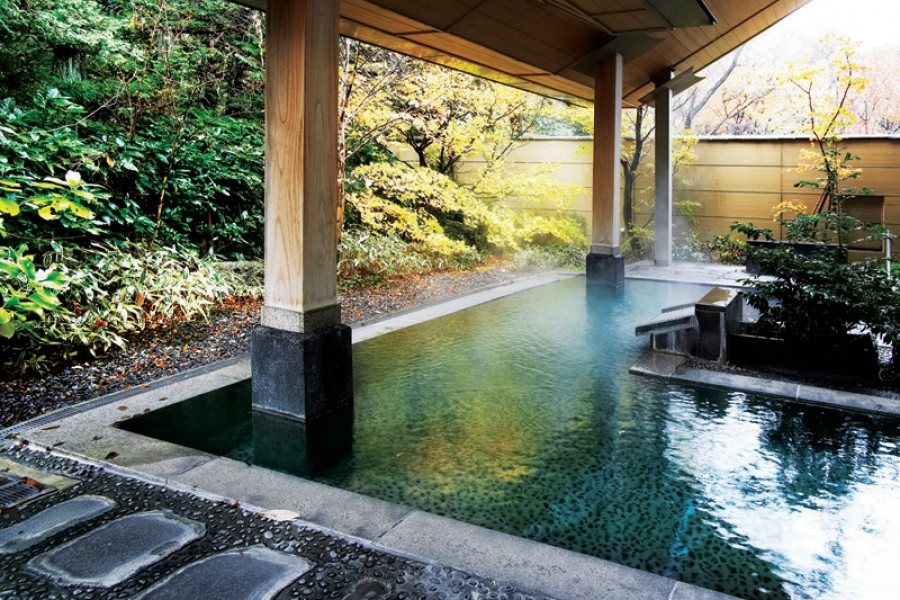
Now Bandai Atami Onsen has become famous in Japan as an onsen resort town with hot spring water that has beautifying effects. It is also well-known for the fantastic views bathers can enjoy of the Gohyakugawa River valley, which are visible from the town's open-air baths.

The soft and gentle quality of the spring water makes your skin amazingly smooth, so please lie back, relax and rest your body, and mind too.

Bandai Atami Onsen is popular as Koriyama’s go-to sanctuary for taking a break from the hustle and bustle of everyday life, and the charming ryokan of this town attract people heading for Bandai Kogen sightseeing spots as well as those in Aizu.

Venue Details

Venue Details
Websitehttp://www.bandaiatami.or.jp/lg/english.html
Contact

Bandai Atami Onsen Inns Corporative Association

(+81) 24-984-2625

Best SeasonAll Year
Accommodation details

Hot springs: Alkaline simple hot spring

Related infoAlkaline simple hot spring
Access Details
Access3 Atami, Atami Town, Fukushima Pref.
View directions
Getting there

In front of Bandai Atami Station (JR Ban-etsu West Line)

Nearby

The World Glassware Hall
Nature & Scenery

Jododaira Visitor Center

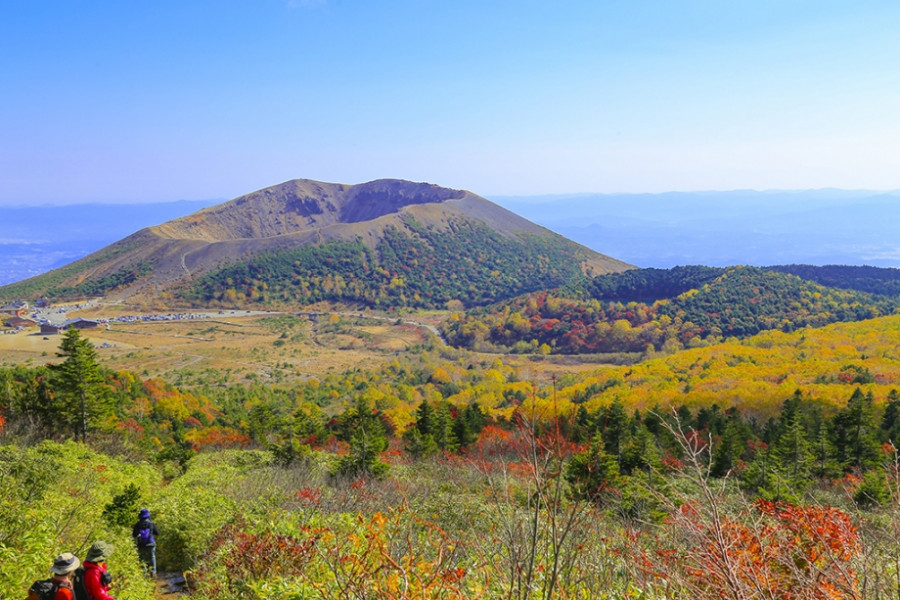
There is a special bus running from Fukushima Station to the Jododaira plateau while the mountain is open. Please visit the Jododaira Sky Access page for more details.Jododaira and the Bandai-Azuma Skyline mountain road are open from April 21, 2026.Jododaira Visitor Center, located at an altitude of 1500 m, stands partway along the Bandai-Azuma Skyline sightseeing road. Jododaira acts as a base to spend the day hiking nearby mountain routes, including Mt. Higashi-Azuma (1,975 m) and Mt. Issaikyo (1,949 m). For those who don’t fancy a long hike, the 1-hour round trip walk up and around the crater at Mt. Azuma Kofuji (1,705 m) is perfect, as it is a very short walk from Jododaira Visitor Center. The Azuma mountains are all totally unique, and are great places to enjoy local flora and fauna. If hiking in this area, please be mindful that the altitude reaches close to 2000 m, so make sure to take equipment necessary in the event of a sudden weather change. The Jododaira area is also prone to high volcanic gas levels, so it is a good idea to check whether the area is open to visitors before making the drive up the mountain roads.
The World Glassware Hall
Nature & Scenery

Kaiseizan Park

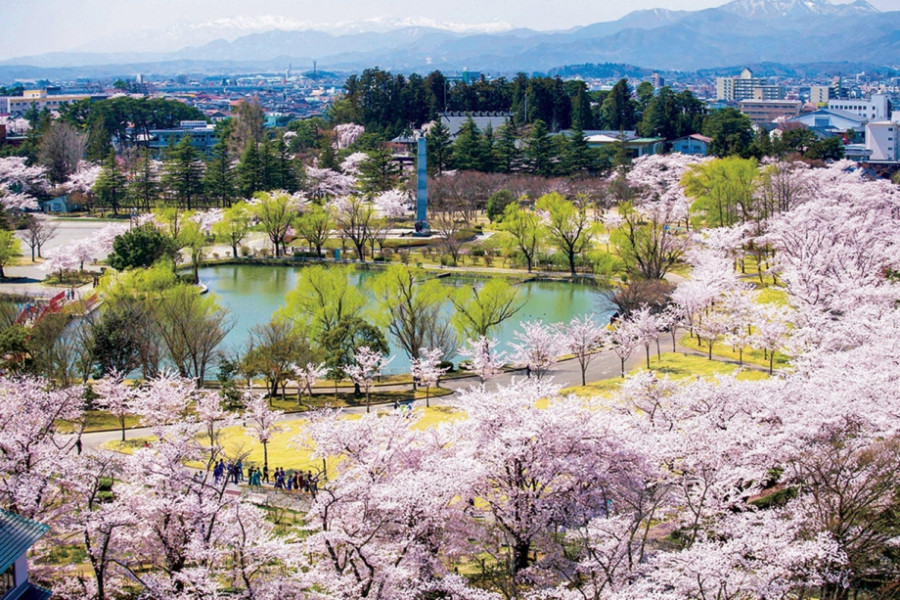
Koriyama’s Kaiseizan Park is a wide realm in the city. Home to around 1300 cherry trees, it is one of the prefecture’s most prominent cherry blossom spots. The impressive trees are lit up in the evening during cherry blossom season, making for fantastic views. The park has a baseball field, an athletics field, and an event venue. Additionally, it is home to one of Fukushima's Chansey's Lucky Parks, making it a popular destination among Pokémon fans. Located nearby is the Kaiseizan Daijingu Shrine.There is also a 3,000-square-meter rose garden that blooms in spring (typically from mid-May to late June) and in the fall (usually from mid-September to late October). Exact blooming dates vary each year.No matter the season, there is something to enjoy at Kaiseizan Park year-round.

The World Glassware Hall
Nature & Scenery

Mogi Station

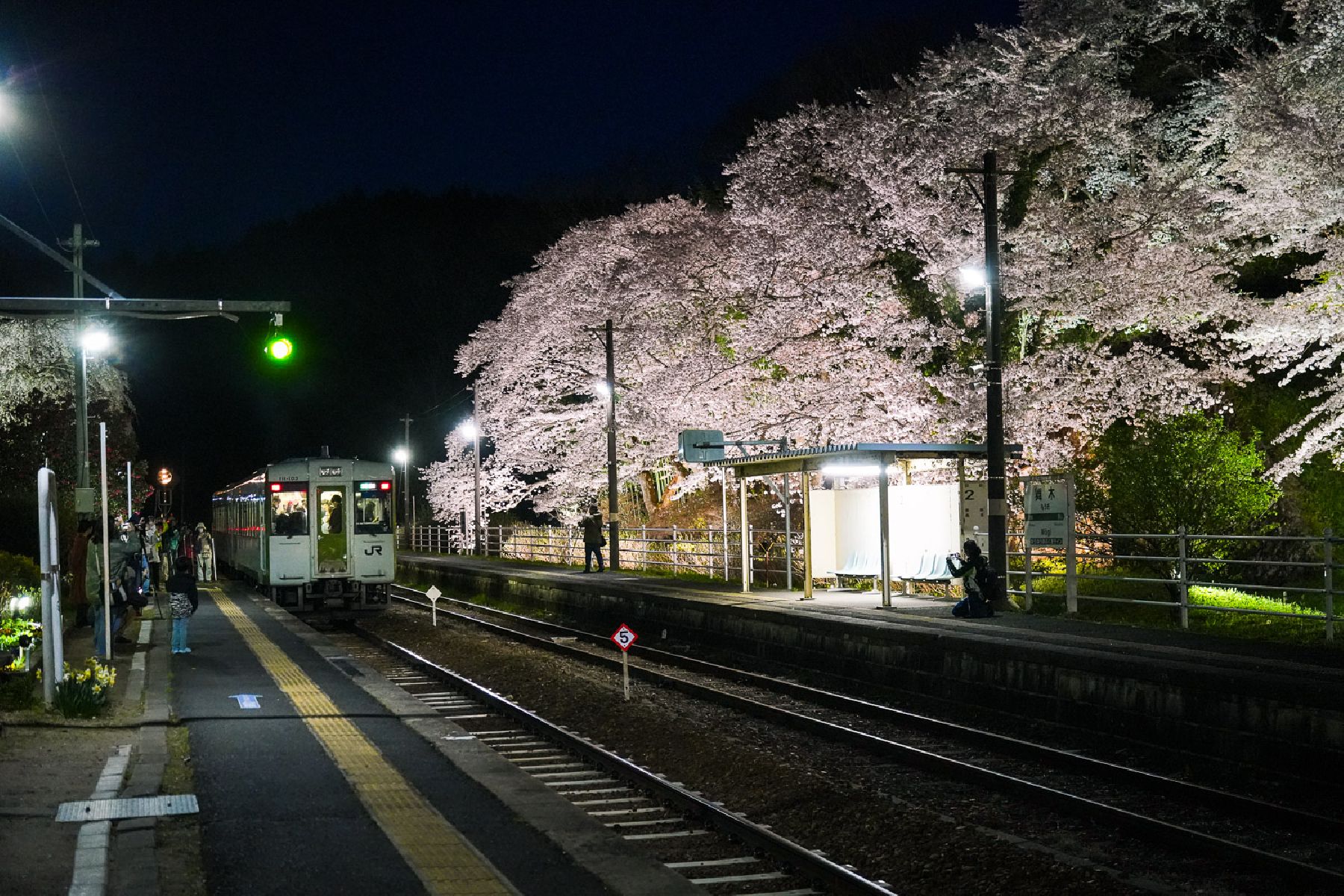
Mogi Station is a small, unassuming train stop that transforms drastically in spring. Every year around mid-April, the bank of over 30 cherry trees south of the station bursts into full bloom, turning the area into a picturesque array of pink, white and blue. The blossoms are illuminated at night once darkness falls, drawing visitors and photographers from across the region.Only the final train of the day, arriving at 21:30 from the direction of Miharu, pulls into platform two, with the background of the blooming cherry trees. For many photographers and train enthusiasts, this is the shot they visit to get. Despite its modest size, Mogi Station has quietly earned its place as one of the most photogenic, if lesser-known, hanami spots in the region.

You might also like

Tsuchiyu Onsen
Hot Springs

Tsuchiyu Onsen

Tsuchiyu Onsen, located at the heart of Mt. Azuma, is surrounded by beautiful scenic spots, and is home to many ryokan and hotels - such as Hotel Sansuiso - that make the most of the abundant onsen water. As well being to make day-trips to the baths at many of Tsuchiyu Onsen's ryokan, there are also footbaths and public baths dotted throughout this quaint town. A Japan of years gone by is captured in the nostalgic streets of Tsuchiyu Onsen. Check out the various shops selling the town’s famous Kokeshi Dolls (a Japanese traditional craft), browse for omiyage or stop by at a café.

Takayu Onsen
Hot Springs

Takayu Onsen

This famous hot spring area is located at an altitude of approximately 750 meters, which is why it’s called 'taka-yu' ('taka' means 'high-up' and 'yu' means 'hot spring'). Located on the slopes of the Azuma mountain range, Takayu Onsen area was once known as “Shinobu Takayu” and, together with Zao Takayu and Shirabu Takayu, prospered as one of three Takayu in what was once known as the northern Ou region. The waters of Takayu Onsen are a bluish milky color and are thought to have healing properties. Most of the resort facilities of the area neither add water nor adjust the temperature in order to maintain the natural allure of the hot spring waters. After bathing in the waters of this spring, your skin becomes almost slippery from the high acidic and hydrogen sulfide makeup. In the Takayu Onsen area, there are 10 natural hot spring sources, with names such as 'Takinoyu', 'Netsuyu', and 'Senkinoyu'. These sources are named after old public baths. In the olden days, bathtubs were built right next to or directly above the hot spring source. Today, the bathing facilities still receive their water flowing directly from the same source. Nowadays, Takayu Onsen consists of about a dozen ryokan (traditional Japanese inns), all offering their unique charm to travelers. You’ll be pleased to note that many of the ryokan open their hot spring baths to non-staying guests for a small fee. The most famous hot spring facility in Takayu Onsen is Tamagoyu, a wooden bathhouse with a traditional feel. There’s even a foot bath in the center of the town open to the public. If public bathing isn’t something you feel comfortable with, many of the onsen facilities in the area also offer private onsen rooms with a rotenburo (open-air bath) available for your own use. It is a relaxing experience unlike any other to soak in the hot waters and feel your worries melt away.

Iizaka Onsen
Hot Springs

Iizaka Onsen

Fukushima City's Iizaka Onsen has been used as an onsen town for over 1,000 years, and has been visited by legendary figures in Japanese literature such as Matsuo Basho (1644-1694), the master of haiku poems. Locals in Iizaka Onsen pride themselves on the well-known Japanese phrase “Beppu in the West; Iizaka in the East”, which refers to the best onsen towns in Japan.The Surikami River that passes through the town is lined on either side by 9 high-rise ryokan (Japanese-style inns). More ryokan can be found scattered about Iizaka Onsen. The town is also dotted with a number of communal baths and public foot baths. Some of Iizaka Onsen’s most well-loved local foods include include Enban Gyoza and soft-boiled eggs known as Onsen Tamago. Iizaka Onsen is also close to sightseeing spots such as Hanamomo no Sato, the Fruit Line, and Nakano Fudoson Temple.Iizaka Onsen is the site of the Iizaka Fighting Festival in October, the one night a year where a lively fight atmosphere overtakes the usually sleepy hot spring resort.

Top