Cosquín en Japón

Cosquín en Japón

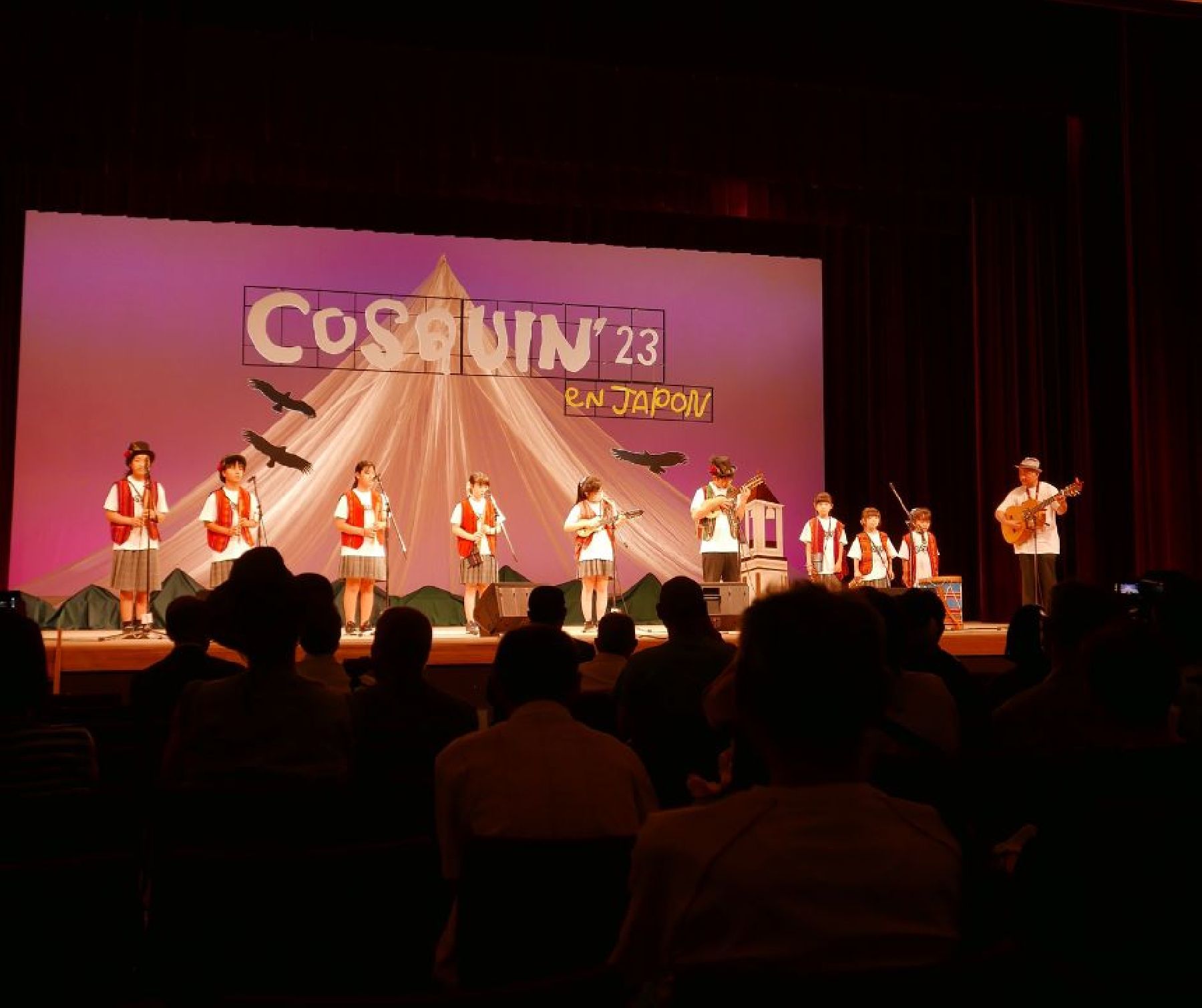
Cosquín en Japón is an Argentinian and Latin American folk music festival held yearly in Kawamata town in central Fukushima Prefecture.

People who love Latin American folk culture, including musicians, singers, and enthusiasts, come together to enjoy the music and dance performances at the festival. The event is open to both amateur and professional performers, and, over the years, the number of participating groups has increased from 13 in its first year to more than 100 in 2023.

The festival, held since 1975, takes place at the Kawamata Town Central Community Center (川俣町中央公民館に会場) over two or three days. It is organized by Norte Japón (North Japan Latin American Music Federation).

The festival name means ‘Cosquín in Japan’ in Spanish, and pays tribute to Argentina's most important National Folklore Festival, held each year in the town of Cosquín in the province of Córdoba.

A variety of rhythms and artistic styles from Latin America are represented at the festival. Its main focus is Argentinian and Andean folk music, which is played with instruments such as the quena, charango, acoustic guitar, and bombo.

You can attend the festival for free without needing to register beforehand.

Venue Details

Venue Details
Websitehttps://www.cosquin.jp/(Japanese)
Contact

Executive Director Hiroyuki Saito
024-566-5050
info@cosquin.jp

Access Details
AccessKawamata Town Central Community Center (川俣町中央公民館に会場) in Kawamata Town
View directions
Getting there

By Car: 35 min from Fukushima Sta. via National Route 114.

By Bus: Take a bus bound for Kawamata at Fukushima Station and get off at the bus stop in front of the Kawamata town hall [川俣町役場前]. The bus ride takes 45 approx. minutes. Buses run every hour.


Nearby

The World Glassware Hall
Cultural Experiences

Sukagawa Enobori Yoshinoya Workshop

Established in 1836, the Yoshinoya family has been continuing the production of Enobori banners using traditional techniques. Originally the family business was a kimono shop, however, the side business of painting Enobori banners began to grow until is eventually became their main business.These banners typically feature images of warriors and can be quite complex with their designs. They are made by painting on banners with a type of calligraphy ink.To create clean and uniform design, stencils are made from various materials to be used as a guide for the design. Once the basic design is painted with a stencil, you connect the lines and add fine details by hand.As a nod to a famous Sukagawa person, they began creating a design of Ultraman posing as a samurai warrior! You can try out the traditional banner making method explained above to create tote bags and small banners featuring a variety of samurai and Ultraman samurai designs.©円谷プロ

The World Glassware Hall
Cultural Experiences

Handmade Japanese Washi Paper Craft Experience

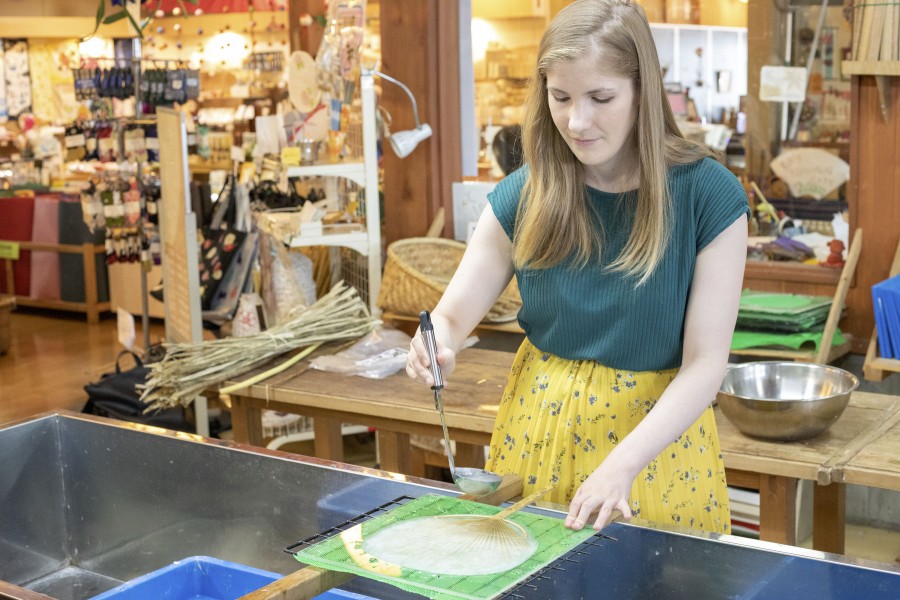
Kami-Kawasaki Washi paper has a history of over 1,000 years. It was given the name "Kami-Kawasaki Washi" because of its origin in Nihonmatsu City's Kami-Kawasaki district. Since the name of districts changes with the years, during Japan's Heian Period, it was known as "Michinoku-gami "("paper made in Michinoku").Kami-Kawasaki Washi paper has been used regularly as shoji paper (paper for sliding doors). Many people are charmed by the warmth and simple beauty of Kami-Kawasaki Washi. Paper mulberry, a type of tree used for making the paper, is grown locally. The traditional production method, from producing the raw ingredients to making the paper, is continued in Nihonmatsu City even today.Sticking to traditional production methods ensures that the finished paper has a luxuriant warmth and refinement, and is strong and durable. At present, a variety of products, such as dyed paper, folkcraft paper, and paper crafts, are produced, all of which maintain the paper's original texture. Although the demand for shoji paper is declining, there is still demand for products such as wallpaper and lamp shades. In this way, Kami-Kawasaki Washi remains important to us everyday.  At the Washi Traditional Crafts Gallery - located at Michi-no-Eki Adachi (Roadside Station) - visitors can make washi postcards, paper fans, and other items.

You might also like

Ebisu Drift Matsuri (Ebisu Drift Festival)
Events & Festivals

Ebisu Drift Matsuri (Ebisu Drift Festival)

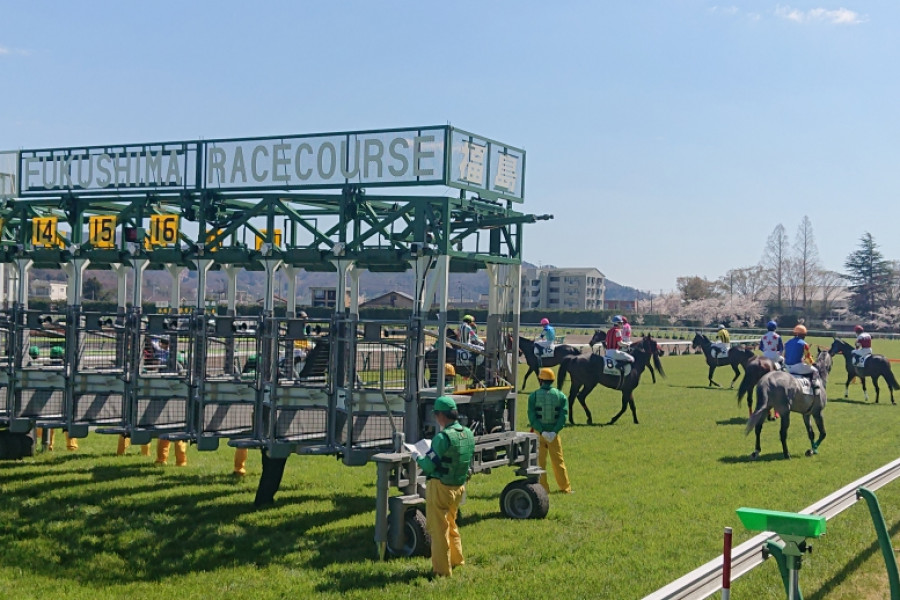
See our total guide to the festival for details on ticket prices, things to do in the area and more.The Ebisu Circuit is a famous car racing track and drifting school in Nihonmatsu. Three times a year, it holds the Ebisu Drift Matsuri (Ebisu Drift Festival), a thrilling event that gathers car drifting fans from across Japan and abroad.The festival usually goes from Saturday morning to Sunday afternoon, during which participants can drift all day and night in the designated courses for a set fee. There are typically three Drift Festivals a year: Spring Drift Festival (ドリフト春祭り): Usually held in April Summer Drift Festival (ドリフト夏祭り): Usually held in August Autumn Drift Festival (ドリフト秋祭り): Usually held in NovemberEbisu Drift Matsuri in 2025: Spring: April 19th & 20th (Sat/Sun) Summer: August 23rd & 24th (Sat/Sun) Autumn: November 15th & 16th (Sat/Sun)Participating in the Drift Festival is a perfect opportunity to get the most out of a visit to the Ebisu Circuit. For instance, using the racing courses at the Circuit would normally require a reservation, but, during the event, participants are free to use the course of their liking between the available options. Because of that, cars run right next to each other, making the already exciting prospect of drifting even more adrenaline-packed!To participate, you can register at the website before the event. Even if you cannot drive, you can make your way there to watch the incredible maneuvers of drifters as they screech their way through the courses. A big allure of the festival is the atmosphere of being among drivers and car enthusiasts.For updated information, please refer to the official site of the Ebisu Circuit (in Japanese).2025 Event Dates for Ebisu Circuit (in Japanese)

Taimatsu Akashi (Torch Festival)
Events & Festivals

Taimatsu Akashi (Torch Festival)

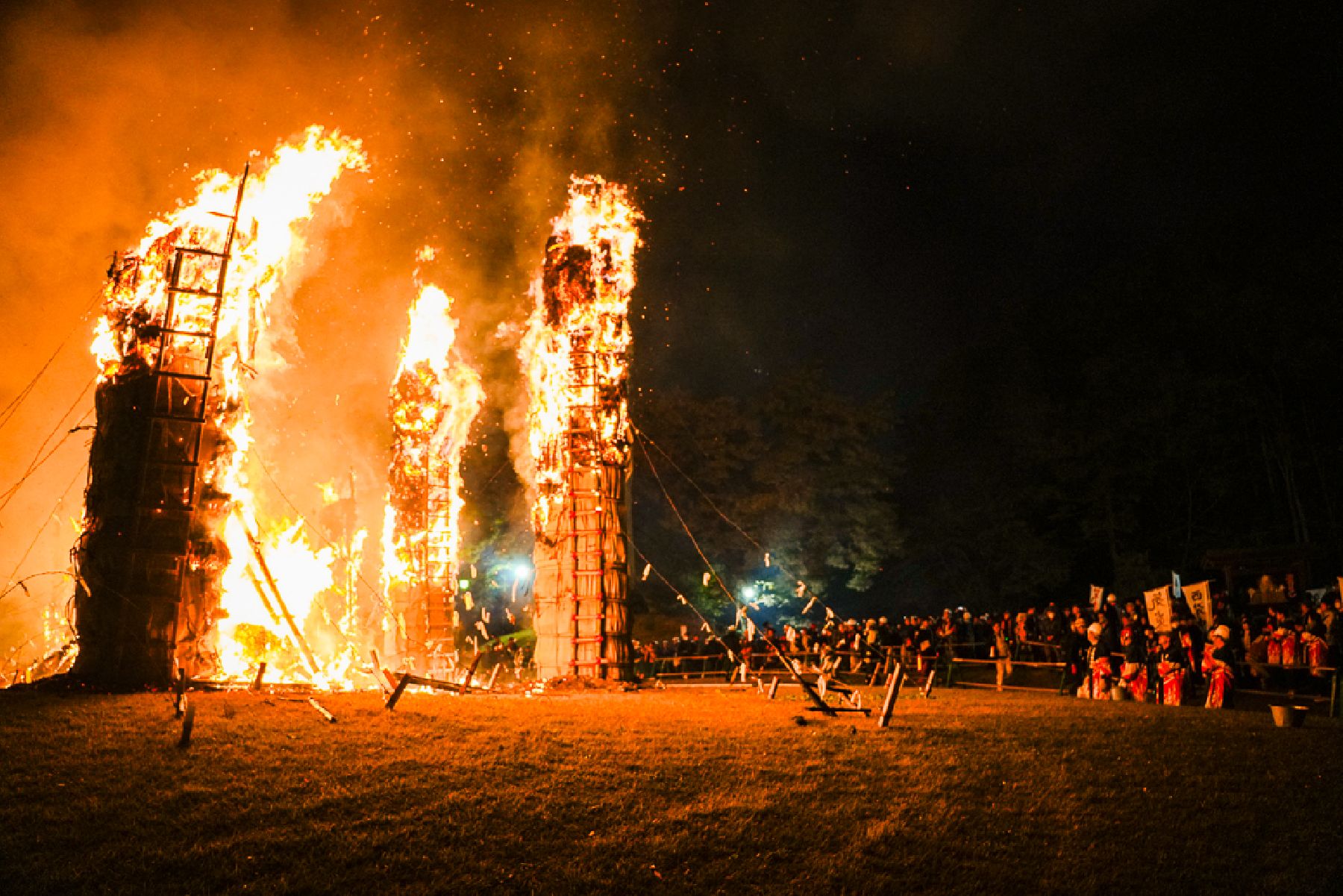
With a history stretching back over 400 years, the Taimatsu Akashi torch festival in Sukagawa City is one of the three major fire festivals in Japan. As the night grows darker and the bonfires flare brightly here and there around the venue, groups of local junior high and senior high school students march through the town carrying 30 8-meter-long wooden torches called Hon-taimatsu, which they created by themselves, followed by a group of young men carrying the huge wooden torch called the Dai-taimatsu (10 meters long and weighing about 3 tons), and a group of women carrying a smaller wooden torch called the Hime-taimatsu (6 meters long and weighing 1 ton). These torches are carried to the top of Mt. Gorozan.There is also a wooden frame depicting Sukagawa Castle and a group of samurai warriors. As the drummers from Oushu Sukagawa Taimatsu-Daiko Hozonkai powerfully beat their Taimatsu-Daiko drums, the torches and the wooden frame are lit with a sacred fire carried up by a group of runners from Nikaido Shrine. The whole mountain looks as if it is on fire. The combination of fire and the beating of the drums is reminiscent of the days in the Warring States period. Local students form chanting squads to cheer on their torch as it burns - this main section with the flaming torches takes around an hour.In recent years, this traditional event has become well known as a participatory festival, allowing neighborhood associations, local elementary school pupils, and tourists to join the parade to Mt. Gorozan, each carrying a thin torchwood called a Sho-taimatsu (10 cm in diameter).2024 ROUTE MAP IN ENGLISHThe schedule for the 2024 festival was as follows:11:00 Midorigaoka Park Grass SquareFood and drink corner 13:00-16:00     tetteSmall torch making cornerNote: After making your torch, you can join the small torch procession at 17.15. 13:00-16:00     Taimatsu Street Sukagawa Shinkin Bank Head Office (Parking Lot)Commemorative photo with warriors in armorFree Sengoku Nabe (pork soup) while stocks lastSale of agricultural productsShizuoka City Specialty Products CornerTaimatsu Akashi Historic Site and Battlefield Walk Meeting Point (15:15)Karate demonstration 13:30-14:10     In front of Yoshida Clinic on Taimatsu StreetTorch presentation 14:00   Torch Street Miyasakicho areaSukagawa First Junior High School torch parade start 17:30-17:45     Nikaido ShrineSacred fire offering ceremony (receiving the sacred fire to light the torch) 17:00 (scheduled)       Myoken Children's ParkLocal organisations torch procession starts 17:15-18:00     Miharashibashi Parking Lot  General torch procession startsPlease participate with small torches made at the small torch crafting corner.Small torches will also be available for purchase (500 yen each, limited to 100) 18:00-19:45     Mt. Goro Special StageTaiko drum performances 18:30   Mt. Goro main festival areaThe large torch and 20 main torches are lit in sequence.

Usokae Festival
Events & Festivals

Usokae Festival

At Usokae Festival, held in Iizaka Onsen Town, visitors buy lucky, hand-carved, wooden birds called ‘Usokae’. ‘Usokae’ translates as ‘changing lies’. Visitors who buy an Usokae bird must think of a ‘lie’ – i.e. something they don’t want to happen – which will in turn be changed to good luck to make sure that thing doesn’t occur by the birds by the end of the year. For example, you could think “I won’t pass my school exam” when you buy the bird, and by the end of the year, the bird will help you pass it! This is a unique local festival, and the hand-carved Usokae birds make very charming gifts too!

Nihonmatsu Chrysanthemum Doll Festival (Nihonmatsu Kiku Ningyo)
Events & Festivals

Nihonmatsu Chrysanthemum Doll Festival (Nihonmatsu Kiku Ningyo)

Each year from mid-October to mid-November, an impressive collection of dolls adorned with chrysanthemum flowers (known as ‘kiku ningyo’) are on display at the Kasumigajo Castle Grounds in Nihonmatsu City, for one of Japan’s salient Chrysanthemum festivals. The city prides itself in its cultivation and cherishing of chrysanthemums, the National Flower of Japan. Several places in the city are adorned with chrysanthemums during the festival period.Kasumigajo Castle, also known as Nihonmatsu Castle, was destroyed during the Boshin War in the 19th century. Visitors can climb up the castle ruins, of which only the walls remain, and enjoy a view of Nihonmatsu City from above. The castle was made into a prefectural natural park and is beautifully preserved, with many cherry blossom trees and flowers in bloom in the spring, as well as stunning foliage in the fall.

Top