Oyaku-en Garden

Oyaku-en Garden

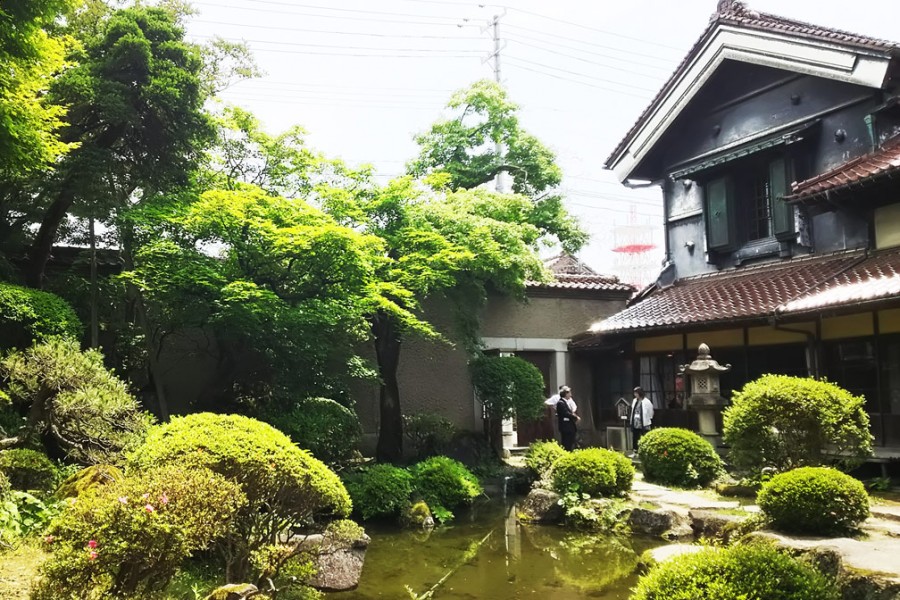
Oyaku-en was used approximately 600 years ago as a villa for the then lord of the Aizu Domain. Subsequently, in the mid-17th century, the lord of the Aizu Domain started growing medicinal herbs within the grounds which he developed to protect the citizenry from epidemics. This lead to the garden gaining the name "Oyaku-en", which literally means "medicinal garden."

The traditional garden has been preserved as it was long ago, and Oyaku-en has now been designated as an important national asset. The buildings within the grounds were used by the lord as a place of relaxation and for entertainment. Accordingly, Oyaku-en still contains buildings devoted to Japanese tea.

Many visitors choose to drink green tea, served by the staff, on the benches by the pavilion, looking out over the still waters and the flocks of ducks that make their home here.

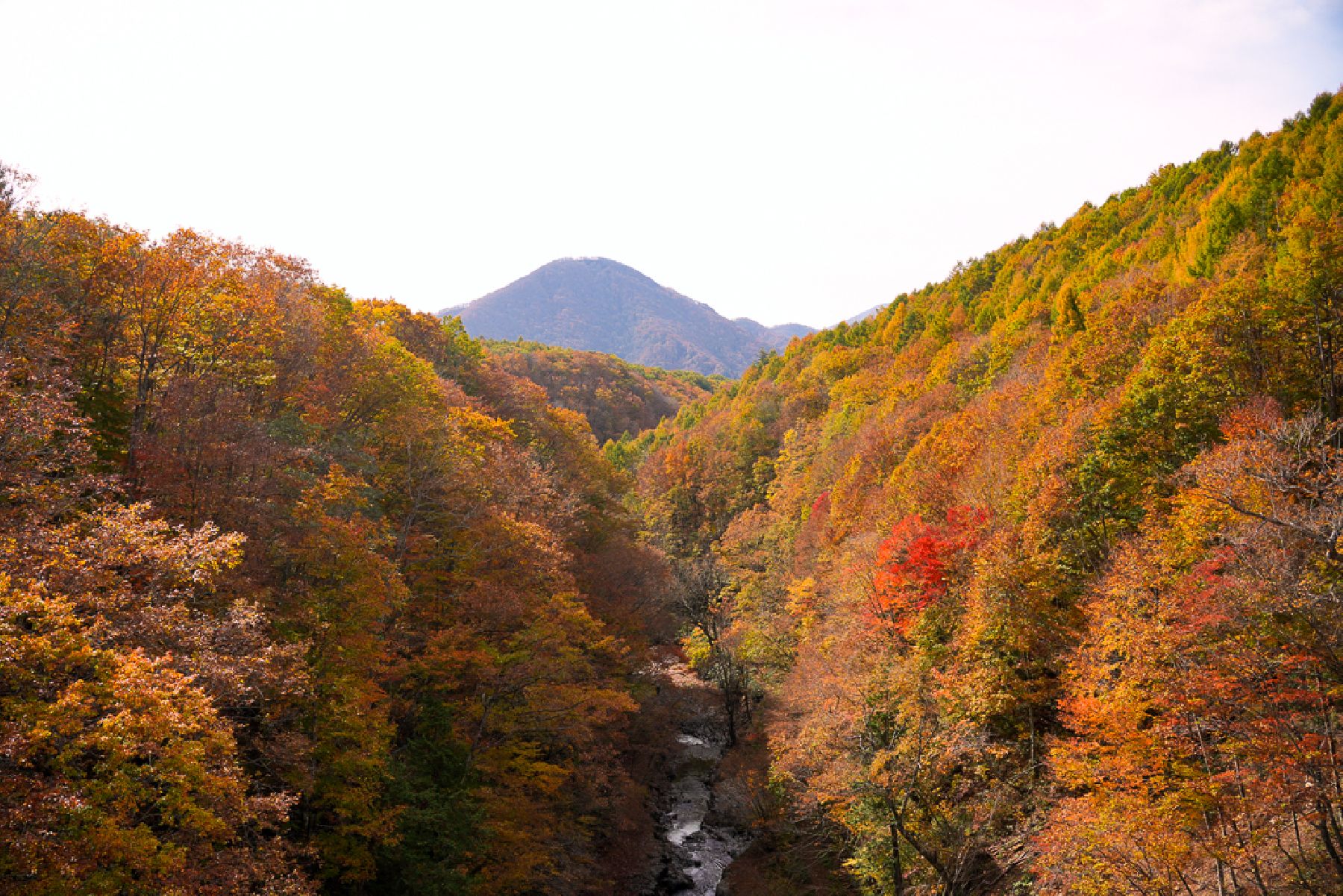
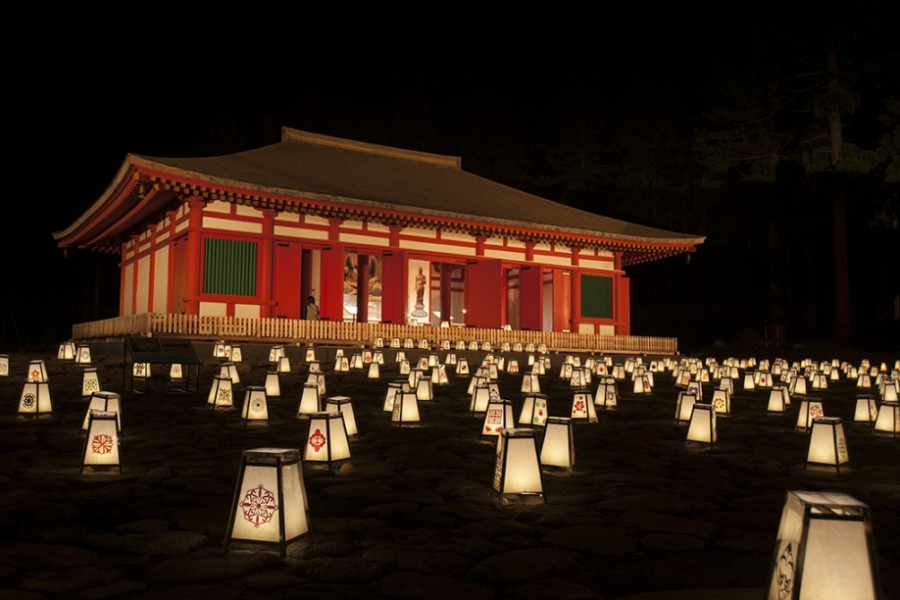
Oyaku-en is also well-known as a popular autumn colour spot, with several trees turning a vibrant yellow in mid-November. The garden is a short distance from Tsurugajo Castle, making for an excellent combination for visitors wanting to learn more about Aizu's rich samurai history. The two sites also happen to be the grounds for one of the Aizu region's best winter sights, the Aizu Painted Candle Festival.

Venue Details

Venue Details
Websitehttps://www.tsurugajo.com/oyakuen/(Japanese)
Contact

Oyaku-en Garden

(+81) 242-27-2472

Best SeasonAll Year
Opening Hours

8:30 AM - 5:00 PM (Last entrance at 4:30 PM)<br>

Open all year

ParkingFree (61 cars)
Entrance FeeAdults: 330 yen | High school students: 270 yen | Junior high and elementary school students: 160 yen
Access Details
Access8-1 Hanaharumachi, Aizu-Wakamatsu City, Fukushima Pref. 965-0804
View directions
Getting there

By Car: 15 min drive from the Aizu-Wakamatsu I.C. exit off the Ban-etsu Expressway

By Bus: Take the Haikara-san or Akabe sightseeing loop bus from Aizuwakamatsu Station (JR Ban-etsu West Line) and get off at Oyakuen Bus Stop. From there, walk for 3 min. The gardens are a 15 min walk from Tsurugajo Castle

Nearby

The World Glassware Hall
History & Culture

Mt. Iimoriyama

Located less than 4km from Tsurugajo Castle in Aizu-Wakamatsu, Fukushima, Mt. Iimoriyama has had a difficult and somewhat dark past. But despite it’s history, the natural beauty of the place remains untarnished. There are many local food stalls set up near the base of the hill, so it’s a good idea to have a snack before you begin the ascent up the stone steps. Also at the bottom is the Byakkotai Memorial Hall; it’s located next to the path up the mountain so it’s easy to find. Inside, guests can observe various artifacts of war and learn about some of Aizu's history.Visitors have two choices to get to the top of the hill: hike up the 183 steps to the summit for free; or pay 250 yen to ride the escalator up (150 yen for children). At the summit stand the nineteen graves of the Byakkotai, White Tiger Corps. The story of these young teenage samurai-in-the-making is legendary in Aizu-Wakamatsu City, and all around this prefecture. The Byakkotai boys were part of the defence against the military forces sweeping through the country during the 1868 civil war. They remained loyal to the leader of their domain and Shogun.On an autumn day during the one-month-long siege on their city, the boys had retreated to Mt. Iimoriyama. From the top of this hill, they caught sight of what they assumed to be Tsurugajo Castle set on fire - a sure sign that the war was lost. In response, they did what they had been taught was the honourable course of action, and took their own lives. In fact, the castle had not been set on fire, and the war was not yet lost. One boy was unsuccessful in his attempt, and was saved by a local woman traversing the hills. His life was saved and his story has become the history we know today. Visitors to Mt. Iimoriyama can stand in the same spot as the boys looking out over the city, or pay respects at the various memorials.The gravesite at the top of Mt. Iimoriyama was built in remembrance of those nineteen boys. Their story resonated with the leaders of the Axis Powers of World War II; near the gravesite are two historic landmarks donated by Nazi Germany and Italy. Down the northern side of the mountain are Uga-shindo, a shrine built in the late seventeenth century which deified a white snake as a god of abundance and fertility. There is also a lovely temple shaped like a turban shell, Sazaedo Temple, that visitors can actually go inside.

The World Glassware Hall
History & Culture

Mt. Bandai 3D World

Experience a simulation of the 1888 Mt. Bandai Eruption in 3D! Mt. Bandai 3D World is a theater developed by Sony, situated right across the road from the Mt. Bandai Eruption Memorial Museum. The circular walls inside the building are covered with a large, panoramic 3D screen - measuring 4.5 m in height, and 42 m around. The powerful acoustics transport visitors to the Urabandai area of 1888, and allow them to feel as if they were there during the great eruption of the same year. The theater's 3D graphics simulate this event, portraying the fleeing of animals that sense the eruption in advance, and the disarray of huge boulders and intense volcanic mud splashes being flung in the air due to the eruption.There is also a simulation of a "walk in the sky" around Mt. Bandai, where visitors can experience a panoramic bird's-eye view of Mt. Bandai's across the four seasons. Take in alpine plants such as skunk cabbages and Nikko-kisoge flowers as you pass over the Oguninuma Wetlands. Shows usually start twice an hour (the first on the hour, and the second at 30 minutes past.)

The World Glassware Hall
Gourmet & Shopping

Human Hub Tenneji Soko

Human Hub is a hip, two-floored shop in the east of Aizu-Wakamatsu, in the same region as common sightseeing spots like Tsurugajo Castle and Oyakuen Garden. The first floor features a baked good section and a cafe space serving hand-drip coffee, while the second floor is home to a coworking space, large-format print lab and a woodworking workshop for local craftsmen.Matching this eclectic mix of disciplines, the first floor shop sells a wide variety of independently-sourced goods, from household items like cushions or fabrics, local produce like oils, teas and jams, outdoor and garden products, and a clothes section.

You might also like

Shingu Kumano Shrine Nagatoko
History & Culture

Shingu Kumano Shrine Nagatoko

Built in 1055, the Nagatoko is Shingu Kumano Shrine's worship hall and translates to “long floor”. It is designated as a Nationally Important Cultural Asset. Its thatched roof main structure was built between the Heian period and the Kamakura period and is supported by 44 massive pillars, each one 45 cm in diameter. It is a large, open stage with no walls, said to have been used for ascetic training by priests, as well as kagura dance festivals. Housed inside a nearby large wooden frame is the shrine bell, which visitors to the shrine are welcome to hit with a wooden rod. There is also a famous copper pot in which, allegedly, rice was rinsed before being offered to the gods; the pot was designated as an Important Cultural Property in 1959. This treasure is housed at the shrine along with many others and is on display for visitors along with national and prefectural designated cultural assets. Also not to be missed is the lion statue in the center of the treasure hall. It is known as a guardian of wisdom: a local legend says that if you can pass under the belly of the lion, your wisdom will blossom. It is a popular place for students to visit before the exam season and even politicians before election season. Come autumn, the magnificent 800-year-old ginkgo tree at the site is bathed in yellow, contrasting beautifully with the Nagatoko. This ancient tree has also been designated as a Natural Monument of Kitakata City. In November each year, you can even see a special illumination of the ginkgo tree for a limited time.

The Grave of the Matsudaira Family
History & Culture

The Grave of the Matsudaira Family

The gravesite was constructed in 1657 when Masayori, the heir of the first Aizu lord Hoshina Masayuki, passed away. Tombs for the second lord Masatsune through the ninth lord Takamori, as well as their wives and children, stand side by side. A Buddhist funeral was conducted for the second lord, but the Shinto style was used for all the other lords. This gravesite is one of Japan’s top daimyo family graves, and is known for its history and scale. The Grave of the Matsudaira Family has also been nationally recognized as an Important Historic Site.

Isasumi Shrine
History & Culture

Isasumi Shrine

Isasumi Shrine's history is thought to be connected to how the Aizu region got its name - a story that has been recorded in two of Japan’s most legendary books of folklore. According to the tale, around 2000 years ago, four shogun were entrusted with uniting the four areas of land which would become Japan. Two of these shogun happened to be father and son. One was sent to the northeast, and the other to the northwest.When the father and son had completed their work uniting the towns in their respective areas, they met in the middle. They named the area “Aizu” (会津), which can be translated as “The riverbank (津) where we met (会)”. The father and son travelled to Mt. Mikagura-dake, a mountain that borders Niigata Prefecture and Aizu, and prayed to the Shinto god of pioneering new lands to protect Aizu, and the rest of Japan. Isasumi Shrine is thought to be built where they met.In spring, the shrine grounds become decorated with the blossoms of one of the most prized cherry trees in Aizu. It is said that this tree, which is named Usuzumi Sakura (“Diluted-Ink Sakura”), has been the sacred tree of Isasumi Shrine since it was brought down from Mt. Mikagura-dake and planted in the shrine grounds as a way of commemorating the efforts of the father and son. The lovely, light scent of the cherry blossom welcomes visitors each spring.Aizu Misato Town’s historic Isasumi Shrine, known as a great spot for viewing beautiful irises, holds a festival to celebrate the splendor of these flowers every year.

Aizu Bukeyashiki (Samurai Residence)
History & Culture

Aizu Bukeyashiki (Samurai Residence)

Aizu Bukeyashiki (Samurai Residence) is a historical open-air museum where visitors can learn about the history of Aizu and sample some of the specialty products of Fukushima.Stroll around the residences to take in traditional Japanese architecture, including the residence of Tanomo Saigo, the Aizu Domain's chief retainer, a magistrate's office, a tea ceremony house, a rice mill, and a warehouse (resource center).Visitors can also enjoy local specialty food at the onsite Kuyotei restaurant, and find specialty products from Aizu and other parts of Fukushima at Sato-Kobo Kokon, and enjoy hand-painting traditional toys and practicing Japanese archery, which is perfect for young kids.Besides such cultural enjoyment, the natural beauty of the spring cherry blossoms and the autumnal foliage are a major attraction for tourists.

Top