Aquamarine Fukushima

Aquamarine Fukushima

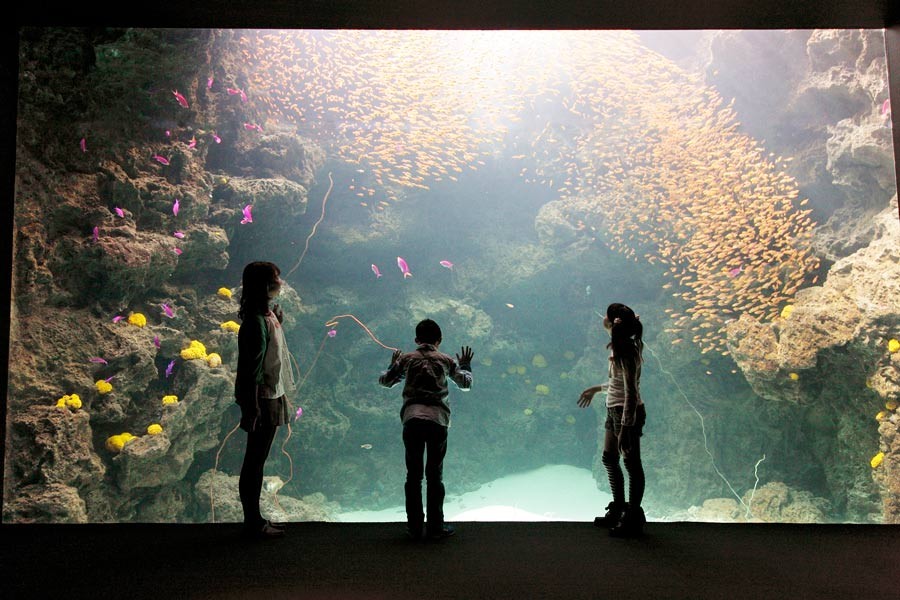
Aquamarine Fukushima is an ‘environmental aquarium’ that exhibits aquatic creatures in environments which closely mimic their natural habitats.

As well as being an aquarium, Aquamarine Fukushima is also home to a research center and offers educational information about sustainability and conservation.

The main exhibits are two gigantic tanks that extend from the second to the fourth floor, reproducing Shiome no Umi, an area of the Pacific Ocean off the coast of Fukushima Prefecture where the Kuroshio (Black Current) and the Oyashio (Kurile Current) meet.

Visitors can enjoy walking through a transparent tunnel whilst being surrounded by the wealth of marine life found in Shiome no Umi, which includes vast schools of sardines and bonito. On the fourth floor, visitors can also visit a calming botanical garden which exhibits the various plant life of Fukushima Prefecture.

In addition, guests can see over the top of the main tank, a great spot to appreciate the sheer scale of the water and the curious marine life below. There is also a touch tank where interested visitors can try touching starfish and other small sea critters.

Since its establishment, Aquamarine Fukushima has conducted research into an ancient species of fish called coelacanths, and its findings are exhibited on the first floor in a corner entitled the World of Coelacanths. Here visitors can view an anatomical specimen of the rarely seen coelacanth and watch exclusive footage of living coelacanths.

There are events throughout the year, with many activities for children and families to enjoy together including a fish maze, art festivals, and a fishing experience where you can catch real fish to be fried for lunch!

If catching your own lunch doesn’t appeal to you, you are in luck as there is a seafood market selling fresh seafood just a 10-minute walk away!

The seafood market is located within Iwaki Lalamew, a shopping center that also includes restaurants where you can dine on locally sourced, freshly caught fish.
Venue Details

Venue Details
Websitehttp://www.aquamarine.or.jp/english/index.html
Contact

Environmental Aquarium Aquamarine Fukushima

(+81) 246-73-2525

Parking380 cars. Disabled parking available.
Entrance FeeAdult: 1,850 yen | Elementary, Junior High, High School Students: 900 yen | Pre-school Age: Free | Groups of over 20 people: 750 yen to 1550 yen per person
Accommodation details

Pets: Not allowed (Caged pet carrier which are to be left outside in a designated pet area are available upon request at the entrance)

Related infoWheelchair-accessible toilet and ostomate toilet available (Omatsuri Square outdoor toilet).

Wheelchair rental available.

There are signs in English.
Access Details
Access50 Tatsumi-Cho, Onahama, Iwaki City, Fukushima Pref. 971-8101
View directions
Getting there

By Car: 20 min from Iwaki-Yumoto I.C. exit off the Joban Expressway

By Public Transport:

  • From Tokyo Station, an expressway bus leaves from Yaesu Minami-guchi to Iwaki Station every 30 minutes. It takes 3 hours.
  • From Fukushima Station, take a bus heading to Iwaki from Fukushima Station East Exit. It will take around 2 hours.
  • From Iwaki Station, take the Hitachi-Tokiwa Line train to Izumi Station.
  • From Izumi Station, take a bus from the east exit, heading to Onahama 小名浜 or Ena 江名. It will take 15 minutes. Get off at Shiyaku Iriguchi (支所入口). From there, Aquamarine Fukushima is a 10 minute walk. (Alternatively, take a taxi for 13 min from Izumi Station)

Related trips

    1. Adventure

      The Coast of Fukushima

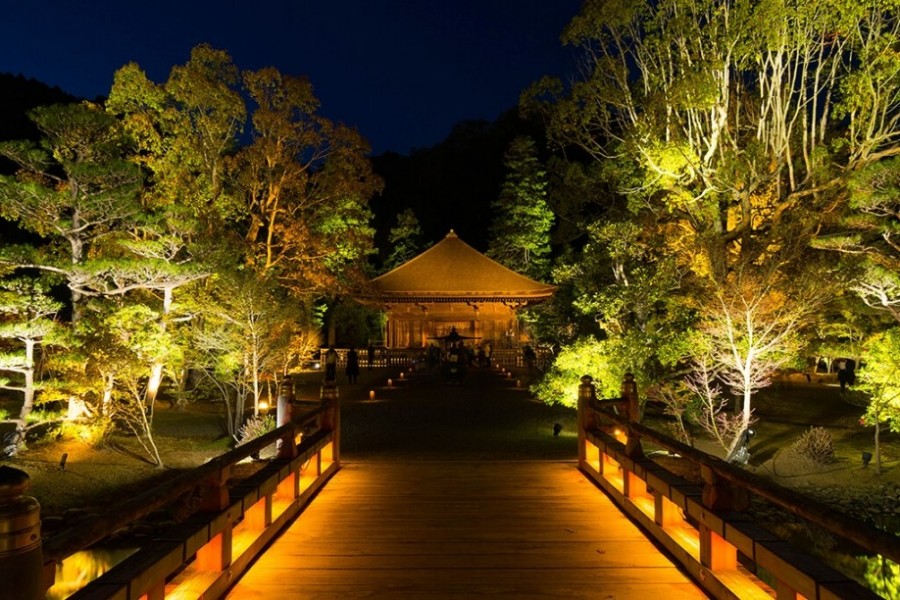
      Refresh yourself along the coast of Fukushima with this one-day plan, which includes three of Iwaki's best spots. You can enjoy these places any time of the year, so it’s perfect to fit into your pre-existing travel plans. Start out at Iwaki Station and make your way down to Aquamarine Fukushima. This beautiful aquarium and aquatic museum will take your breath away with its amazing exhibits of sea creatures and habitats. Let your imagination run free as you walk through the interior and discover something new everywhere you look. After you’ve finished at Aquamarine Fukushima, make your way to Shiramizu Amidado Temple. This temple is a National Treasure of Japan and was first commissioned by a princess. It has a unique history and the atmosphere lends itself well to relaxation and introspection. Once you’ve found inner peace, head over to Natsuigawa Valley. The pristine river waters and cool countryside breeze will relax your body and rejuvenate your spirit. No matter where you turn to, the coastal area of Fukushima is sure to astound you. This plan is best enjoyed by renting a car from Iwaki Station.

      The Coast of Fukushima
      1. Adventure

        Diamond Route (4 Days, 3 Nights)

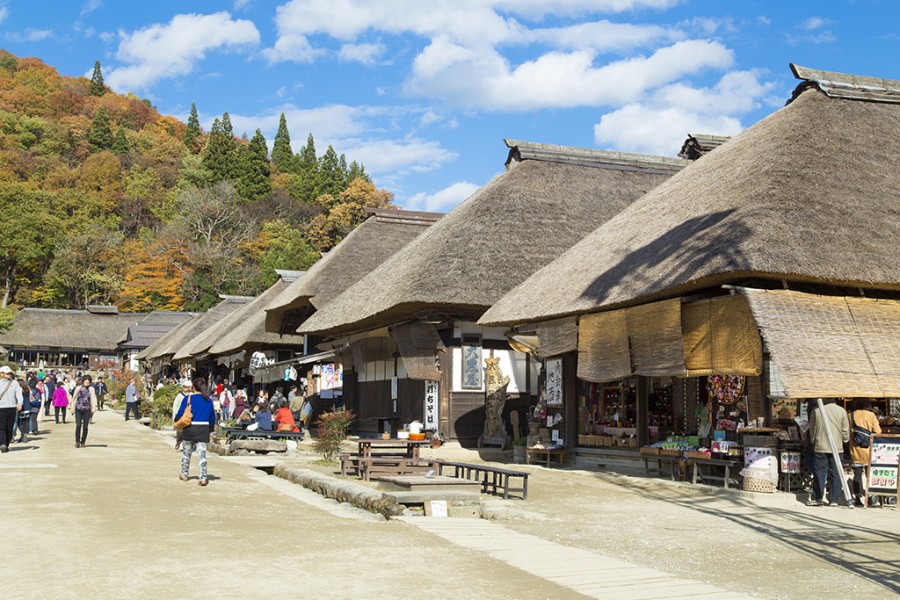
        Have you ever wanted to take a cross-prefecture tour of Japan, from Tokyo to the impeccable countryside of Fukushima? Well, now is your chance to travel from the international hub of Tokyo and see what else Japan and—especially—Fukushima have to offer. Enjoy this cross-country tour of Japan over the span of a few days, so that you can enjoy things at your pace. Start your trip from Tokyo Station and ride a short distance to Asakusa. See one of the busiest shrine-and-temple locations in Tokyo. You’ll love the bustling atmosphere and the street stalls with their many trinkets and souvenirs. Once you’ve finished in Asakusa, head out of the city and make your way for Tochigi Prefecture’s Nikko. Nikko is perhaps most famous for the three monkey statues that people equate with “hear no evil, see no evil, speak no evil”. You’ll see these wonderful statues and more while you stop over in Nikko. From there, travel north to Higashiyama Onsen and enjoy the sights form the train along the way. Higashiyama Onsen is Fukushima’s home to some truly great hot springs and Japanese-style inns. Soak up the hot waters and relax your tired muscles. At Tsuruga-jo Castle, you can walk the pristine gardens and enjoy the castle grounds. Be sure to make note of the red-roof tiles of the castle as well, this is the only castle in Japan that boasts having these deep-red tiles. Inside the castle keep, discover the history of the Aizu samurai through the many exhibits and displayed artifacts. Make your way to Nanokamachi-dori Street and admire the local architecture, which is quite different than that from the rest of the area. Search out local hidden gems along the narrow streets and find the perfect souvenir to take home. Enjoy your time in Tokyo, Tochigi, and Fukushima like never before with this route.  

        Diamond Route (4 Days, 3 Nights)

Nearby

The World Glassware Hall
Museums & Galleries

Shoko Kanazawa Art Museum

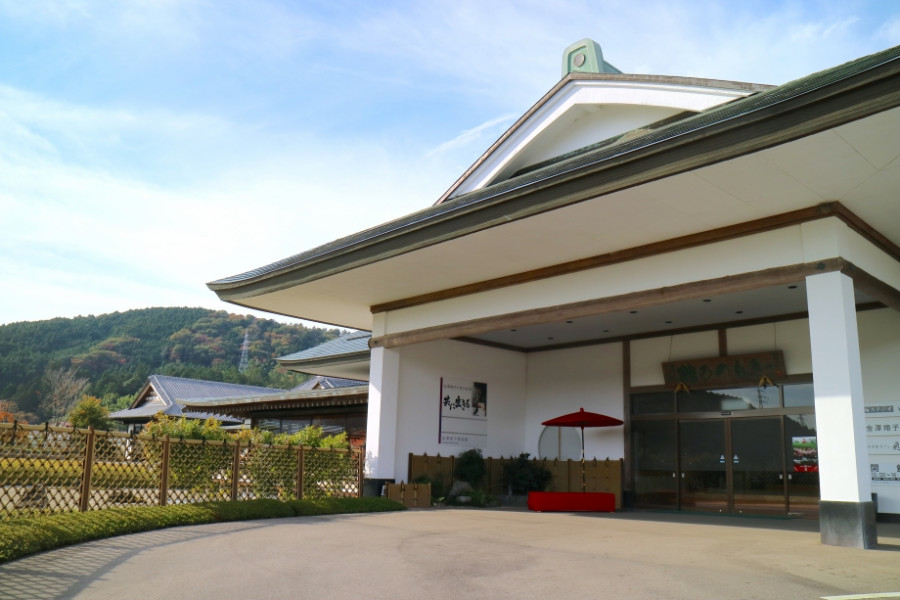
This museum, located in sunny Iwaki City, exhibits the moving calligraphy of Shoko Kanazawa. The whole museum has been constructed while keeping in mind traditional Japanese architectural styles. As well as the calligraphy exhibition, Shoko Kanazawa Art Museum also has a Japanese tea room café on site, where you can take a rest with beautiful Japanese garden viewing. The same building also houses a kimono exhibition, while features one of the world's biggest kimono!

The World Glassware Hall
Gourmet & Shopping

Full House Book Cafe

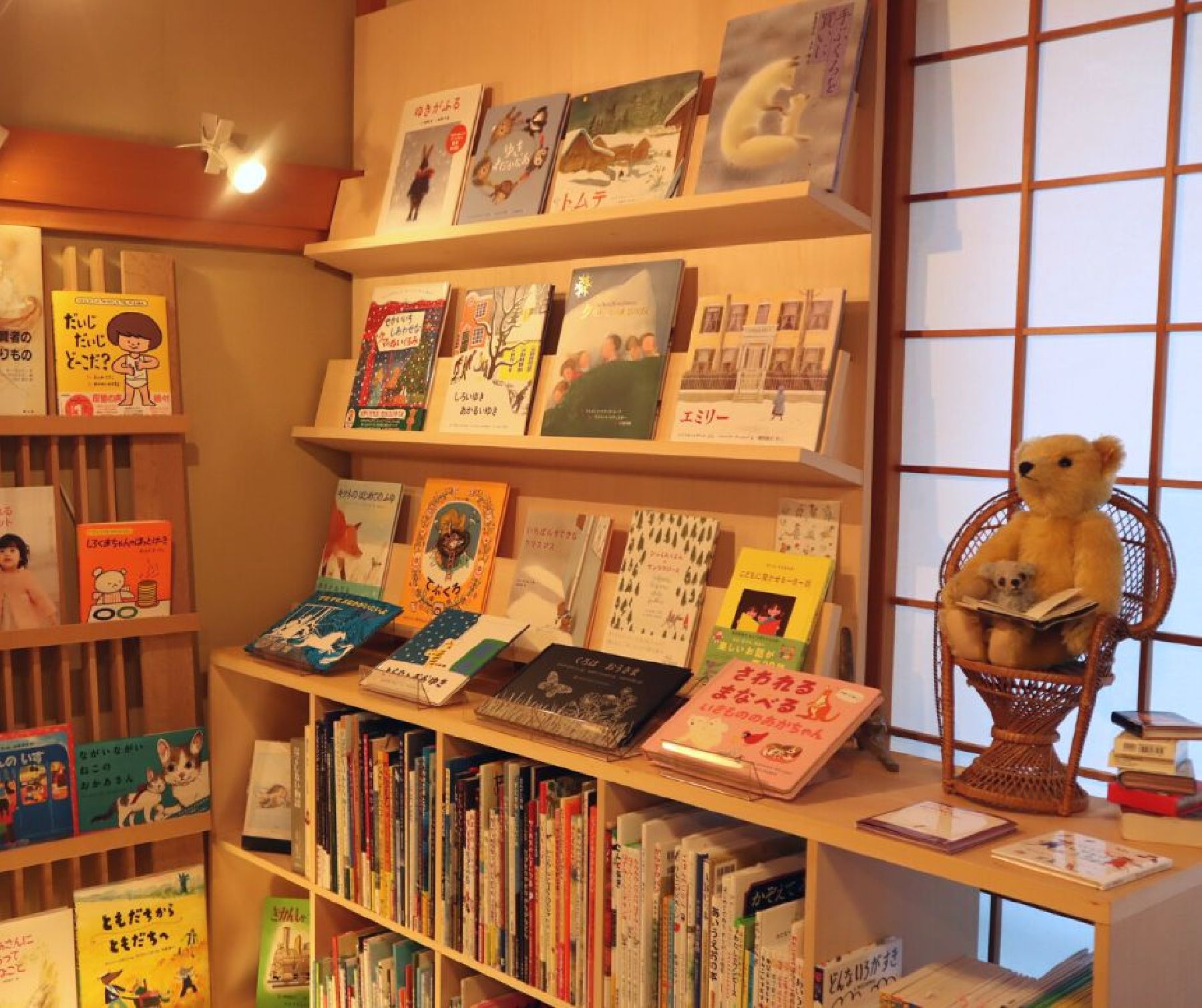
Full House is a stylish bookstore and cafe run by the critically-acclaimed novelist Yu Miri. It is located near the JR Odaka Station in Minamisoma City, in the coastal area of Fukushima prefecture.Full House is located on the ground floor of a refurbished house. The interior is wooden and elegant, and there is a selection of books in Japanese chosen by the author. The cafe serves meals like pasta and doria, as well as desserts and drinks with seasonal options.Yu Miri is famously known for her novel Tokyo Ueno Station (translated into English by Morgan Giles), which won the U.S. National Book Award in the Translated Literature category in 2019.Following 3.11, Ms. Miri has worked extensively to communicate the stories of residents of evacuated towns and villages in Fukushima’s coastal area, and has been living in Minamisoma City since 2015.When Ms. Miri moved to Minamisoma, there were no other bookstores open in the area —the few bookstores that had been there before 3.11 had closed following the evacuation—, so she decided to open her own in 2018, and named it ‘Full House’ after one of her novels.But something was missing. She quickly realized that people who traveled all the way to visit the store wanted to sit down with a warm drink, and there weren’t many restaurants or cafes nearby yet, so she decided to turn Full House into a book cafe the following year.Today, Full House is a lively and cozy hub where locals and visitors can bond over their love of coffee and literature.

The World Glassware Hall
Gourmet & Shopping

The Suzuki Brewery in Namie Town

The Suzuki Sake Brewery used to operate a sake brewery in Namie Town's Ukedo district, this building was located steps from the sea and was physically destroyed by the tsunami wave. This left the owner of the brewery without a home or a livelihood.They managed to evacuate with the necessities of the brewery and after the disaster, the brewery was moved to Nagai City to the mountains of Yamagata Prefecture in October 2011 (the same year as the earthquake). Since then, they’ve continued to brew sake with the hope of preserving the traditional sake brewing techniques that had been developed by generations of brewers in Namie Town.Finally, on March 20, 2021, the brewery was able to return to its hometown of Namie with the opening of a new brewery at the Namie Roadside Station. Here, visitors can watch the Suzuki brewers at work making their delicious sake. They even use locally grown rice to make some of their sake, with a focus on maintaining their hometown flavor.At the Namie Roadside Station, you can visit the sake brewery and taste their freshly brewed sake. For visitors who don't drink sake, there is also a sake flavored soft serve ice cream that is absolutely delicious. The soft serve comes in a traditional wooden sake cup!

You might also like

Top