Lake Side Hotel Minatoya

Lake Side Hotel Minatoya

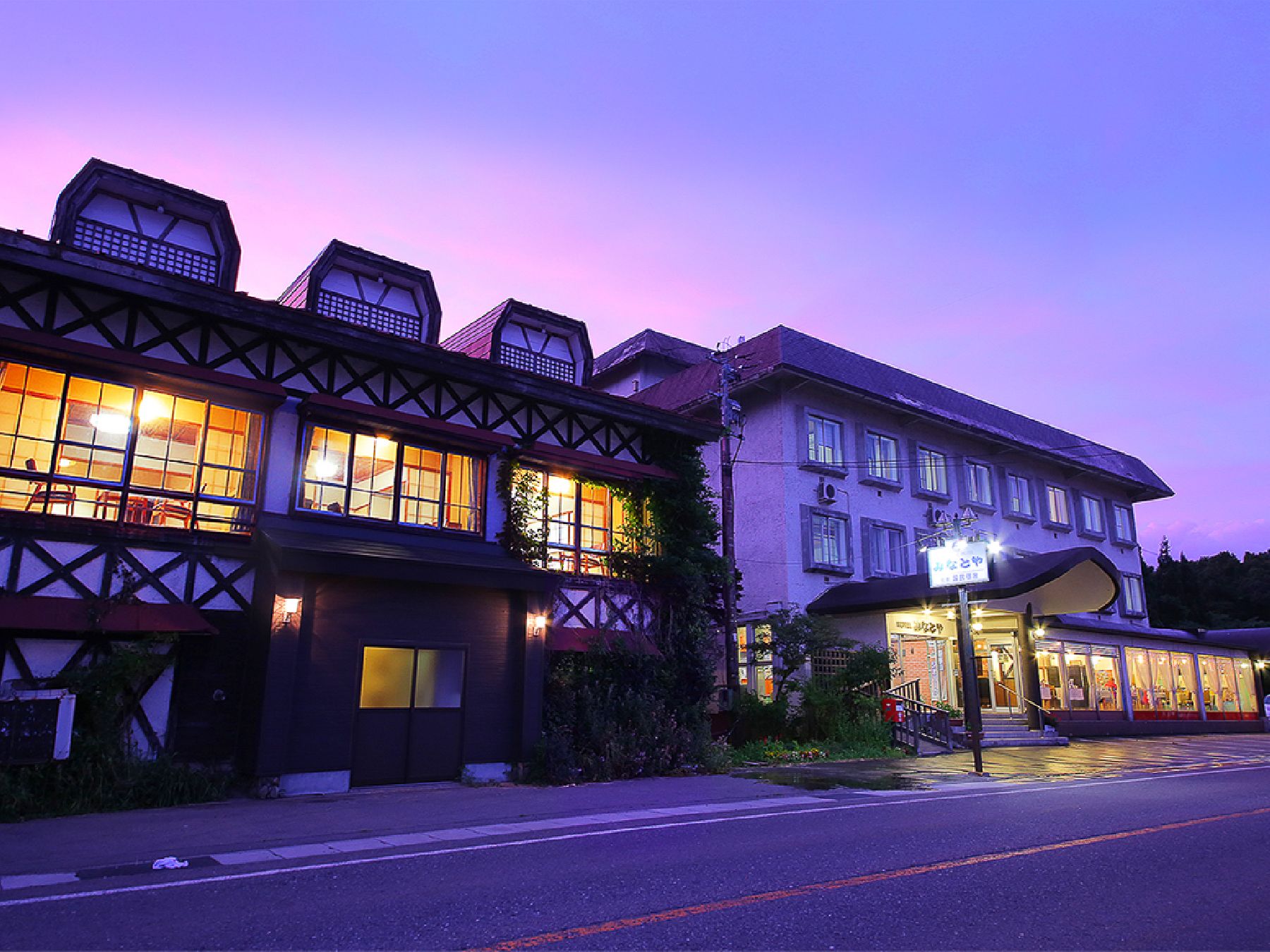
Lake Side Hotel Minatoya is located near Lake Inawashiro, known for its clear waters, often referred to as 'Heaven's Mirror.' It is also connected to Dr. Hideyo Noguchi and is situated within Bandai-Asahi National Park, offering a range of outdoor activities such as summer marine sports and winter views of swan migrations.

Guests can experience Fukushima's first Finnish-style tent sauna, located on the sandy shores of Lake Inawashiro. The hotel also features a rooftop BBQ terrace that doubles as a beer garden, with indoor seating available during bad weather or in the winter months.

The hotel is located close to the dock for the Lake Inawashiro Sightseeing Boat.

Venue Details

Venue Details
Websitehttps://www.h-minatoya.com/(Japanese)
Contact

goyoyaku@h-minatoya.com

0242-65-2111

Best SeasonAll Year
Accommodation details

Check in / Check out: 16:00 / 10:00

Hot springs: Maifan stone hot spring, sauna

Related infoVending machines, smoking area
English and Nepalese support available
Access Details
Access969-3285 Fukushima, Yama District, Inawashiro, Okinasawa, Nagahama−870 ホテルみなとや 4F
View directions
Getting there

By Car: 10min from the Inawashiro Bandaikogen I.C. exit off the Ban-etsu Expressway

Mapcode for Car GPS:413 081 360*23

Nearby

The World Glassware Hall
Cultural Experiences

Mitsuishi Shrine (Three Stones Shrine)

The Mitsuishi Shrine (Three Stones Shrine) is located a short 10-minute walk from Tadami Station in Tadami Town. Ichinoiwa, Ninoiwa and Saniwa are the three large stones that have spritual significance.  Ichinoiwa (the first stone) is thought to improve intelligence, Ninoiwa (the second stone) is thought to improve eyesight, and Saniwa (the third stone) is thought to improve connections with others, particularly romantic love. The Saniwa is a popular place to visit for those who are hoping to get married someday. To reach the shrine there is a short hike through dense forest, so it is recommended that visitors wear shoes that are easy to walk in.
The World Glassware Hall
Cultural Experiences

Ride the Oza-Toro-Tembo Train

The Oza-Toro-Tembo Train is a limited-service sightseeing train which is operated during selected days of the peak tourist seasons. The train has three carriages - the oza carriage (which has a tatami-floor), the torokko (tram) carriage, and the tembo (observation deck) carriage. Stretch out and relax in the tatami carriage with its sunken kotatsu (heated table) in autumn, take in Aizu's nature and air from the tram carriage, and revel in the fantastic scenery that await you through the expansive windows of the observation deck carriage. The train runs along the Aizu Railway tracks, meaning you can hop off at various points to visit places such as Ouchi-juku (a 15 minute taxi ride from Yunokami Onsen Station), and To-no-Hetsuri Crags, among others. For information about when this train runs this year, please check out this link (Japanese).

The World Glassware Hall
Cultural Experiences

Makie Painting Lacquerware Experience at Suzuzen

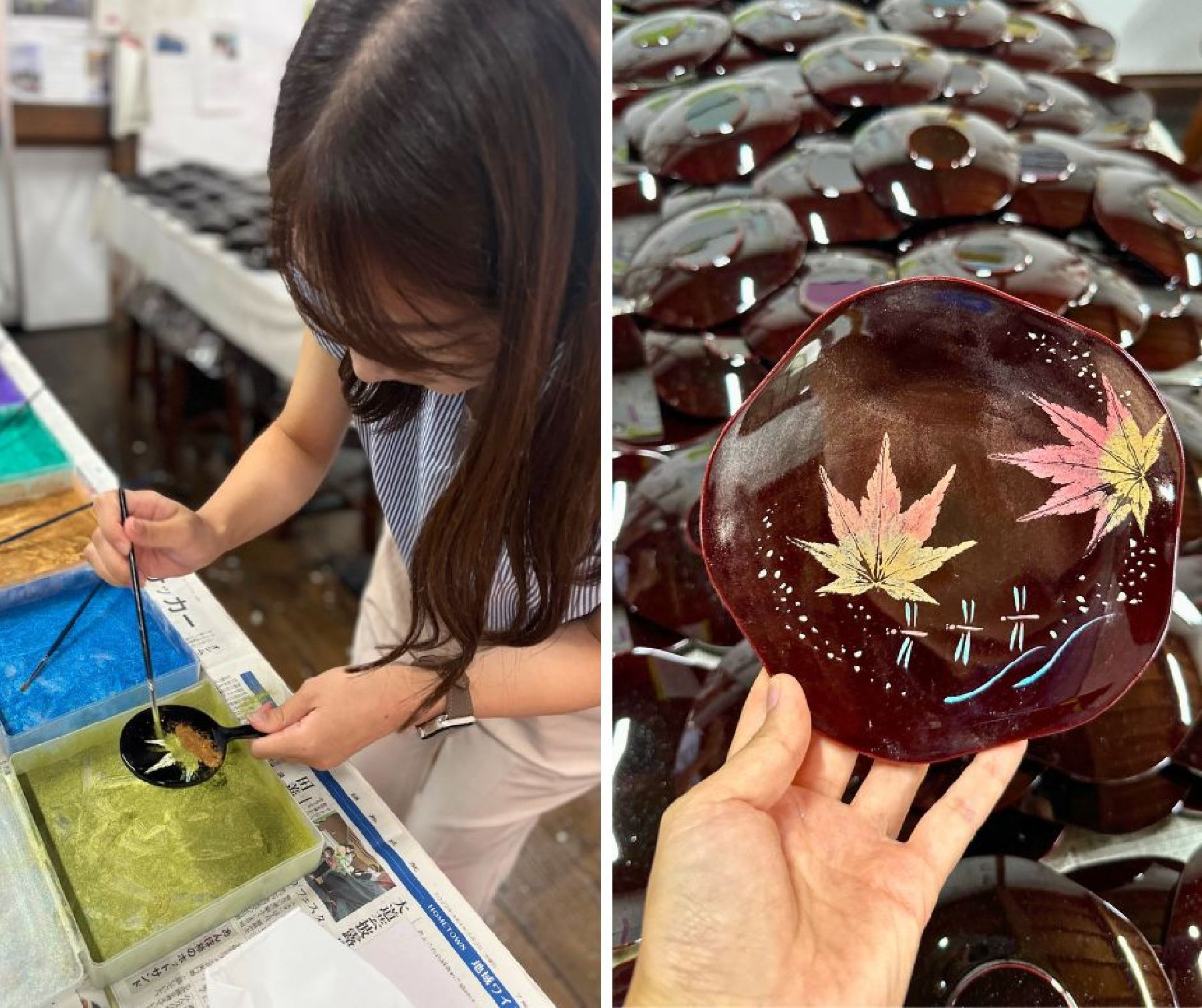
Suzuzen was established in 1832 as a lacquerware wholesale shop. Not only can visitors see process of lacquerware being finished using gold and silver dusted designs called 'Makie', but visitors can also have the opportunity to design their own lacquered product using Makie design techniques, which is perfect to take home as a souvenir. Booking & More InformationSuzuzen is made up of 6 kura (Japanese-style warehouses), which have been renovated. The Suzuzen warehouses include a gallery featuring pieces by contemporary artists who use lacquer in their work, and a cafe which is open for lunch. English-language signs also make the history of lacquer in Aizu accessible for overseas visitors.

The World Glassware Hall
Cultural Experiences

Paint Your Own Akabeko

Bookings for the akabeko painting can be made on the official reservation page.What is 'Akabeko'?The akabeko legend started at Enzoji Temple in Yanaizu Town, in the Aizu region. The construction of this temple began in the year 807, but due to a huge earthquake at the end of the seventeenth century, it had to be repaired in 1617. It was during the reconstruction of the temple that the akabeko became a folk legend.It is said that moving the wood and other supplies necessary for the reconstruction work was incredibly difficult because materials had to be transported from various villages upstream of the Tadami River. The materials were heavy and the journey to the temple was long. Cattle were used to transport materials, but many struggled to bear their loads.Then, out of nowhere, appeared a cow with a red coat. (It should be noted that, in the past, the word ‘red’ was used to describe the color ‘brown’, so it is likely that it was a brown cow.) The red cow supported the other cows and helped the priests who were constructing the temple until it was completed. Then, it suddenly vanished.'Akabeko' means 'red cow' in the local dialect.A number of statues of the cow were built inside the temple grounds so that the people of Yanaizu could express their gratitude to the akabeko.In the years following, there was a range of legends about the akabeko, with stories such as families who owned akabeko being rid of sickness upon stroking the cows. They continued to hold their status of bringers of good luck and strength. Families bought or made akabeko toys for their young children to play with.Akabeko Painting ExperiencesIn recent history, the Aizu tradition of painting akabeko began. It is said that this tradition started as something to do for children visiting Aizu-Wakamatsu City as part of school trips. This was when the story of the Akabeko evolved once more, into its newest papier-mâché form. The stripes on the face and back of the papier-mâché Akabeko are said to represent strength and perseverance.There are a number of workshops in Aizu-Wakamatsu City where you can paint your own Akabeko. Most workshops offer the standard red, white, and black paint. These talismans for good health make very cute and lightweight souvenirs to take home for family and friends – or keep for yourself! Those who prefer to buy a ready-painted Akabeko will be able to find it at most souvenir shops.BookingIf you would like to book an akabeko painting experience at the Tsurugajo Kaikan (a shopping complex located next to Tsurugajo Castle), please access this page.

You might also like

Ookawaso
Hotels

Ookawaso

Ookawaso is located in the Ashinomaki Onsen resort nestled along the beautiful valley of Okawa River.As you step into this inn, you will be welcomed by a live performance on the shamisen, a traditional Japanese stringed instrument.Attentive service is provided by female attendants (called nakai-san) dressed in kimono, which is another of the charms of this old-fashioned Japanese inn.For dinner, you can enjoy a Japanese-style set menu rich in locally produced ingredients.The open-air hot spring facility Shiki Butai Tanada consists of multi-level baths set up like terraced rice fields overlooking the valley. Here you can enjoy basking amid the beautiful nature of the valley.Ookawaso also has large baths and lie-down saunas, both of which are perfect for relaxing and soothing the body. Another open-air bath Kuchu Roten Buro looks similar to the famous stage of Kiyomizu Temple in Kyoto and commands a magnificent view.After enjoying dinner and hot spring bathing, guests can experience a mochi (rice cake) pounding event, which is a typically Japanese traditional communal activity.When the pounding is completed, freshly-made mochi will be served to the participants on the spot. Please enjoy to the full everything that a Japanese-style hot spring resort hotel has to offer.  

Daiwa Link Aizu-Tajima
Hotels

Daiwa Link Aizu-Tajima

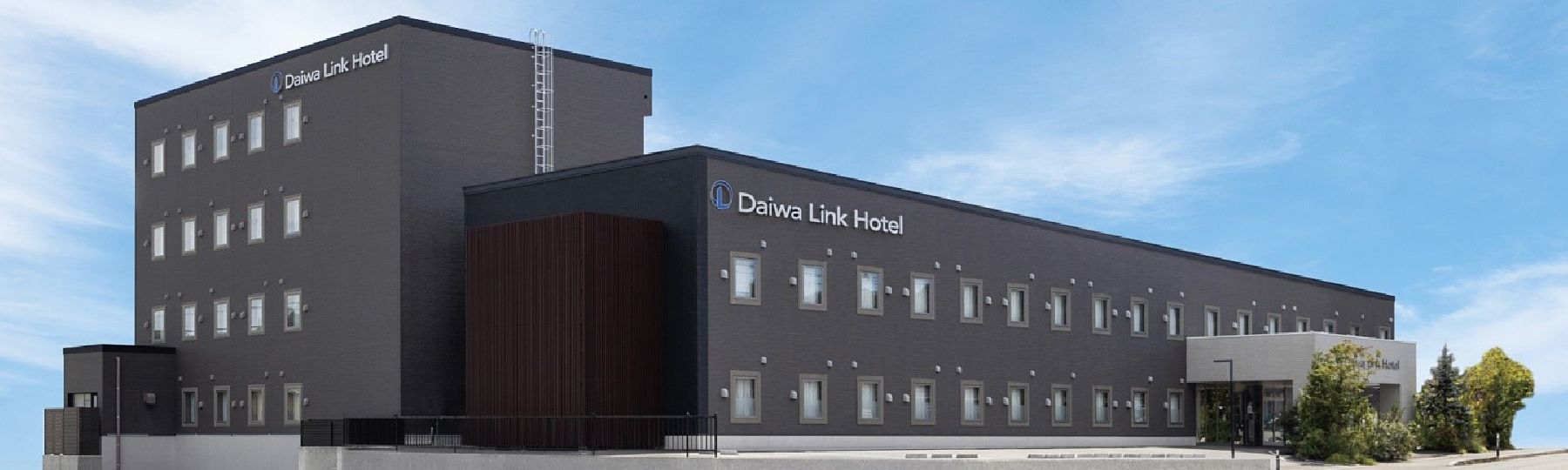
Daiwa Link Aizu-Tajima offers a relaxed and welcoming atmosphere, making it an ideal choice for both business and leisure stays, including extended visits. The hotel offers a variety of room types, including single, twin, and double options to suit different needs.Guests can start their day with a hearty breakfast buffet in the spacious dining café, which is available free of charge. The café serves as a versatile space, suitable not only for meals but also for a range of other activities.

Villa Inawashiro
Hotels

Villa Inawashiro

Villa Inawashiro is a hot spring resort hotel, located in Inawashiro Town, at the foot of Mt. Bandai. It's possible to bathe in the onsen baths at Village Inawashiro each day until midnight. The spring flows from Mt. Bandai, and is called a "beautifying hot spring" and a "fertility hot spring." In the winter, visitors can enjoy winter sports at the ski resort located next to the hotel. Visitors can dine on original dishes made from the best ingredients grown on Villa Inawashiro's private farm. Located less than one hour from Aizu-Wakamatsu and Kitakata, and close to Urabandai, Villa Inawashiro makes an excellent hub for sightseeing in the Aizu area.

Hôtel De Première Minowa
Hotels

Hôtel De Première Minowa

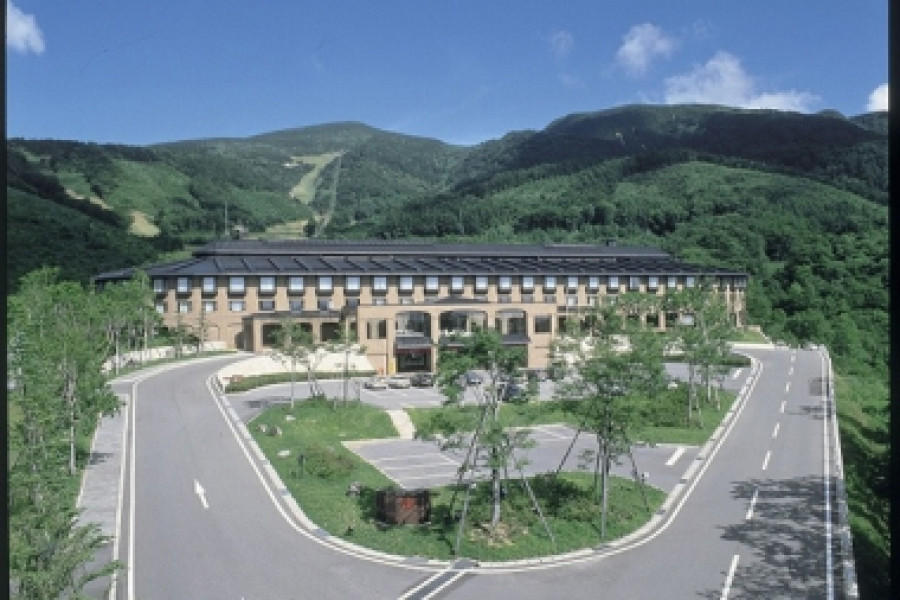
Enjoy gazing out upon the evening sky bathed in orange, and the sun setting behind Mt. Bandai from the lookout (The best time to see this view is from August to October).A resort perched in the highlands of the Bandai-Asahi National Park. Minowa shows a different face throughout the seasons, whether it is colored with fresh greens in spring, offering relief from the heat of summer, adorned with beautiful autumn foliage, or being used as a ski field in winter.Hôtel De Première Minowa is a fantastic place to enjoy relaxation, beauty, dining, and luxury to the full. What's more, guests can satiate all five senses with authentic French and Japanese cuisine. Surrounded by granite, the main hot spring bath uses very soft pure water that flows down the valley from Mt. Minowa. The onsen baths, with their water full of healing negative ions, are very popular among guests.

Top