Mishima Town Local Crafts Museum

Mishima Town Local Crafts Museum

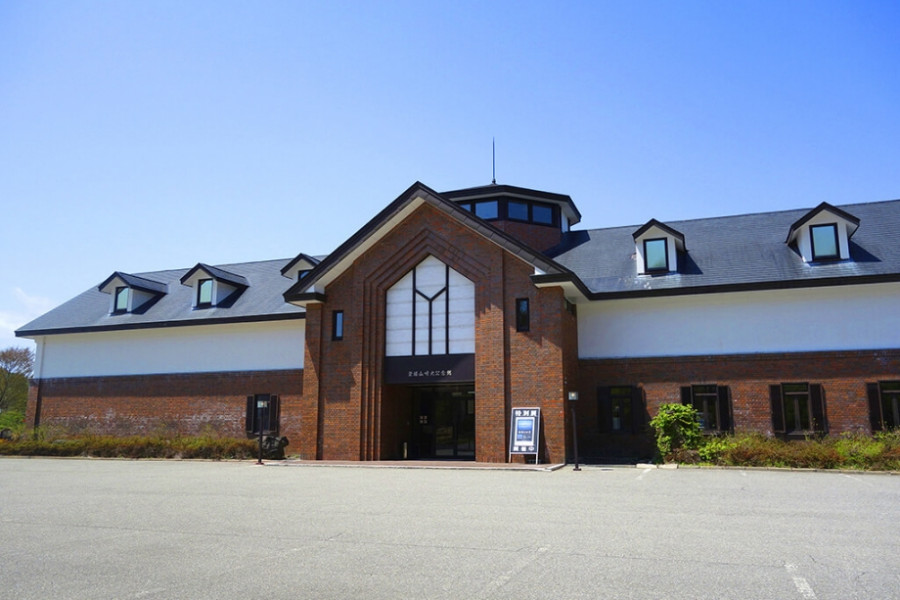
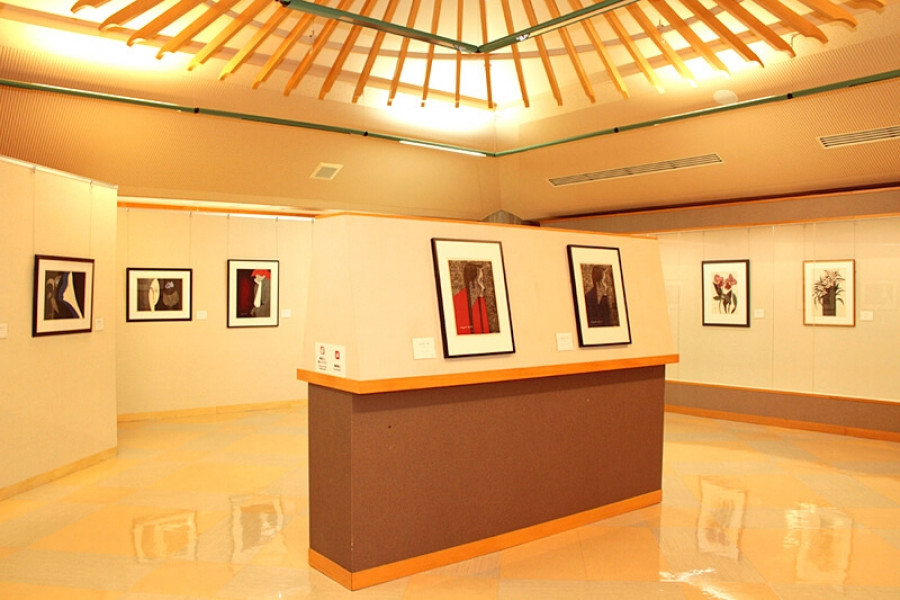
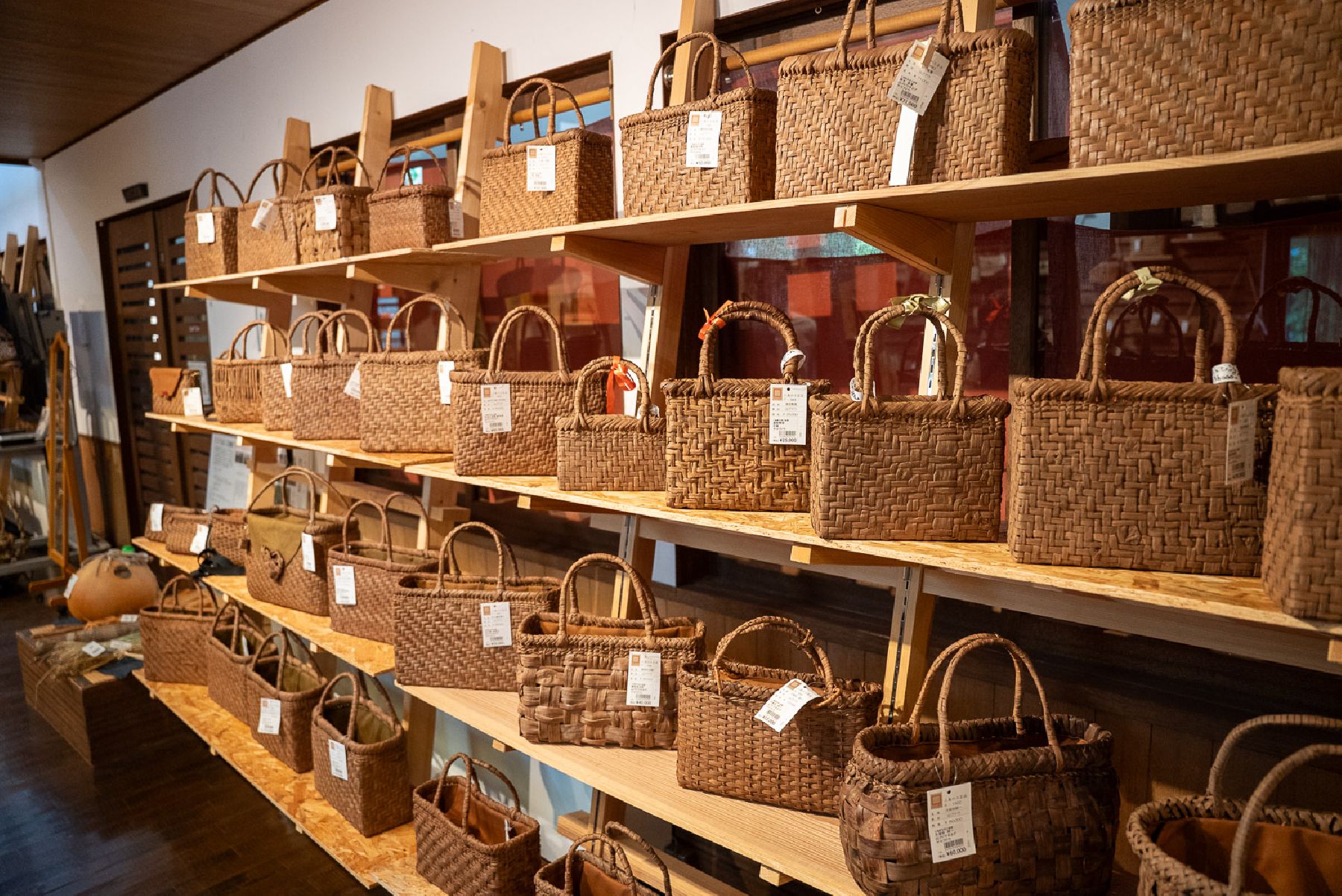
This crafts museum, deep in the heart of the beautiful Oku-Aizu region, specialises in braided wicker crafts that have been a staple of the area for centuries. The local people have a strong affinity for handmade crafts, passing techniques down from generation to generation. In addition to learning about the history of the crafts here, visitors can try their hand at it themselves, making a small strap souvenir to take home (1,000 yen per person; reservations required).

There's also an expansive shop on site where visitors can buy baskets, bags, home ornaments and so on.

A trip to Mishima combines well with seeing a passing train at one of Japan's most scenic railway bridges, the Tadami River Bridge No.1, accessible by parking at the Mishima roadside station.

Venue Details

Venue Details
Websitehttps://www.okuaizu-amikumi.jp/(Japanese)
Contact

0241-48-5502

Opening Hours

9:00 - 17:00

Closed Mondays (or, next day if public holiday)

Entrance FeeFree to enter
Related infoParking for about 200 vehicles on-site
Access Details
AccessSuwanoue-395 Nairi, Mishima Town, Onuma District, Fukushima 969-7402
View directions
Getting there

By Car: About 1 hour from Aizu-Wakamatsu City

By Train: 20min walk from Aizu-Nishikata Station (Tadami Line, 1 hour from Aizu-Wakamatsu Station)

Useful Links

Guide to Visiting the Famous Tadami River Bridge Viewpoint

Tadami Line: 5 Sights You Shouldn't Miss

Michi-no-Eki Ozekaido Mishima-juku (Roadside Station)

5 Reasons to Visit Mishima Town

Nearby

The World Glassware Hall
Nature & Scenery

Inawashiro Herb Garden

The breeze from the nearby Lake Inawashiro, seasonal flowers, and art displays of the Inawashiro Herb Garden await your visit!The outdoor garden area is around 100,000 square meters and is filled with various herbs, flowers, and plants that bloom at different times on the year, creating a unique visitor experience that changes with the seasons. The park has around 500 varieties or herbs, flowers, and plants including lavender, mint, chamomile, nanohana blossoms, poppies, sunflowers, cosmos, and kochia! There is an indoor greenhouse area, so, even on rainy days, visitors have plenty of greenery and flowers to see! In addition to the herbs, flowers, and plants you will also find seasonal decorations and original art displays that are created and updated for guests to enjoy.The outdoor garden area of the Inawashiro Herb Garden also features 5 m-tall wooden statues carved by a Canadian artist, Glen Greenside. The 12 statues, one for each zodiac sign, were carved over the course of twelve years as part of a now-discontinued annual chainsaw festival that took place at the garden.Inside, at the shop, visitors can find products and snacks that are made from various herbs and flowers.

The World Glassware Hall
History & Culture

Aizu Hanko Nisshinkan

Aizu Hanko Nisshinkan was the highest-level learning institution of its time. It was established in 1803 by the Aizu Domain to foster Japan's next generation of talented samurais.Children of samurai families entered this school at the age of ten and worked on academic studies and physical exercises to instill both physical and mental discipline.The property, covering about 26,500 square meters in area, used to house such facilities as a martial arts training hall, an astronomical observatory, and Suiren-Suiba Ike, Japan's oldest swimming pool.During the late Edo Period, the school turned out a great deal of excellent talent, including the legendary group of young warriors, the Byakkotai. The facilities, which were burned down during the Boshin War, have been rebuilt faithful to their original design. They now function as a hands-on museum that features exhibits of the magnificent architecture of the Edo Period and dioramas of school life as it used to be.Visitors can enjoy practicing some of the essential disciplines of the samurai, including tea ceremony, Japanese archery, meditation, and horseback riding, as well as experiencing hand painting an akabeko (red cow), a traditional good-luck charm of Aizu.Make a reservation : https://nisshinkan.jp/reservation*Since the website is in Japanese, we recommend that you use Google Translate or other translation functions to make reservations. 

The World Glassware Hall
Museums & Galleries

Morohashi Museum of Modern Art

This museum, which opened in June 1999, is located a short walk from the Goshiki-numa Ponds, which is one of the most scenic spots in Fukushima Prefecture.Morohashi Museum of Modert Art houses a collection of about 350 of the works of Salvador Dali, the master Spanish surrealist artist, including paintings, prints, and sculptures, as well as about 40 works by such impressionist and post-impressionist artists as Cézanne, Renoir, Chagall, Picasso, and Van Gogh. About 100 works out of this collection are on permanent exhibition, including 37 works of sculpture by Dali. The scale of this collection is unparalleled in the world and really is worth seeing.

The World Glassware Hall
Nature & Scenery

Tenkyokaku

Named by the Crown Prince Yoshihito upon its opening in 1907 as “The Palace of Heaven’s Mirror”, Tenkyokaku is a decadently decorated former villa.Imperial Prince Arisugawa Takehito decided to build Tenkyokaku after being impressed by the beauty of Lake Inawashiro during a visit to the Tohoku District. His family, the Arisugawa-no-miya Family, owned the villa until 1952, when it was granted to Fukushima Prefecture.Tenkyokaku has since been used as a meeting hall and a space for lectures and exhibitions. The former villa, its annex and its front gate have been specified as important cultural properties of Japan.Despite being restored in 1984, the building retains many of its original features, including the impressive chandelier which can be seen below.Despite no longer being able to see Lake Inawashiro from the windows of Tenkyokaku, the luxurious renaissance-style architecture and liberal use of all things gold and glittery means that visitors will by all means feel that its name still rings true.For only 1000 yen, you can dress up in a traditional outfit and take as many photos as you would like in the building!

You might also like

Morohashi Museum of Modern Art
Museums & Galleries

Morohashi Museum of Modern Art

This museum, which opened in June 1999, is located a short walk from the Goshiki-numa Ponds, which is one of the most scenic spots in Fukushima Prefecture.Morohashi Museum of Modert Art houses a collection of about 350 of the works of Salvador Dali, the master Spanish surrealist artist, including paintings, prints, and sculptures, as well as about 40 works by such impressionist and post-impressionist artists as Cézanne, Renoir, Chagall, Picasso, and Van Gogh. About 100 works out of this collection are on permanent exhibition, including 37 works of sculpture by Dali. The scale of this collection is unparalleled in the world and really is worth seeing.

The World Glassware Hall
Museums & Galleries

The World Glassware Hall

The World Glassware Hall is located at the foot of Mt. Bandai, by the side of Lake Inawashiro.About 25,000 handmade glassware items, imported directly from countries all over the world, are exhibited and sold at the World Glassware Hall. You can even try your hand at glass etching, or glass blowing.Next to the Glassware Hall is the Inawashiro Original Beer Brewery and a sweets shop. Local Inawashiro beer has received the gold prize in an international beer competition, and can be purchased on site. In the sweets shop, you can try a line up of famous local delicacies.

Fukushima Prefectural Museum
Museums & Galleries

Fukushima Prefectural Museum

The Fukushima Prefectural Museum (Fukushima Museum) [福島県立博物館] is in Aizu-Wakamatsu City, about a ten-minute walk (750 m) from Tsurugajo Castle. The museum covers the history of Fukushima prefecture from the primitive age through modern times with exhibitions of historical items, relics, scale models, and replicas of objects of historical significance.Its general exhibition is divided into six parts and explains the history of the area in chronological order. Starting with archaeological findings from the Glacial Age, the formation of the Japanese islands, and the first settlements (all covered in the Primitive Age section), the exhibits show the cultural developments and the evolving way of life through to modern times. The last exhibit, ‘Fukushima and its Nature’, details the prefecture’s ecosystems and how they have been impacted by natural disasters through the years.The museum also has departmental exhibition rooms that focus on Fukushima’s geological features and folk culture.Visitors can ask for an English guidebook at the entrance, which contains explanations of most items on exhibit. Information in English, Chinese, and Korean is displayed on some screen panels at the museum.The museum also houses a tea room, the Prefectural Museum Tea Room ‘Tsukinai’, that serves lunch and a variety of drinks. To the right of the main entrance is a recreational room for children. The room has a tatami area, children’s books, wooden toys, and decorations in traditional Aizu momen (cotton) textiles, which give it a unique, warm feel. Throughout the year, several special events and activities for children are hosted in this space.

Showa Nostalgia Museum
Museums & Galleries

Showa Nostalgia Museum

The Showa Nostalgia Museum (or 'Natsukashi-kan') is a museum in Aizu-Wakamatsu dedicated to the Showa period of Japanese history, 1926-1989. The museum features goods spanning the period and includes several rooms perfectly recreating the style that would have been common generations ago.The walls are plastered with classic movie posters and the shelves are heaving with old toys and model figurines. There is also a small shop at the front desk selling snacks and small ornaments.

Top