Tatsusawa Fudo Falls

Tatsusawa Fudo Falls

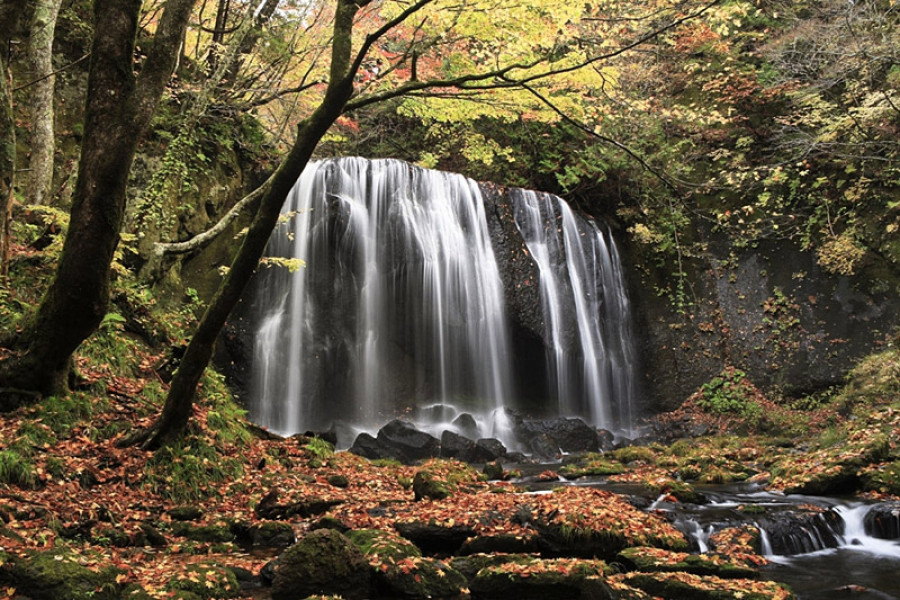
Breathe in the cool, crisp negative ion air and relax under the shade of trees as you marvel at the beauty of the Tatsusawa Fudo Falls. Two waterfalls make up the Tatsusawa Fudo Falls; Odaki is considered the male fall and is the larger of the two (16 m tall), while the smaller of the two is considered female and called Medaki. The sight is indeed lovely to behold as the silvery waterfalls over the rocks below.

The Tatsusawa Fudo Falls are located in Inawashiro Town and are beautiful year-round. These falls are also a treasure for photographers because of how serene they are surrounded by nature on all sides. In spring and summer, the lush greenery makes the whole forest feel alive; in autumn, the vibrant colors of the leaves reflect off the water and give it a painterly feel. With proper snow equipment, you can even visit in winter and see the stark contrast falls against the white snow.

The drive up to the falls is only 15 minutes from central Inawashiro Town, and there’s a small parking lot about a 10-minute hike from the falls. The walk itself is easy and smooth. You’ll first pass Lady Medaki before arriving at the main Odaki falls. And with maple trees framing the waterfall just perfectly, you’ll want to be sure to remember your camera and perhaps a tripod as well.

There is even nearby onsen for you to stay and relax afterward. So why not visit the falls to relax your mind and soul, and then go for a soothing dip in the hot springs to rejuvenate your body. You won’t be disappointed with the vista of the falls or the nearby area.

Venue Details

Venue Details
Websitehttps://bandaisan.or.jp/ib/en/nature/
Contact

Inawashiro Tourist Association

(+81) 242-62-2048

Best SeasonAll Year
ParkingAvailable (Space for 20 cars)
Access Details
AccessTatsusawa, Kogai, Inawashiro Town, Yama District, Fukushima Pref. 969-2752
View directions
Getting there

By Car: 30 min drive from Inawashiro-Bandaikogen I.C. exit off the Ban-etsu Expressway. The falls are a 10 min walk from the parking lot.

By Train: 30 min by taxi from Inawashiro Station (JR Ban-etsu West Line). Walk about 10 min after alighting from the taxi.

Nearby

The World Glassware Hall
Hot Springs

Oze Hinoemata Onsen

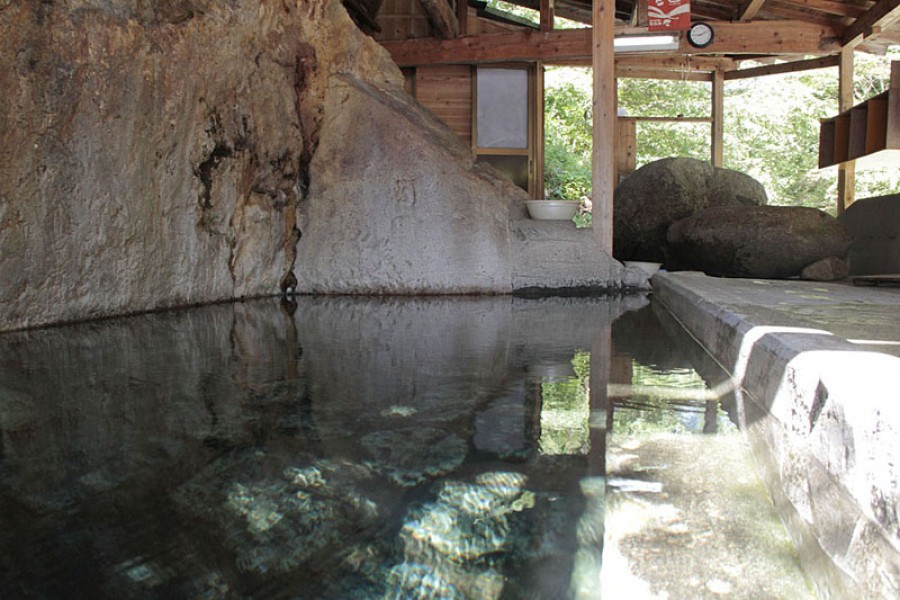
Oze Hinoemata Onsen has hot springs fed to every household, as well as bathing facilities run by the village for day visits. Aruza Oze no Sato, Hiuchi no Yu, Koma no Yu are all names of hot spring establishments in the town. Hinoemata area is also famous for Kabuki, a form of traditional performing art in Japan. Traditional Kabuki performances with a rich history dating from the Edo Period are still performed to this day on Hinoemata's kabuki stage, which is over 250 years old. There are three performances per year (May 12, August 18, and the first Saturday of September). Explore historical and cultural treasures such as the kabuki stage, the unique shrine featuring a stone statue of Hashiba-no-Banba, itakura (wooden storehouses), the six jizo statues, and the Hinoemata Folk Village by foot. Make sure to try Hinoemata area's 'Yamodo Cuisine': a characteristic cuisine centered on 100% buckwheat noodles, which features dishes such as 'Hatto soba' and rice cakes. Visitors can also enjoy walking and fishing at Hinoemata Mini Oze Park, a spacious park which comes to life with bright colours throughout the year as various flowers take turns to bloom. Oze Hinoemata Onsen is at the gateway to Oze National Park, making it as a base for hiking around Ozegahara Marsh, and for climbing mountains such as Mt. Hiuchigatake, Aizu Komagatake, Teishakuzen, and Tashiroyama.

The World Glassware Hall
Nature & Scenery

Shibuki-gori (Naturally-forming ice sculptures)

If you head to Tenjinhama beach on Lake Inawashiro in the depths of winter, through the trees at its south towards the mouth of the Nagase river, you will see the "shibuki-gori" natural ice sculptures. Lake water is picked up by strong winds from the west, and meets the trees on the coastline. There it creates a very unusual phenomenon with a beauty that rivals the "juhyo" (ice-covered trees) seen at the tops of mountains. Local peoples and visitors alike never tire of these sights. You can also see other shapes formed by ice here, such as ice drifts and the prominent "Omiwatari" cracked, rising ice on the beach and lake surface. Please note that Shibuki-gori are natural ice sculptures, and therefore their appearance and size change by the day. Please check before visiting.

The World Glassware Hall
History & Culture

Mt. Iimoriyama

Located less than 4km from Tsurugajo Castle in Aizu-Wakamatsu, Fukushima, Mt. Iimoriyama has had a difficult and somewhat dark past. But despite it’s history, the natural beauty of the place remains untarnished. There are many local food stalls set up near the base of the hill, so it’s a good idea to have a snack before you begin the ascent up the stone steps. Also at the bottom is the Byakkotai Memorial Hall; it’s located next to the path up the mountain so it’s easy to find. Inside, guests can observe various artifacts of war and learn about some of Aizu's history.Visitors have two choices to get to the top of the hill: hike up the 183 steps to the summit for free; or pay 250 yen to ride the escalator up (150 yen for children). At the summit stand the nineteen graves of the Byakkotai, White Tiger Corps. The story of these young teenage samurai-in-the-making is legendary in Aizu-Wakamatsu City, and all around this prefecture. The Byakkotai boys were part of the defence against the military forces sweeping through the country during the 1868 civil war. They remained loyal to the leader of their domain and Shogun.On an autumn day during the one-month-long siege on their city, the boys had retreated to Mt. Iimoriyama. From the top of this hill, they caught sight of what they assumed to be Tsurugajo Castle set on fire - a sure sign that the war was lost. In response, they did what they had been taught was the honourable course of action, and took their own lives. In fact, the castle had not been set on fire, and the war was not yet lost. One boy was unsuccessful in his attempt, and was saved by a local woman traversing the hills. His life was saved and his story has become the history we know today. Visitors to Mt. Iimoriyama can stand in the same spot as the boys looking out over the city, or pay respects at the various memorials.The gravesite at the top of Mt. Iimoriyama was built in remembrance of those nineteen boys. Their story resonated with the leaders of the Axis Powers of World War II; near the gravesite are two historic landmarks donated by Nazi Germany and Italy. Down the northern side of the mountain are Uga-shindo, a shrine built in the late seventeenth century which deified a white snake as a god of abundance and fertility. There is also a lovely temple shaped like a turban shell, Sazaedo Temple, that visitors can actually go inside.

You might also like

Kannon-numa Forest Park
Nature & Scenery

Kannon-numa Forest Park

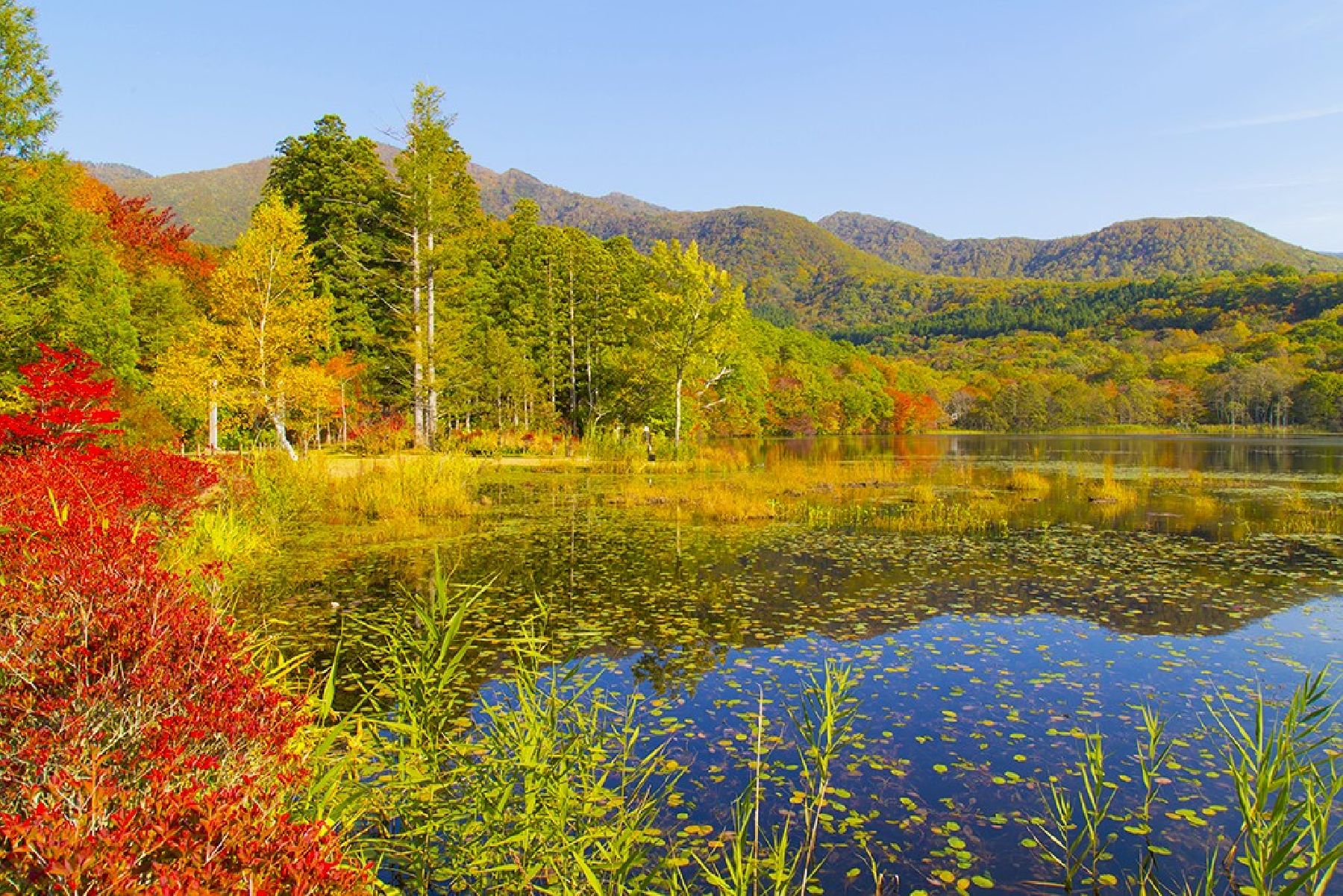
Kannon-numa Forest Park (観音沼森林公園) is a picturesque natural area in the Minamiaizu District of Southern Fukushima Prefecture.A wide variety of vegetation, flowers, and birds can be found at Kannon-numa Forest Park. There are nine walking trails, each offering unique sights. The main trail covers about 1.2 km and goes around the Kannon-numa swamp, which is one of the main highlights of the park. The park becomes transformed in each season, with cherry blossoms in spring and hydrangeas in the summer, and it is particularly popular with visitors during the autumn. The colorful trees reflected on the swamp’s waters make for a lovely sight, making it one of the main autumn attractions in the area. The best time to visit to see the autumn foliage is typically from late October to early November. There is also a shrine, Dake Kannondo, believed to have been built over 1,000 years ago.Located about 35 minutes from Ouchi-juku by car, this park is the perfect place to bask in the natural wonders of Shimogo Town. 

Bandaisan Gold Line
Nature & Scenery

Bandaisan Gold Line

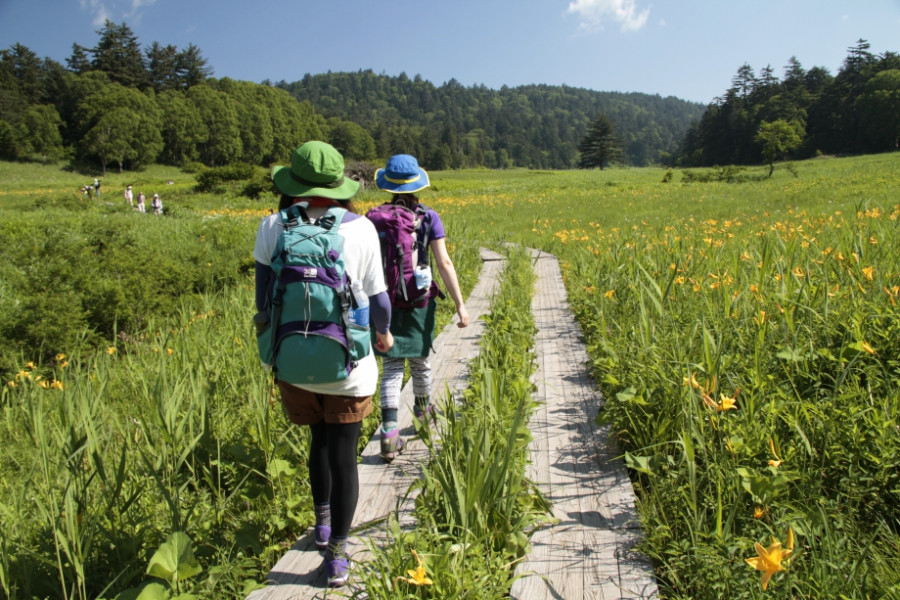
The Bandaisan Gold Line road connects Bandai Kogen, a highland rich with lakes diverse in shapes and size, and various alpine plants, and the Aizu area, which has an immensely rich and fascinating history. This submontane sightseeing road offers diverse views of Mt. Bandai (known in Japanese as 'Bandai-san') and can lead visitors to either the mountain's rugged caldera or to the picturesque Lake Inawashiro. Visitors can discover new hidden gems every time they explore the Gold Line by car, making it a very popular spot to return to among tourists and locals. The area surrounding the road is known as a foliage-viewing spot with hairpin curves that carve through the woodlands. On the walking trail that leads to Baya-ike, a "phantom" waterfall, visitors can take in the beauty of the landscape as they hike. The most highly recommended walking course extends from Happodai to the Oguninuma wetlands, where in late June, visitors are greeted by ban array of beautiful, broad dwarf day-lilies.

Natural Sparkling Water in Kaneyama Town
Nature & Scenery

Natural Sparkling Water in Kaneyama Town

Kaneyama Town is a scenic, rural town surrounded by woods. One of the most famous things about Kaneyama Town is its well of naturally carbonated water. Such water is rarely found in Japan. Small bubbles are infused into the water, giving it a gentle and smooth taste. Locals and visitors take empty bottles to the well to fill and take back home. There is a pot at the well that can be used to collect water from the base of the well. Pulling up water from the bottom with a rope definitely makes for a fun and unique experience! Why don’t you try this natural sparkling water while enjoying the beautiful scenery in Kaneyama?

Top