Nicchu Line Weeping Cherry Blossoms

Nicchu Line Weeping Cherry Blossoms

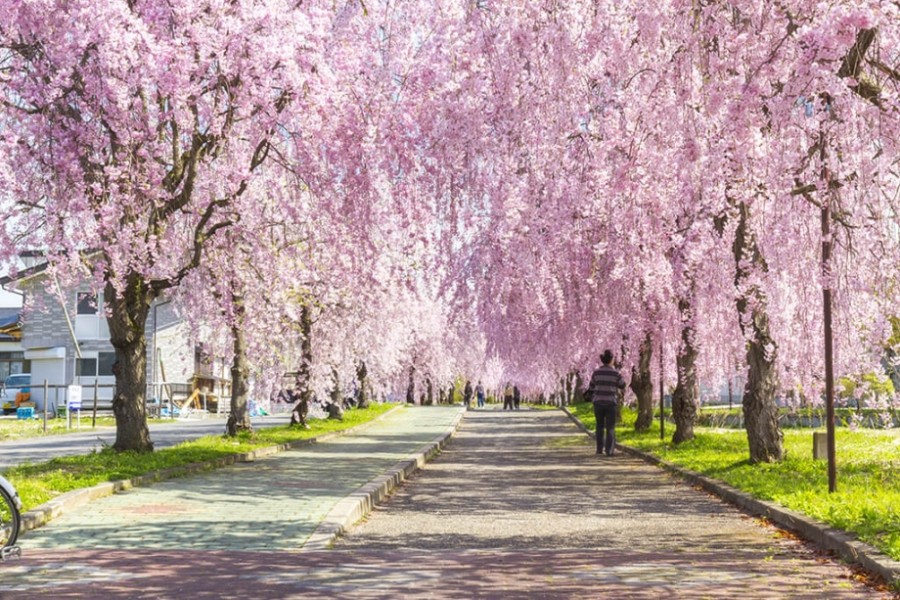
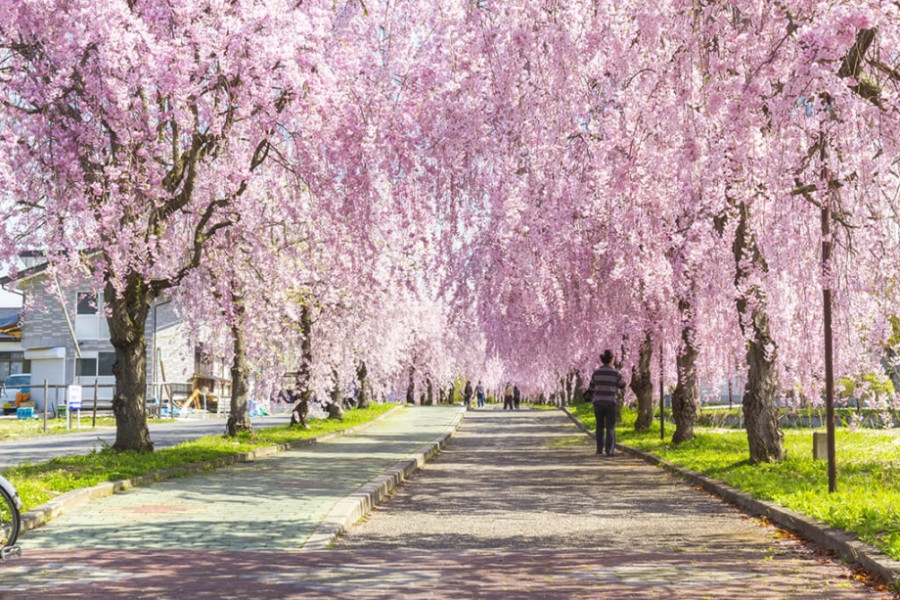
The Nicchusen cherry blossoms in Kitakata City follow a three-kilometer section of the former Nicchu Line railway. Once running between Kitakata and Atsushio Onsen, part of the line has been converted into a walking and cycling path. Each spring, rows of cherry trees along the path draw visitors to see them in bloom, usually around Golden Week in late April or early May.

The length of the path allows people to enjoy the blossoms at their own pace. Even when some areas are busy, it is easy to find quieter spots for photos or a break. Visitors often walk the full route, stopping at different points to take in the changing scenery.

Along the way, there are several features of interest. An old steam locomotive, once used on the Nicchu Line, remains on display at the midpoint and has become a popular photo spot. The path also runs past houses, rice fields, and farmland, giving a glimpse of the everyday landscape of Kitakata.

Different types of cherry trees can be seen, from weeping varieties to those with pale or darker blossoms. With open areas to sit and rest, many people bring food or drinks to enjoy a picnic under the trees, making the Nicchusen cherry blossom path a relaxed way to experience spring in Fukushima.

Venue Details

Venue Details
Websitehttp://www.kitakata-kanko.jp/category/detail.php?id=104(Japanese)
Contact

Kitakata Tourism and Product Association

(+81) 241-24-5200

Best Season
  • Spring
ParkingPaid parking
Entrance FeeFree
Related infoBest time to see cherry blossoms: Mid to Late April
Access Details
Access2 Oshikiri Higashi, Kitakata City, Fukushima Pref.
View directions
Getting there

By Car: 35 min drive from the Aizuwakamatsu I.C. exit off the Ban-etsu Expressway.

By Train: 5 min walk from Kitakata Station on the JR Ban-etsu West Line

Useful Links

Destination Spotlight: Nicchu Line Weeping Cherry Blossom

Fukushima's Top Cherry Blossom Spots

Cycling in Kitakata City

Related trips

Nearby

The World Glassware Hall
History & Culture

Tsurugajo Castle

Tsurugajo Castle is the crown jewel of the Aizu region, bringing visitors from all over the world to see its incredible scenery, which changes drastically every season.Despite several reconstructions to the main castle over the years, the surrounding park's stone walls remain in their original state. In 2010, for the first time since it was refurbished in 1965, the castle underwent a cosmetic restoration. Following completion in 2011, the same red-tile roofs seen by the Byakkotai (during the Boshin War and finals days of the Tokugawa shogunate) are now displayed for all to see.This castle is one of the final strongholds of samurai that remained loyal to the shogunate and today stands as a symbol of courage and faithfulness.Within the castle tower's museum, the swords and armor of the castle’s successive lords are on display. Visitors can watch a CG-enhanced theatrical video reflecting on the great history of Aizu.In addition to the historical atmosphere surrounding Tsurugajo, visitors can sense the changes that have occurred throughout history, thanks to the engaging and informative museum within the castle walls. It’s fun to gaze across Aizu from the fifth floor, like a feudal lord admiring his domain—the viewing platform up here provides panoramic views taking in Mt. Bandai and Mt. Iimoriyama.The castle is also a must-see in the springtime when approximately 1,000 cherry trees offer a magnificent display within the castle's grounds.When you’re in the mood for a rest, visit the Rinkaku Tea Rooms for some freshly-prepared matcha green tea. This tea house on the grounds of Tsurugajo was vital in the spread of this traditional art—and had it been destroyed during the Meiji Restoration, tea ceremony as it is known in Japan might have vanished.

The World Glassware Hall
Nature & Scenery

Urabandai Highlands

The Urabandai highlands of northern Fukushima Prefecture, are situated at an altitude of 800 meters and surrounded by Mt. Bandai, Mt. Adatara, and Mt. Azuma. The highlands were created by Mt. Bandai erupting in 1888. Urabandai is part of Bandai Asahi National Park and offers a variety of seasonal attractions. Cool weather in summer and deep snow in winter make Urabandai a perfect place for both indoor and outdoor enjoyment. About 300 lakes and ponds, including the Goshiki-numa Ponds and Lake Hibara, are scattered across Urabandai. The harmonious beauty of nature created by the abundant woodlands and lakes will certainly touch the hearts of all visitors.

The World Glassware Hall
History & Culture

Aizu Urushi Lacquerware

Aizu Urushi Lacquerware has a very long history – predating lacquerware from Wajima or Tsushima. Aizu Lacquerware was originally produced in areas of Aizu that experience very heavy annual snowfall. The industry began to boom about 400 years ago - this development was initiated by feudal lord Gamo Ujisato’s endorsement of Aizu Lacquerware.From then onwards, techniques used in the production of Aizu Lacquerware were refined and Aizu Lacquerware became very famous in Japan.  You can make your paint your own design onto Aizu Lacquerware items, or even try painting with lacquer, in Aizu region.Makie Painting Experience WorkshopsSuzuzen (Aizu-Wakamatsu City) From 1,900 yen Page on Fukushima.Travel Website Suzutake (Aizu-Wakamatsu City) From 1,000 yen Must book in advance Page on Fukushima.Travel Website (Japanese)Bansho (Aizu-Wakamatsu City) From 1,200 yen  Irregular opening hours in winter Website (Japanese)Fukubun (Aizu-Wakamatsu City) From 1,600 yen Irregular opening hours Must book in advance Website (Japanese)Shitsugei Tsunoda (Urabandai Area) From 1,000 yen They also have an experience where you can paint with real lacquer (From 10,000 yen) Must book in advance Website (Japanese)

You might also like

To-no-hetsuri Crags
Nature & Scenery

To-no-hetsuri Crags

A national natural monument, To-no-hetsuri Crags consists of tower-shaped cliffs overlooking Okawa River. Hetsuri is an Aizu word meaning "a cliff overlooking a river" or "a steep slope" in the local dialect.These strange-shaped cliffs are thought to be made of various types of rocks formed around 28 million years ago and feature deep cracks along the vertical joints. Thanks to trees growing between the white multi-layered rocks the view in autumn is quite spectacular. In spring and summer, the lush greens create a beautiful carpet down the rocks; in winter, the heavy snows make To-no-hetsuri Crags look otherworldly.The 200-meter long, natural cliff formation has alternating types of rocks that also include a relatively soft strata, which have been eroded by rain and wind, resulting in distinctive and eye-catching dips and curves in the rock face that resemble a forest of towers. Each of these tower-like rocks has its own name: Eagle Tower, Hawk Tower, Lion Tower, House Tower, Turret Tower, Nine-Ring Tower, Elephant Tower, Goma (fire ritual) Tower, Eboshi (tall hat worn by male aristocrats in the Heian Period) Rock, Folding Screen Rock, Stage Rock, and Sumo Arena Rock.Visitors to the area of To-no-hetsuri Crags can best enjoy the dynamic scenery by crossing the nearby suspension bridge. The suspension bridge offers a breathtaking sight of the river and cliff sides. At the foot of the cliff there is also a small shrine dedicated to the Bodhisattva of Wisdom. Another great way to enjoy To-no-hetsuri Crags is from the observatory neighboring the area where guests can view a panoramic scene of Okawa River, To-no-hetsuri Crags, and the suspension bridge. After enjoying the beautiful sight, head over to the local shopping area for restaurants and souvenirs.

Tenkyokaku
Nature & Scenery

Tenkyokaku

Named by the Crown Prince Yoshihito upon its opening in 1907 as “The Palace of Heaven’s Mirror”, Tenkyokaku is a decadently decorated former villa.Imperial Prince Arisugawa Takehito decided to build Tenkyokaku after being impressed by the beauty of Lake Inawashiro during a visit to the Tohoku District. His family, the Arisugawa-no-miya Family, owned the villa until 1952, when it was granted to Fukushima Prefecture.Tenkyokaku has since been used as a meeting hall and a space for lectures and exhibitions. The former villa, its annex and its front gate have been specified as important cultural properties of Japan.Despite being restored in 1984, the building retains many of its original features, including the impressive chandelier which can be seen below.Despite no longer being able to see Lake Inawashiro from the windows of Tenkyokaku, the luxurious renaissance-style architecture and liberal use of all things gold and glittery means that visitors will by all means feel that its name still rings true.For only 1000 yen, you can dress up in a traditional outfit and take as many photos as you would like in the building!

Ozegahara Marsh
Nature & Scenery

Ozegahara Marsh

Ozegahara Marsh is a high-altitude marshland located in Oze National Park. This 8 square kilometer marshland is a popular hiking destination and is home to some rare plants, including white skunk cabbage, Nikko Kisuge, and Watasuge (a variant of cottongrass). Hiking trails at Ozegahara are well-maintained and used almost year-round for hikers, except in winter when the park is often closed due to snow. Being just 150 kilometers from Tokyo makes Ozegahara and the rest of Oze National Park a popular getaway from city life. Some people will even drive up early in the morning, hike the day away, and then return to Tokyo the same day. It’s admittedly a tough trip if you choose to do it all in one day. Instead, why not stay the night in one of the overnight lodgings and huts within the park grounds? There's also the option of staying at a minshuku (private homes that provide meals and lodging for tourists) in Hinoemata Onsen town. However you choose to travel to Ozegahara, you won’t be disappointed. The marshland has hundreds of small pools that are a beauty to admire. Two mountains, Shibutsusan and Mt. Hiuchigatake, almost seem to stand guard over those who admire the lovely marshland scenery. The most popular trail to hike is the Hatomachitoge, as it is only a one-hour walk from the western end of the marshland. Visit in late May to early June to enjoy the famous white skunk cabbages as they bloom across Ozegahara. In July and August, the marshlands are painted a gentle yellow by the Nikko Kisuge flowers. And in September and October, the autumn colors bathe the marshland in bright gold and crimson.

Top