Higashiyama Onsen Candle Festival

Higashiyama Onsen Candle Festival

The Candle Festival at Higashiyama Onsen runs for three months from mid-December through to the end of February. The candles in this charming onsen town are illuminated for 90 minutes every evening, making for a pleasant atmosphere on an evening stroll.

The festival begins on 21 December and continues until 28 February in winter 2024/25. Candles are lit 16:30-18:00 in December and January, 17:00-18:30 in February.

Given its dates, the Candle Festival combines well with visiting other winter festivals, regardless of whether you’re staying in Higashiyama Onsen.

Venue Details

Venue Details
Websitehttps://www.mukaitaki.com/yukimiR/(Japanese)
Best Season
  • Winter
Entrance FeeFree
Access Details
AccessKawamukai-200 Higashiyamamachi Oaza Yumoto, Aizuwakamatsu, Fukushima 965-0814
View directions
Getting there

By Car: 15 min drive from Aizu-Wakamatsu Station

20 min drive from Bandai Kawahigashi IC on the Ban-etsu Expressway

By Bus: 20 min bus from Aizu-Wakamatsu Station (take bus Akabe to Higashiyama Onsen station)

Related

Fukushima’s Winter Festivals: Details and Dates for 2025

Nearby

The World Glassware Hall
Cultural Experiences

Mitsuishi Shrine (Three Stones Shrine)

The Mitsuishi Shrine (Three Stones Shrine) is located a short 10-minute walk from Tadami Station in Tadami Town. Ichinoiwa, Ninoiwa and Saniwa are the three large stones that have spritual significance.  Ichinoiwa (the first stone) is thought to improve intelligence, Ninoiwa (the second stone) is thought to improve eyesight, and Saniwa (the third stone) is thought to improve connections with others, particularly romantic love. The Saniwa is a popular place to visit for those who are hoping to get married someday. To reach the shrine there is a short hike through dense forest, so it is recommended that visitors wear shoes that are easy to walk in.

The World Glassware Hall
Cultural Experiences

Kimono Experience in Aizu-Wakamatsu City

You can now try on yukata or kimono at Tsuruga Kimono Rental Shop, which opened in April 2019. Tsuruga Kimono Rental Shop is located on the second floor of Tsurugajo Kaikan, which is right next to Tsurugajo Castle in Aizu-Wakamatsu City. Rent a kimono or yukata and take photos with friends and family in front of the castle, or venture a bit further to the historical Nanokamachi-dori Street to feel like you have stepped back in time. Come and make some great memories in Aizu-Wakamatsu City!

The World Glassware Hall
Cultural Experiences

Aizu Painted Candles Craft Experience

Aizu Erosoku (painted candles) are sumptuous items that were long-prized among samurai families. Delicate and vivid patterns such as chrysanthemums, plum blossoms, and peonies are painted onto candles made of natural Japan wax extracted from the fruits of lacquer trees. Each candle is still painstakingly painted one by one, and they serve as regal decorations in Shinto and Buddhist ceremonies and weddings. A candle painting experience is available at Ozawa Candle Shop (Reservation required).

You might also like

Tadami  Snow Festival
Events & Festivals

Tadami Snow Festival

2026: The festival will be held on Saturday 14th and Sunday 15th February, 2026.Snow sculptures big and small take center stage at this exciting, local snow festival. Try out local cuisine and browse traditional locally-made crafts at the Tadami Furusato Snow Festival. As night closes in, the snow sculptures are dramatically lit up. They look even more fantastic when surrounded with the light of the fireworks display that is held on Saturday and Sunday evening.

Ouchi-juku Hange Festival
Events & Festivals

Ouchi-juku Hange Festival

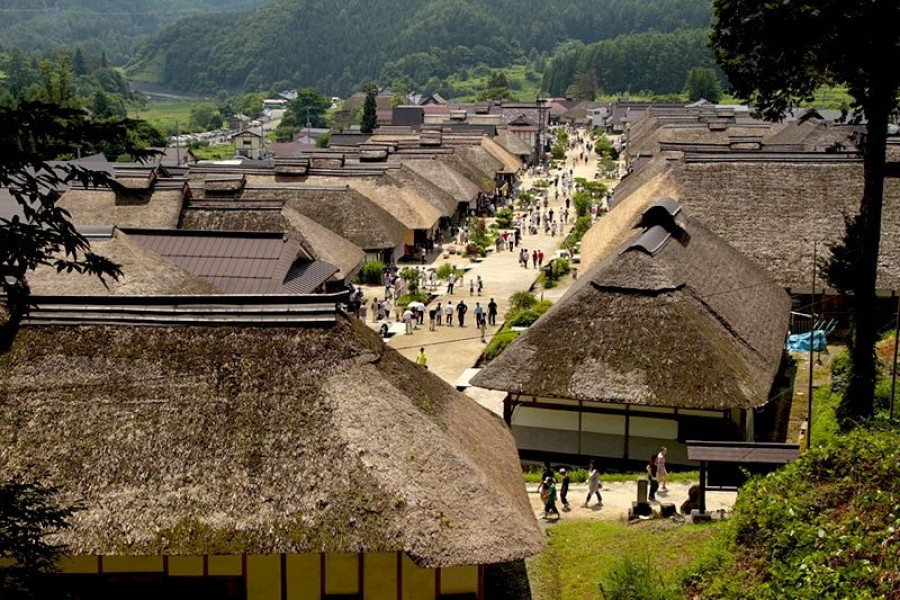
Held every year on July 2, the Ouchi-juku Hange Matsuri (‘mid-summer festival’) is a charming festival with hundreds of years of tradition behind it. The festival takes place at the traditional Edo period post town of Ouchi-juku, about 40 minutes south of Aizu-Wakamatsu City. It features a vivid parade featuring men in black eboshi caps carrying around the mikoshi (portable shrine), as well as the famous red-faced Tengu, supernatural creatures seen as spiritual guardians.Originally held to venerate the spirit of Prince Mochihito, an emperor’s son said to have taken refuge here after the Genpei War, the festival is now a broader community event that prays for household safety and strong harvests.Blessings are invoked at 12:00pm at Takakura Shrine, with the parade starting from 12.30pm and winding its way slowly through the village until about 3pm. They take breaks at several points, so it’s even possible to duck into a nearby soba restaurant for lunch. (A great time to try negi-soba, the Ouchi-juku speciality of soba eaten with a long onion!)  

Top