Inawashiro Original Beer Brewery

Inawashiro Original Beer Brewery

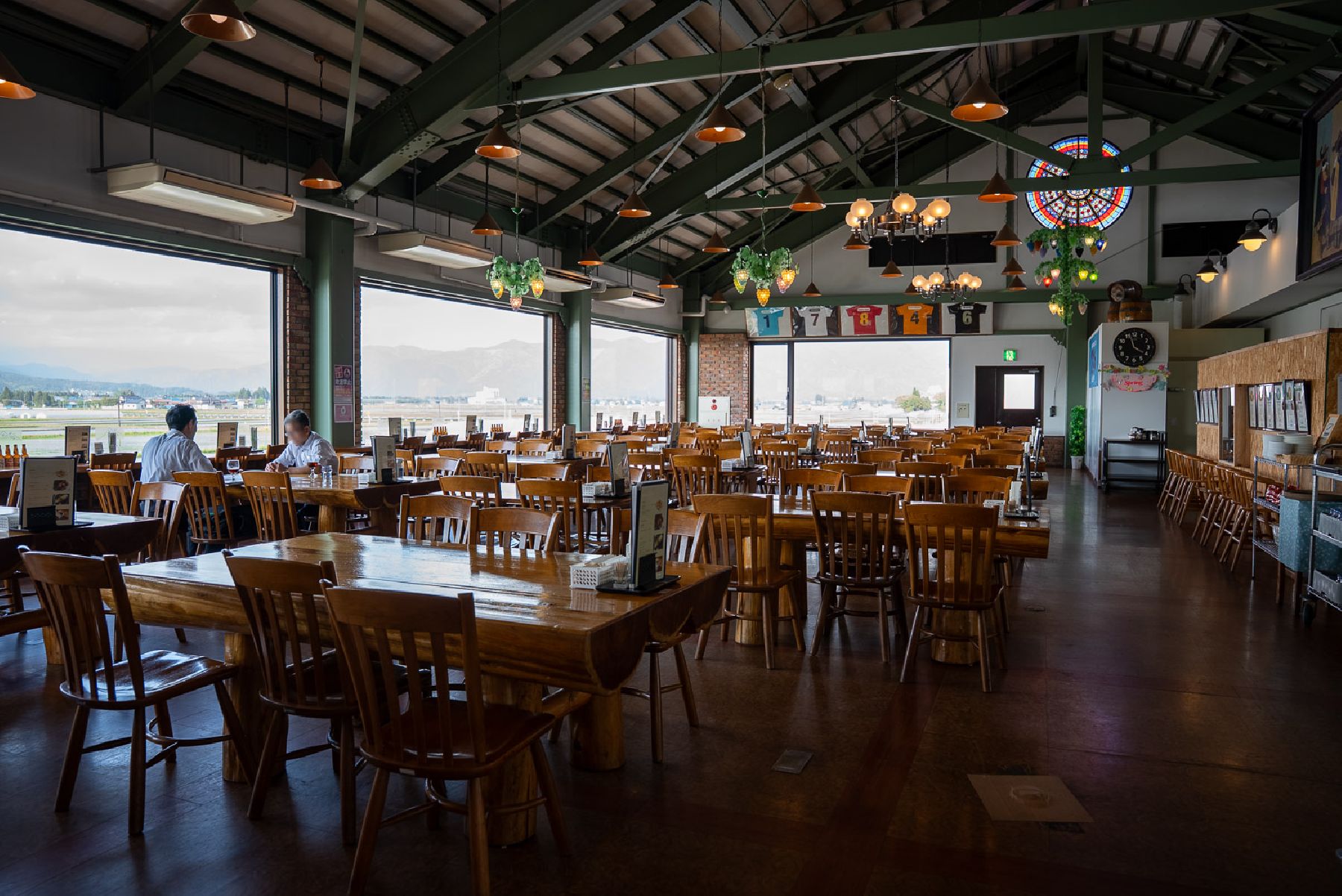
Although Fukushima is most famous for its sake distilleries, the Inawashiro Original Beer Brewery has a growing reputation among expats for its rich taste. The large beer hall here is well-located in central Inawashiro, close to the lake, allowing travellers a chance to sample the beer and German sausages. Views of Mt. Bandai from the second-floor restaurant hall are spectacular and unobstructed, making this an excellent stopping place on a longer journey.

The beer at Inawashiro is made using the famously pure mountain spring waters of Mt. Bandai, combined with German wheat and hops for a unique taste you won't find anywhere else in Japan. A 5-drink sample set is available for new guests to try the range of the brewery's most popular five beers.

There's also a shop downstairs selling Fukushima specialties and beers from the brewery, as well as souvenir stand where you can buy ice cream (including a beer-flavoured one!)

The brewery shares parking with the World Glassware Hall, where visitors can try their hand at glass-blowing and etching. The Hideyo Noguchi Memorial Hall is also a short walk away.
Venue Details

Venue Details
Websitehttp://inawashirojibeer.com/(Japanese)
Opening Hours

09:30 - 17:30 most days, closes 17:00 Wednesdays

ParkingFree
Access Details
AccessMurahigashi-85 Mitsuwa, Inawashiro, Yama District, Fukushima 969-3284
View directions
Getting there

By Car: 7 min from Inawashiro-Bandaikogen I.C. exit off the Ban-etsu Expressway.

By Train: 10 min taxi or bus ride from Inawashiro Station (JR Ban-etsu West Line)

Nearby

The World Glassware Hall
Nature & Scenery

Tenkyokaku

Named by the Crown Prince Yoshihito upon its opening in 1907 as “The Palace of Heaven’s Mirror”, Tenkyokaku is a decadently decorated former villa.Imperial Prince Arisugawa Takehito decided to build Tenkyokaku after being impressed by the beauty of Lake Inawashiro during a visit to the Tohoku District. His family, the Arisugawa-no-miya Family, owned the villa until 1952, when it was granted to Fukushima Prefecture.Tenkyokaku has since been used as a meeting hall and a space for lectures and exhibitions. The former villa, its annex and its front gate have been specified as important cultural properties of Japan.Despite being restored in 1984, the building retains many of its original features, including the impressive chandelier which can be seen below.Despite no longer being able to see Lake Inawashiro from the windows of Tenkyokaku, the luxurious renaissance-style architecture and liberal use of all things gold and glittery means that visitors will by all means feel that its name still rings true.For only 1000 yen, you can dress up in a traditional outfit and take as many photos as you would like in the building!

The World Glassware Hall
Museums & Galleries

Mt. Bandai Eruption Memorial Museum

This museum introduces the eruption of Mt. Bandai, and uses large sized models and "body sonic" facilities to give a simulated experience of the eruption in 1888 of Mt. Bandai. The plants and animals that live around Mt. Bandai are introduced using a diorama, and nature observation meetings are held several times a year. This museum has wheelchair access and bathroom facilities.The museum is across the road from Mt. Bandai 3D World, and a combined entrance ticket is available for the two facilities.

The World Glassware Hall
Museums & Galleries

Hideyo Noguchi Memorial Museum

Most people probably don’t know who Hideyo Noguchi (1876-1928) is by name but just look at a 1,000-yen note and you’ll know his face. A renowned bacteriologist, Noguchi made great advances in the research of a vaccine for yellow fever. He’s also credited with the discovery of the agent which causes syphilis.This memorial museum was established to honor the Nobel-nominated bacteriologist, and to introduce his life achievements. The house where Noguchi was born stands within the museum grounds. Visitors to the house can see the fireplace where he fell as a child, leading to him seriously burning his left hand. The alcove post of the house has carved into it the words of resolution Noguchi made before he went to Tokyo.The exhibition room contains many resources that introduce Noguchi's life and accomplishments, including his favorite articles, letters, and photographs. In Noguchi's laboratory, which was recreated for the memorial museum, visitors can interact with a robot designed in the image of Noguchi. The robot answers questions from visitors and gives them encouraging messages.Though the house retains its Meiji Period charm, the hall and facilities were renovated in April 2015, during which time the experience-based corner was added. Here, guests can learn about bacteriology through videos and interactive games.Aizu-Ichiban Café, a café which renovated from the clinic where Hideo Noguchi received treatment for the burns he suffered to his left hand, is located nearby. Once named Kaihiyo Clinic, this is where he spent much of his youth and acquired his motivation to study and ambition to help others. There are also a number of his belongings on display, making it an interesting place to visit after a trip to the museum.

The World Glassware Hall
Nature & Scenery

Oze National Park

Oze is home to a plethora of beautiful flowers. These include the Asian skunk cabbage that blossoms in the marshes as the snow melts, and the bright yellow of the Nikko Kisuge, which is reflected in the marshes just when the surrounding mountains become green. The nature of Oze is symbolized by its beautiful flowers, and together with the mountains, lakes, marshes, rivers, forests, and wildlife that lives in this region, create a stunning sight. Chozo Hirano opened up the area around 100 years ago, and because of the protection of its magnificent nature up until now, Oze has become a symbol of nature conservation in Japan. The beautiful nature of Oze presents a different face throughout the seasons, and all continue to charm us. Key points of the sightseeing spot/ recommended points for tours:  In order to both preserve the precious nature of Oze, and to be able to come face-to-face with its splendor, we recommend that you visit on weekdays, and take your time to encounter the nature of Oze. Oze has the Ozenuma Visitor Center and the Oze-Yamanohana Visitor Center as locations from which you can both appreciate Oze's nature, and learn about the environment. At the visitor center, you can learn from displays that explain in an easy-to-understand the formation of the nature in Oze, points to see, and the most up-to-date information about the natural environment. This lets you more fully enjoy the appeal of the nature of Oze.Visits are even more enjoyable when you know more; therefore we recommend visits with a guide who can tell you more about the nature and charm of Oze. We urge visitors to make use of the certified guides who have a wealth of knowledge about Oze's nature, culture, and history, and who can ensure your visit is safe.

You might also like

Yamatogawa Sake Brewery
Gourmet & Shopping

Yamatogawa Sake Brewery

Close to Kitakata station is Yamatogawa Brewery. This brewery was built in 1790 in the Edo Era, and has been producing sake ever since. The famous sake cultivated at this brewery is made using the clear, mountain water from Mt Iide.Another important component of Yamatogawa Brewery’s sake is the use of high-quality, carefully cultivated rice. This rice is grown in Yamatogawa Brewery’s own rice fields, and from the fields of selected local farming families. Next door to the brewery is the Northern Museum – where old earthen storehouses built during the Edo Era have been opened up to the public. Here you can learn about how the sake-making process has changed since the Edo period. Tours and sake tasting available for free.

Tsurugajo Kaikan
Gourmet & Shopping

Tsurugajo Kaikan

Tsurugajo Kaikan is a shopping complex next to Tsurugajo Castle. Here you can try local cuisine, from Wappa Meshi and Sauce Katsudon, to soba noodles and Kitakata Ramen. The French restaurant "Racines" is also on the premises, so that both Japanese and western-style cuisines can be enjoyed in one location. The restaurants have seating for approximately 1,000 guests.The first floor contains a tax-free shop that sells local Aizu goods and souvenirs, from ready-to-cook Kitakata Ramen, soba noodles, Japanese pickles, and sweet treats, to traditional crafts like Akabeko lucky red cow.You can even try painting your own akabeko cow (a traditional folk toy which is said to bring luck), and take it home as a souvenir of your trip. Painting an akabeko takes about 30 minutes, and a reservation is required for groups. The parking area accommodates full-size buses as well as personal vehicles.  

Top